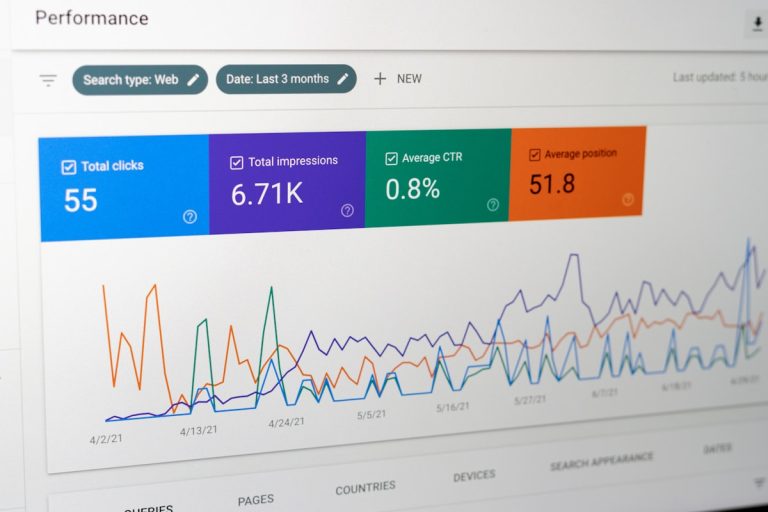
Why Most Marketing Dashboards Are Merely Expensive Graveyards
Let us be completely honest with each other: most marketing reports are completely useless. You log into four different platforms, copy numbers into a spreadsheet, copy those figures into a slide deck, and present charts that nobody acts on. Traditional setups show you vanity metrics like page impressions, average bounce rates, or generic keyword ranks that change every five minutes without adding a single pound to your bank account. If your current reporting process feels like a slow, manual chore that explains what happened three weeks ago rather than fixing what is broken right now, you need a modern marketing performance dashboard that automates your growth tracking instead of collecting digital dust.
A real performance cockpit should not merely report history; it must govern your strategy and trigger execution. It connects audience demand, multi-channel content, local intent, and actual pipeline revenue into a single clear view. When small businesses and growing teams rely on fragmented point solutions, critical insights slip through the cracks. In this practical guide, we will break down why legacy dashboard platforms fall short, what strategic signals truly move your bottom line, and how autonomous AI operations run circles around traditional, passive analytics.
The Flaw of Traditional Dashboard Tools: Passive Analytics vs Active Execution
Traditional dashboard platforms like Siteimprove, Tableau, or Looker Studio focus heavily on measurement. They present detailed tables, track accessibility scores, and display crawl statistics. For enterprise data science teams, that level of granular customisation can be interesting. However, for lean teams and growing businesses, passive reporting creates an operational bottleneck. You see that your non-branded organic clicks dropped by 14 percent, but what happens next?
The dashboard will not fix the meta tags for you. It will not draft a refreshed content cluster, adjust your geographical targeting, or publish an update. You still have to hire an expensive agency or task an overburdened marketer with doing the heavy lifting by hand. When you inspect tools built purely around passive analytics, several painful limitations become obvious:
- Observation without action: The software highlights technical errors or dropping ranks, leaving you to solve the underlying code or copy issues manually.
- Prohibitive licensing and complexity: Enterprise-tier business intelligence platforms demand dedicated analysts, custom SQL queries, and steep subscription fees that drain your marketing budget.
- Siloed channel views: One tool monitors search rankings, another checks social channels, and your CRM handles actual deals, preventing a unified view of your pipeline.
- Zero autonomous execution: Reporting tools do not create, optimise, or schedule multi-channel assets; they simply monitor what you produce elsewhere.
This is precisely where the paradigm shifts from passive reporting to active execution. Instead of hiring external consultants to interpret charts, modern operators use full-stack AI marketing operating systems that spot trends, prepare updates, and execute tasks across your digital footprint. To discover how this works across diverse platforms, read our guide on how to manage multi-channel with aiCMO to keep your messaging aligned without extra staff.
Strategic Metrics That Actually Predict Revenue
If you want your dashboard to command respect from leadership, stop tracking metrics that do not pay bills. Time on page never paid an invoice. Broad impressions do not cover payroll. A practical marketing performance dashboard focuses on three vital layers: revenue alignment, search intent, and technical stability.
| Layer | Strategic Metric | Why It Matters | Review Cadence |
|---|---|---|---|
| Revenue | Customer Lifetime Value (LTV) by Landing Page | Identifies which content assets attract high-paying, recurring clients | Monthly |
| Intent | Non-Branded Organic Click-Through Rate (CTR) | Proves market expansion by showing new customers discovering your solution | Weekly |
| Visibility | Generative Engine & Local Search Share | Tracks brand presence inside AI search results and local map queries | Daily / Real-Time |
| Technical | Core Web Vitals (LCP, INP, CLS) | Flags performance friction before it damages organic conversions | Daily |
When your metrics directly connect to commercial outcomes, prioritisation becomes straightforward. If non-branded CTR drops, your title structures or snippet formats need immediate revision. If certain regional landing pages generate superior conversion rates, you should double down on local intent. You can effortlessly master GEO targeting with AI to capture high-intent geographic demand without building dozens of individual location pages by hand.
How to Build an Operational Dashboard: Moving from Data to Action
Connecting your marketing channels into an operational workflow does not require complex data pipelines or six-figure enterprise software. Follow these direct steps to transform passive numbers into active growth routines.
1. Unify Your Core Data Streams
Start by linking your search consoles, core website metrics, and pipeline conversions. Avoid jumping straight into custom dimensions or exotic visualisations. You want to see the clear path: search intent leading to a page visit, leading to an inquiry, leading to revenue.
2. Segment Views by Objective Rather Than Vanity
Create clear views tailored to operational needs. Technical health (such as server response times and Core Web Vitals) should be monitored continuously to prevent conversion drops. Content intent signals must highlight which topics drive inquiries, allowing you to deploy fresh content against emerging search trends without delay.
3. Establish Human-in-the-Loop Execution
The greatest failure of legacy dashboards is the delay between spotting an issue and deploying a remedy. When your tracking tools connect straight to execution engines, workflow friction vanishes. To explore how autonomous agents streamline this journey from review to live updates, you can connect your modern marketing performance dashboard to preview roadmaps that turn raw analytics into verified, live content.
Eliminating Agencies and Fragmented Point Solutions
Small to medium enterprises face an uphill struggle. Traditional marketing agencies charge hefty monthly retainers while providing opaque PDF summaries that hide lacklustre results. On the flip side, subscribing to ten separate subscription tools (one for backlink audits, one for social management, one for rank tracking, one for local citations) produces fragmented chaos.
Unified AI marketing automation strips out this unnecessary friction. By combining 24/7 SEO monitoring, local visibility, and multi-channel asset preparation into a single console, businesses gain radical transparency. You do not have to wonder what your retainer achieved this month. The dashboard shows what was spotted, what was prepared, what was approved, and how the traffic responded.
For teams managing busy content schedules across web properties, using a streamlined setup like learning how to install and run the aiCMO WordPress Plugin beta makes publishing and verifying content updates completely seamless.
If you are tired of spending hours updating title tags, conducting manual competitor checks, and assembling weekly spreadsheets, it is time to automate your SEO with AI and let intelligent systems handle tedious operational tasks around the clock.
The Role of Generative Engine Optimisation (GEO) in Modern Dashboards
Traditional SEO dashboards only look at Google’s traditional ten blue links. But modern buyer behaviour has shifted radically. Today, prospective clients ask AI engines, conversational assistants, and localised map prompts for vendor recommendations. If your marketing performance dashboard does not track whether AI models cite your business, you are flying blind.
Generative Engine Optimisation (GEO) evaluates how your brand surfaces within answer engines and conversational search. Tracking this presence requires monitoring brand mentions, structured data credibility, and authoritative topical footprints across regional touchpoints. For a step-by-step breakdown of how to evaluate your current standing, check our practical tutorial on how to check your brand’s AI visibility.
When your dashboard integrates GEO alongside traditional organic search, you protect your business against sudden algorithm shifts. You can monitor whether your key offerings are being recommended in conversational prompts, allowing you to refine your website’s authoritative content before your competitors even realise why their referral traffic dipped. To ensure your company stays ahead of this curve across local markets, enhance your local visibility with targeted, continuous optimisation.
Transforming Dashboard Insights into Measurable Growth
A dashboard should never be a static report card; it is your marketing steering wheel. The difference between teams that stagnate and those that scale rapidly comes down to cycle time. When an issue takes three weeks to identify and another month to fix via an external agency, you lose market share. When an issue is flagged, drafted, approved, and resolved within hours, organic visibility expands exponentially.
Modern marketing belongs to agile teams that embrace unified automation. By combining clear data with automated execution, you eliminate bloated software stacks, slash overhead costs, and turn your metrics into an active growth engine.
Take control of your digital visibility today. Boost your search rankings now with AI CMO and build an intelligent, real-time operating dashboard that works tirelessly to grow your business.