The Hidden Drain on Your Online Store: Why Modern Marketing Data Feels Broken
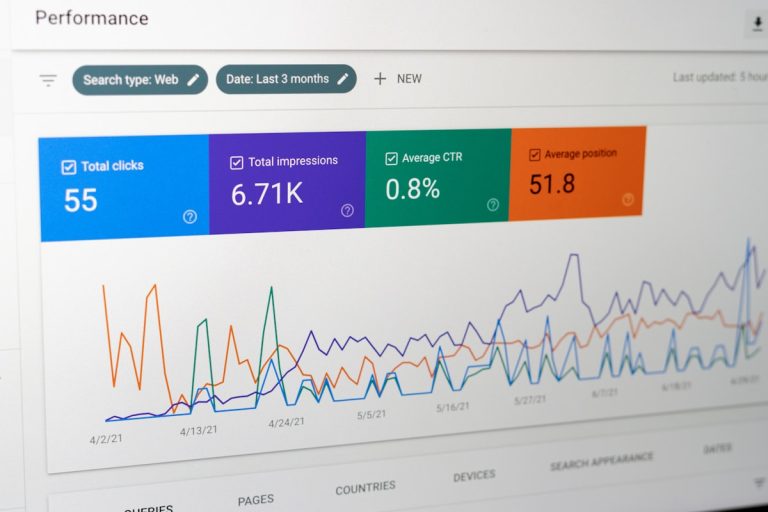
Running an online shop often feels like juggling spinning plates while blindfolded. You set up pay-per-click ads, tweak product descriptions, send out email blasts, and hope for the best. Yet, when you sit down on a Friday afternoon to figure out what actually drove your sales, you face a messy patchwork of browser tabs. Google Analytics reports one number, Shopify claims another, and your paid social dashboard insists it generated all the revenue single-handedly. This confusion is where solid campaign performance analytics should save the day, giving you clarity on customer acquisition cost, conversion rates, and true return on ad spend.
Instead of clear directions, most e-commerce founders and marketing teams end up with analysis paralysis. You burn precious hours pulling CSV files and trying to reconcile mismatched conversion attribution figures. This chaotic process slows down your growth and burns your budget on campaigns that quietly lose money. If you want to stop guessing and start scaling, adopting AI CMO: Unified AI Marketing Automation for Digital Growth gives you a hands-on way to connect operational metrics with real-time revenue actions.
The Core Problem: The Fragmented Marketing Stack
Most growing e-commerce businesses rely on an accidental stack of five to ten separate tools. You might have one platform for email, another for keyword research, a tool for social scheduling, and a Product Information Management (PIM) system like WISEPIM to manage product catalogues.
While dedicated catalogue systems organise descriptions and images neatly, they do not run your campaigns or adjust your ad spend. Traditional marketing software tells you what happened three days ago. It rarely tells you what to do right now.
Here is what happens when your data lives in silos:
- Attribution overlap: Facebook and Google both claim credit for the exact same order.
- Delayed reactions: By the time you notice an ad group stopped converting, you have already wasted hundreds of pounds.
- Disconnected product inventory: You spend ad money promoting items that are low on stock or have high return rates.
- Agency opacity: Traditional digital agencies send complicated monthly slide decks that hide poor performance behind vanity impressions.
Marketers do not need more dashboards; they need automated action. When your tracking is fragmented, your team spends 80% of its energy gathering numbers and only 20% improving strategy.

The Essential Metrics for E-Commerce Campaign Performance Analytics
To make sensible decisions, you must strip away vanity statistics like pageviews, impressions, and generic clicks. E-commerce survival comes down to five fundamental metrics:
1. Customer Acquisition Cost (CAC)
How much hard cash does it take to get a single paying buyer through the door? If your average order value is £45 and your CAC creeps up to £40, you are operating on razor-thin margins once product costs and VAT come out.
2. Return on Ad Spend (ROAS)
ROAS tracks gross revenue generated for every pound spent on advertising. While a 4x ROAS sounds impressive, it means little if excessive product returns or discounted items wipe out your net margin.
3. Conversion Rate (CR)
The percentage of visitors who actually complete checkout. Tracking conversion rate by specific traffic sources reveals whether your ads are attracting genuine buyers or casual window shoppers. To pull in organic searchers who genuinely want to purchase, you can Automate Your SEO with AI and systematically target high-intent transactional queries.
4. Average Order Value (AOV)
AOV measures the average spend per checkout. Robust analytics will pinpoint which campaign hooks encourage shoppers to add secondary items or take advantage of bundle promotions.
5. Customer Lifetime Value (CLTV)
True e-commerce profits rarely come from the first sale. They come from repeat purchases. Your analytics must show which acquisition channels deliver loyal customers with high lifetime value versus one-and-done discount hunters.
Moving Beyond Static Dashboards: The AI CMO Advantage
Historically, fixing your analytics meant hiring an expensive data consultant or spending five figures a month on an enterprise agency. Today, artificial intelligence has changed the equation. AI CMO acts as an always-on marketing brain, combining continuous tracking with automated execution across channels.
Instead of simply charting historical drops in your store conversion rates, AI CMO detects performance changes in real time. It diagnoses whether a dip stems from slow page load times, poor ad creative targeting, or shifts in search intent.
By combining search engine optimisation, geographical visibility tracking, and cross-channel performance into a single platform, AI CMO eliminates the need for sprawling tool stacks. You no longer need SEMrush for keywords, a separate tool for local visibility, and manual spreadsheets for paid media. You can evaluate your full marketing engine in one spot with real-time campaign performance analytics and execution.
Bridging the Gap Between Product Data and Traffic Generation
PIM platforms like WISEPIM are great at keeping SKUs, dimensions, and descriptions aligned across sales channels. Accurate product descriptions naturally decrease return rates and build customer trust.
However, clean product data alone does not generate revenue. You still need targeted visitors landing on those product pages.
This is where automated channel execution becomes indispensable. While your catalogue software organises your products, AI CMO works 24/7 to direct relevant regional and search traffic directly to them. If you operate retail stores or supply local stockists alongside your digital storefront, you can Enhance Your Local Visibility using automated local targeting to ensure nearby customers discover your physical and digital shelves first.
Once qualified visitors arrive at well-structured product pages, your conversion rates increase. Your campaign performance analytics then feed real-time conversion data back into your marketing engine, automatically refining ad copy and search targeting for future campaigns.

Practical Steps to Master Your Campaign Analytics
Turning messy marketing data into consistent profit does not require an advanced mathematics degree. Follow this four-step blueprint to build clarity into your daily marketing routine:
Step 1: Standardise Your Tracking Parameters
Messy UTM tags destroy clean data. Establish strict naming rules for your campaign source, medium, and campaign names. If one team member writes “facebook-ad” and another logs “FB_Paid”, your analytics will treat them as separate channels, skewing your reporting.
Step 2: Tie Campaign Spend Directly to Net Margins
Stop celebrating top-line gross revenue. Factor in payment processing charges, VAT, shipping costs, and average return rates directly alongside ad spend. A campaign producing £10,000 in revenue at a 20% margin is far healthier than one bringing in £25,000 at a 3% margin.
Step 3: Automate Your Organic Search Strategy
Paid ads stop delivering the second you turn off your daily budget. Organic search traffic, by contrast, builds compounding brand equity over time. Rather than manually writing basic meta descriptions or outsourcing blog posts to expensive agencies, you can Start Your SEO Autopilot to produce regular, search-optimised content that pulls in organic buyers day after day.
Step 4: Monitor Regional Variations
Shoppers in Manchester do not necessarily behave the same way as buyers in Munich or Milan. Segment your analytics by geographic region to uncover surprising conversion hotspots. You can then Master GEO Targeting with AI to shift marketing resources directly toward the towns, cities, or territories delivering your highest return on investment.
Moving From Rear-View Reporting to Forward-Looking Growth
Most traditional marketing reports are like driving down a motorway while looking solely in the rear-view mirror. They explain why you crashed into the barrier last Tuesday, but do nothing to help you steer around the hazard right in front of you today.
Effective campaign performance analytics should tell you what actions to take tomorrow morning:
- Which low-performing ad sets should be paused immediately?
- Which product categories warrant an aggressive push based on rising search queries?
- Which regions are showing spiking interest without corresponding ad spend?
By shifting away from disconnected marketing tools and opaque agencies, you gain complete visibility over your digital growth. With an intelligent system handling repetitive tasks, continuous keyword tracking, and automated regional optimisations, you free your internal team to focus on overarching brand strategy, product sourcing, and outstanding customer service.
Stop wrestling with disconnected spreadsheets and inaccurate attribution models. Experience unified tracking, 24/7 campaign execution, and transparent revenue reporting by choosing AI CMO for your marketing automation today.