Stop Guessing and Start Testing: The Modern SEO Growth Formula
Most digital marketing advice tells you to produce endless blog posts, build backlinks, and hope Google notices. That is not a strategy; that is gambling with your company’s marketing budget. When you run a business or manage a lean team, you simply cannot afford to throw tactics against the wall to see what sticks. True search growth comes from disciplined, scientific experimentation. Finding the right levers begins when you design and execute your first three seo tests, giving you clear visibility into what actually drives conversions and rankings.
Setting up a structured testing regime sounds intimidating, especially when you juggle daily product launches, client emails, and multi-channel campaigns. Most traditional platforms leave you with raw charts and zero hands-on execution, forcing you to decipher complex dashboards alone. In this guide, we break down the core mechanics of search experimentation, evaluate how to prioritise experiments by effort and impact, and demonstrate how unified marketing automation removes tedious manual maintenance. If you want sustainable growth, mastering these initial experiments will set the foundation for your business.
The Three Levers of Organic Search Growth
Before touching any code or drafting meta descriptions, you need a solid hypothesis. A genuine SEO test is not just “making things better.” It targets a specific, measurable mechanism.
Search testing essentially influences three primary levers:
- Improving Click-Through Rates (CTR): You do not always need position one to win traffic. By capturing rich snippets or crafting compelling title tags, you can convince more people to click your snippet over the competition.
- Expanding Keyword Footprint: Ranking for net-new queries brings fresh eyes to your site. This expands your total addressable search audience.
- Elevating Existing Rankings: Pushing a URL from position eight to position three yields exponential gains. This typically involves content quality, speed, internal architecture, and domain authority.
If an experiment does not pull at least one of these levers, it is not an SEO test. It might be a conversion rate test for your landing page, which is useful, but it does not belong in your organic search sprint.

How to Prioritise: The Effort vs Impact Matrix
Marketing teams waste hundreds of hours on low-value tasks. Changing image alt tags across 2,000 pages takes days of coordination, but it rarely moves the needle for top-of-funnel revenue.
To plan effectively, plot your test ideas on a simple two-by-two matrix:
- High Impact, Low Effort (The Sweet Spot): These are your immediate wins. Fast changes that directly influence rankings and CTR.
- High Impact, High Effort (Strategic Projects): Major site restructures, site-wide internal link rewrites, or custom schema deployments. Vital, but they require project management and engineering cycles.
- Low Impact, Low Effort (Fillers): Small metadata tweaks and image tag tidy-ups. Run these during downtime, but do not expect dramatic surges.
- Low Impact, High Effort (The Danger Zone): Avoid these entirely. Endless technical refactoring that produces no noticeable traffic change drains your runway.
Starting with high-impact, low-effort changes builds momentum. Once you see returns, you can justify deeper investments.
The Playbook: Executing Your First Three SEO Tests
Let us review the three fundamental experiments every marketing team should launch first. They deliver high return on investment and clear data feedback.
Test 1: Title Tag Optimisation for CTR and Keyword Relevance
Title tags remain the most influential on-page signal you control. They directly dictate how Google indexes your page and how searchers perceive your brand in the SERPs.
- The Hypothesis: Updating page titles with high-intent modifiers (such as pricing, primary value propositions, or location tokens) will increase CTR without sacrificing existing impressions.
- The Execution: Take ten high-impression URLs sitting between positions four and ten. Update their title tags to be more action-oriented. For example, change a bland headline like B2B Invoicing Tools to Fast B2B Invoicing Software for UK Agencies (Save 10 Hours Weekly).
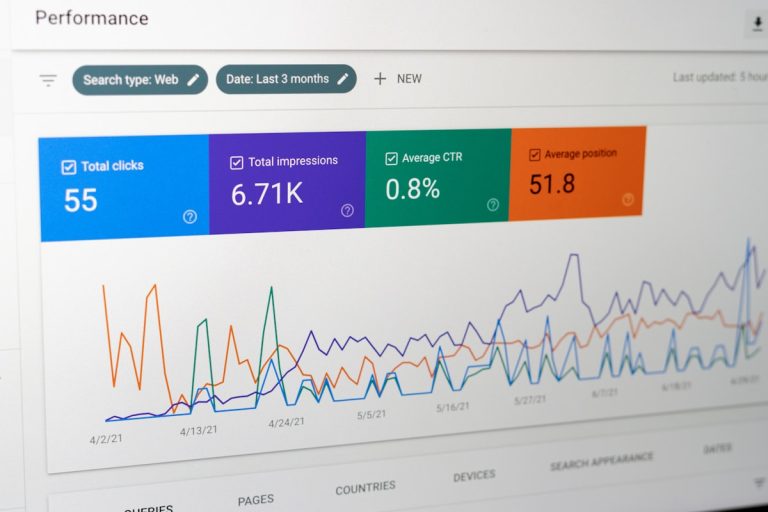
- What to Measure: Track organic impressions and CTR inside Google Search Console over a four-week period.
Because this test requires zero development support, it sits firmly in the sweet spot. You can also deploy SEO Automation to audit, suggest, and monitor these metadata tests continuously across your entire catalogue.
Test 2: On-Page Keyword Targeting and Semantic Depth
Search engines use semantic analysis to judge topical authority. If your landing pages do not answer follow-up queries, search engines will downgrade your visibility in favour of more comprehensive guides.
- The Hypothesis: Restructuring H1 and H2 subheadings to align with secondary search queries will improve organic reach and push the page higher for long-tail phrases.
- The Execution: Audit a core landing page. Identify gaps where searchers ask specific implementation questions. Introduce distinct subheadings addressing these queries, weaving in natural synonyms and precise terminology. Ensure you follow a structured workflow, perhaps using the WordPress Plugin Beta to stage content directly on your production environment.
- What to Measure: Monitor the total number of ranking keywords for that specific URL. If the query footprint widens, your semantic test succeeded.
Managing search visibility also means keeping an eye on where your business ranks across geographic markets. Teams looking to expand locally can Enhance Your Local Visibility to guarantee geographic queries return the right landing pages.
Test 3: Structured Data for Rich Results
Plain blue links lose clicks to search snippets enriched with review stars, FAQs, and pricing data. Schema markup helps search engines categorise your content and display prominent search enhancements.
- The Hypothesis: Adding structured FAQ or product schema will capture extra vertical space in search results, increasing overall CTR.
- The Execution: Add JSON-LD schema to five commercial pages. Make sure the schema strictly reflects visible content to avoid search engine penalties.
- What to Measure: Monitor rich result impressions within your search analytics reporting.
Understanding your full presence across modern platforms is critical. You can learn how to check your brand’s AI visibility to see how both traditional crawlers and generative engines process your on-page data.
To scale these experiments without burning out your team, adopting AI CMO: Unified AI Marketing Automation for Digital Growth provides the real-time tracking and structured governance you need to oversee multiple tests simultaneously.

The Bottleneck: Why Most Companies Stop Testing
The methodology behind testing is straightforward. Why, then, do so many businesses abandon it?
The problem lies in execution:
- Fragmented Tooling: Marketers use one tool for keyword tracking, another for crawling, a third for content analysis, and spreadsheets to connect them. The administrative overhead kills testing cadence.
- Opaque Agency Retainers: External agencies often charge hefty monthly retainers for monthly PDF reports that list suggestions without implementing them.
- Measurement Friction: Determining whether traffic grew due to a title change, a seasonality shift, or an algorithm update requires rigorous data hygiene.
Point solutions like SEMrush, Moz, and Ahrefs offer deep backlink indices and keyword volumes, but they remain passive analytical suites. They highlight problems, but they do not execute changes for you. They hand you diagnostic dashboards and leave the implementation, copywriting, and verification on your desk.
Bridging the gap between strategy and execution requires modern infrastructure. Marketers wanting streamlined execution can learn how to manage multi-channel with aiCMO to keep social, content, and search initiatives perfectly synchronised.
Beyond Manual Testing: The Autopilot Advantage
Manual A/B testing in organic search works, but it moves slowly. By the time you draft a hypothesis, wait for developer bandwidth, deploy changes, and track six weeks of data, the market has shifted.
Unified marketing automation transforms this dynamic. Instead of treating SEO as an isolated monthly check, automated systems monitor search landscape volatility around the clock.
When your marketing software pairs continuous analysis with safe, hands-on task execution, your testing throughput multiplies. Businesses can Automate Your SEO with AI, moving from running one quarterly test to iterating across dozens of pages every single week.
Consider local intent. Regional terms require geo-specific metadata, localised landing pages, and consistent citations. With unified platforms, teams can Master GEO Targeting with AI without manually crafting hundreds of regional page variations.
By eliminating disjointed subscription stacks and closed-box agencies, you gain complete transparency over every test run on your domain.
Scaling Search and Local Authority with AI CMO
Experimentation is not a luxury reserved for massive enterprise corporations with dedicated data science departments. Any growth-minded business can build a repeatable testing engine.
Start by executing title tag experiments, refining your on-page semantic targeting, and implementing structured schema. Track your results carefully against the three core levers: CTR, keyword breadth, and rank improvements.
Once your baseline is established, stop letting operational tasks distract you from commercial strategy. Take control of your digital visibility with an end-to-end platform that automates continuous technical testing, tracks GEO positioning, and publishes approved changes directly to your site.
Transform your organic strategy from guesswork into an automated engine by choosing AI CMO: Unified AI Marketing Automation for Digital Growth today.