Why Yesterday’s Keyword Rank Tracking Leaves Your Brand in the Dark
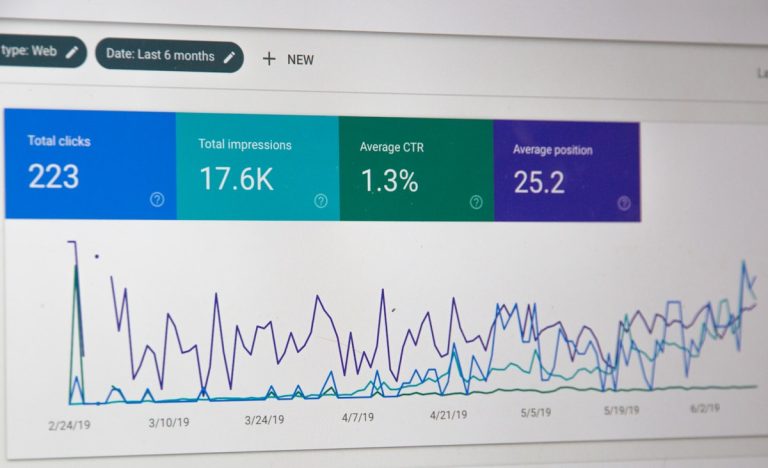
Most marketing teams still check rankings like it is 2012. You open an expensive dashboard on Monday morning, scan a CSV export of fifty target terms, and celebrate a two-place jump on Google. Meanwhile, a competitor published three comparison guides overnight, an AI answer engine completely dropped your brand from its top recommendations, and local search queries in Manchester switched intent entirely. Relying on scheduled, weekly batch audits means you are reacting to old news. Modern digital presence requires active, real-time SEO monitoring to catch search shifts, algorithm tweaks, and generative search citations as they actually unfold across the web.
Static trackers simply cannot keep pace with the modern multi-channel ecosystem. The web moves in seconds, not fortnights, and tracking isolated keywords no longer tells you if customers actually discover your business. You must bridge the gap between continuous market listening and immediate digital execution. If you are ready to ditch fragmented dashboards and turn immediate data into growth, you can explore real-time SEO monitoring with AI CMO: Unified AI Marketing Automation for Digital Growth to transform how your business commands organic attention.
The Blind Spot of Legacy SEO Surveillance
Traditional search monitoring tools were built for an era when search engines updated their indices slowly. You set a keyword list, waited for a weekly crawl, and reviewed historical lines on a graph. Today, that model is fundamentally broken for three reasons.
First, search engine results pages (SERPs) are volatile living feeds. Features like local packs, knowledge panels, and generative summaries alter what users see based on time, location, and intent shifts. A position-three ranking means very little if an interactive panel pushes your organic link below the fold.
Second, modern searchers do not browse in a silo. A user might query a term on a search engine, cross-check reviews on social channels, and then run a prompt through a generative search tool. If your tracking stack only counts blue-link positions, you miss the bigger picture: brand discoverability.
Third, point solutions produce passive notifications. Knowing that your core product page dropped six spots at 2:00 AM on a Tuesday helps nobody if your team does not see the alert until Friday. Even worse, the tool that tells you about the drop will not write the fix, analyse competitor updates, or refresh your schema markup. You are left juggling subscriptions, exporting spreadsheets, and burning hours trying to coordinate a counter-strategy.
To understand where your domain currently stands across generative tools, you can run a diagnostic using our AI Visibility Tracker before building your automated response workflow.
The Evolution: Beyond Keyword Rank Tracking to Continuous Brand Radar
Surveillance tools have tried to evolve. Major platforms are attempting to launch brand radar features to spot digital mentions across the broader web. These monitoring features sound great on paper: they crawl content, watch brand visibility, and tell you when an industry conversation pops up.
Yet there is a fundamental limitation with these enterprise surveillance add-ons: they stop at observation.
They provide an endless queue of insights, charts, and alerts. But who executes the work? For small-to-medium enterprises and lean marketing teams, more data without execution just breeds anxiety. You do not need another dashboard highlighting fifty things that went wrong this week; you need an operational system that intercepts the problem and acts on it.
| Capability | Legacy SEO Trackers | Enterprise Radar Dashboards | AI CMO Full-Stack Automation |
|---|---|---|---|
| Tracking Cadence | Weekly or daily batch crawls | Real-time observation alerts | 24/7 continuous multi-channel surveillance |
| Search Scope | Traditional SERP blue links | Mentions and web indices | Traditional SERPs, AI answer engines, and GEO queries |
| Workflow | Passive reporting only | Manual alert review | Detection tied straight to execution pipelines |
| Resource Demand | Requires full-time SEO analyst | Needs an agency or team to action data | Automated workflows with human-in-the-loop sign-off |
| Cost Profile | Heavy tool stacking (£500+/mo) | Expensive enterprise bolt-on | Unified platform eliminating fragmented tools |
Static data informs, but continuous execution wins market share. Instead of paying thousands of pounds every month for software that demands hours of manual labour, brands are switching to unified systems that identify gaps and draft solutions automatically. To protect and scale your search footprint on autopilot, you can Automate Your SEO with AI and bypass the manual reporting loop entirely.
What Real-Time SEO Monitoring Looks Like in Practice
What does active surveillance actually do for a business daily? Let us break down how continuous tracking handles real-world market movements.
1. Intercepting Algorithm Volatility
Search engines refine ranking parameters continuously. A sudden shift in topical authority requirements can suppress older pages overnight. With live surveillance, drops trigger an immediate content gap assessment. The system scans the newly promoted pages, evaluates their technical structure and topical depth, and flags exact recommendations to reclaim authority.
2. Defending Local and Regional Visibility
Search intent varies drastically by region. If you operate regional branches across the UK, a ranking drop in Leeds requires an entirely different operational response than an issue in Bristol. You must monitor local citation consistency, regional review velocity, and localized SERP packs continuously. For local service brands, learning how to onboard & manage your brand with aiCMO shows how easy it is to tie regional tracking directly into regular promotional content.
If you are expanding across regional hubs, you can Enhance Your Local Visibility to ensure regional buyers discover your physical and digital outlets first.
3. Monitoring Generative AI Engines
Generative engines synthesise answers using specific knowledge sets. When a potential buyer asks an AI assistant for the top suppliers in your niche, is your business cited as the leading authority, or are your competitors taking every mention? Live monitoring tracks entity presence across AI models, flagging when your brand drops out of conversational answer paths so you can publish the exact authoritative references needed to regain citation share.
Merging Intelligence with Action: The AI Marketing Operating System
The primary failure of modern marketing stacks is fragmentation. You pay for one tool to track keywords, another to monitor backlinks, a third to schedule blog posts, and a costly agency to make sense of the mess. The strategy sits in one head, the data sits in another, and execution drags behind for months.
Real-time surveillance only delivers return on investment when it feeds an automated execution engine.
Imagine a system that runs 24/7. When real-time SEO monitoring detects a dip in organic click-through rates on an important commercial page, it does not just send an email notification that sits unread in an inbox. It inspects the updated SERP features, identifies missing search intent signals, drafts the revised copy, prepares technical schema updates, and queues them in an action log for your review.
Through integrated workspaces, teams can use conversational commands to interact with their marketing roadmap directly. You can inspect workspace analytics, query live visibility trends, and sign off on prepared updates through a single dashboard. Every automated action uses signed confirmations, rigorous permission checks, and strict review gates, ensuring that autonomous execution remains firmly under human control.
If you want a unified platform that bridges real-time strategy with daily publishing, you can Connect your website to preview your marketing roadmap with AI CMO right away.
To automate distribution across web environments without manual copy-pasting, take a look at our technical walkthrough on how to install and run the aiCMO WordPress Plugin beta to see autonomous publishing in action.
Setting Up Your Real-Time Surveillance Engine
Shifting from old-school ranking trackers to an automated surveillance workflow is straightforward when you follow a structured approach.
Step 1: Establish Your Real-Time Brand Perimeter
Stop tracking three hundred vanity terms that yield zero revenue. Focus your perimeter on high-intent commercial terms, key competitor brand terms, local geographic variants, and informational discovery prompts where your customers begin their buying journey.
Step 2: Connect Direct Execution Channels
Your tracking platform must connect straight into your publishing environment. Hooking up your Content Management System (CMS) and social channels ensures that when an opportunity is spotted, the remedy can be drafted and deployed without manual handoffs.
You can streamline this pipeline today: Start Your SEO Autopilot to merge organic discovery tracking with immediate publishing workflows.
Step 3: Define Human-in-the-Loop Approval Thresholds
Automation works best when paired with strategic oversight. Establish clear governance rules:
– Routine content refreshes and internal link adjustments can be queued for quick one-click approvals.
– High-stakes brand positioning pages or multi-channel campaigns can require explicit executive review before going live.
– Automated action logs record every change, ensuring complete transparency across your entire digital estate.
Step 4: Monitor, Learn, and Refine
Continuous surveillance generates continuous feedback. As your updated pages roll out, the system tracks the impact on organic traffic, engagement, and visibility in real time. It learns which content formats, headings, and data points satisfy user intent fastest, using those insights to refine future content strategies.
If local foot traffic and regional authority matter to your growth, take the step to Master GEO Targeting with AI to dominate search queries across your specific territories.
Autonomous Execution: The Decisive Advantage
The gap between agile startups and sluggish legacy brands is widening. Companies that rely on static keyword trackers, bloated agency retainers, and manual content workflows will consistently find themselves outmanoeuvred by leaner competitors armed with intelligent automation.
Continuous market monitoring is not about looking at prettier graphs. It is about speed to action. When your digital marketing operating system watches the market around the clock, discovers emerging gaps before your competitors notice them, and prepares the exact assets required to capture demand, sustained organic growth becomes predictable.
Stop settling for historical reports that tell you what happened last month. Take control of your digital visibility across traditional search, local markets, and generative AI search engines with an all-in-one platform built for measurable business growth.
Step into the next era of digital marketing: Meet Maggie and start your free trial with AI CMO today, automate your digital operations, and let continuous intelligence drive your growth.