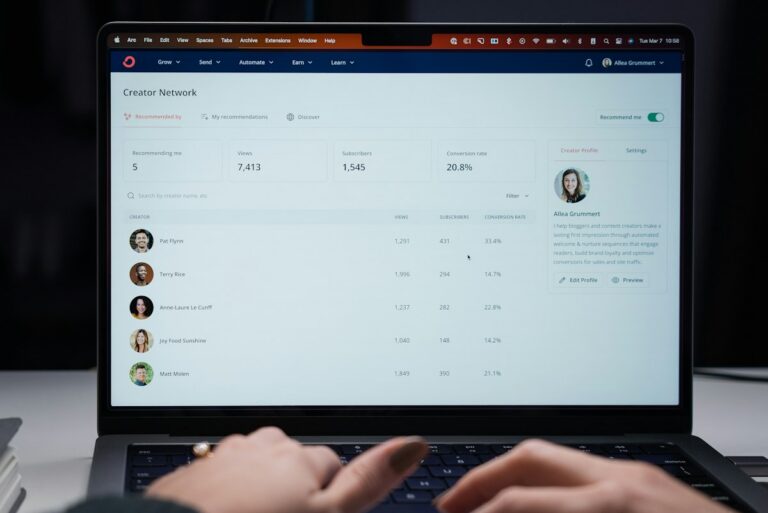
Why Modern Marketing Demands an Automated Analytics Dashboard
Most marketing teams spend half their working week copying numbers between disconnected platforms. You pull search queries from Google Search Console, grab social engagement metrics from LinkedIn, check bounce rates in your web analytics, and paste it all into a messy spreadsheet. It is slow, prone to human error, and by the time you spot a problem, you have already wasted precious budget. A modern automated analytics dashboard solves this drag by unifying your metrics, tracking workflow health, and translating raw data into instant marketing action.
Without continuous tracking, growth becomes an uphill battle of guessing games. Instead of building endless custom visualisations in external reporting tools, you can discover a faster, governed path to growth with AI CMO: Unified AI Marketing Automation for Digital Growth. By combining automated insights with cross-channel execution, modern teams avoid the trap of static charts that tell you what went wrong after the money is already spent.
The Core Problem With Fragmented Marketing Toolstacks
Look at the everyday reality for small to medium enterprises and startups across the UK. You want clear visibility, but you end up juggling six different subscriptions.
Here is what your daily setup usually looks like:
* An SEO toolkit for keyword rankings (costly and complicated).
* A social scheduler that does not talk to your blog.
* Google Analytics dashboards that require an advanced degree to read properly.
* An external automation engine like Activepieces or Zapier to shuttle webhooks back and forth.
What happens next? The integration breaks silently. You build an external dashboard in Looker or Tableau to track flow completion rates, but nobody looks at it.
Standard workflow automation platforms serve a specific purpose: they move raw payload data from point A to point B. For example, generic workflow tools allow you to pipe webhook outputs into third-party business intelligence tools to monitor task execution times or error rates. That works fine for IT operations, but marketing is not just about measuring server response times. Marketing demands context.
When your analytics live in a separate silo from your campaign execution, insight never turns into immediate action. You end up hiring expensive agencies to interpret the numbers, only to receive monthly reports that hide lacklustre results behind vanity metrics.
How an Automated Analytics Dashboard Works in Practice
At its core, an automated analytics dashboard gathers performance signals across multiple channels, restructures them into clear benchmarks, and presents actionable steps.
Rather than sending technical JSON payloads to external data lakes, an intelligent dashboard focuses on three critical layers:
1. Data Ingestion Across Multi-Channel Endpoints
The platform listens directly to your connected channels. It tracks your website’s organic visibility, your content performance, and your local map pack ranks. It removes the need to manually export CSV files every Friday afternoon. For an overview on coordinating these touchpoints, take a look at how to manage multi-channel with aiCMO to keep your channels aligned.
2. Contextual Transformation
Raw numbers mean very little without context. A spike in impressions is meaningless if your click-through rate collapses. An automated dashboard categorises signals into high-impact pillars:
* Organic search momentum and crawl health.
* GEO visibility across specific target postal codes and towns.
* Content engagement and multi-channel pipeline velocity.
If your focus is expanding reach within specific UK regions, you can Master GEO Targeting with AI to turn regional data points into localised organic traffic.
3. Closed-Loop Execution
Here is where typical setups fall short. An ordinary dashboard displays a red line when rankings fall. Then it stops. You must figure out why, write a brief, update metadata, and republish manually.
A closed-loop system flags the ranking drop, identifies the missing search intent, drafts the optimisation, and queues the change for your explicit sign-off.
Generic Workflow Automations vs Unified AI Marketing Platforms
Let us be completely fair to standard automation platforms. Tools like Activepieces, Make, or Zapier are brilliant at technical plumbing. If you need a form submission to create a CRM row and ping a Slack channel, they work like a charm.
However, using generic workflow tools to construct a bespoke automated analytics dashboard comes with serious drawbacks for fast-growing businesses:
| Feature Capability | Generic Workflow Automations | Unified AI CMO Platform |
|---|---|---|
| Setup Overhead | High; requires custom webhooks, data pipelines, and third-party BI tools | Zero; out-of-the-box native marketing intelligence |
| Data Scope | Technical flow stats (status codes, execution times, error counts) | Strategic marketing metrics (SERP visibility, GEO rank, conversions) |
| Execution | Pure data routing; cannot write or refine marketing copy natively | Native multi-channel publishing with human-in-the-loop control |
| Local Optimisation | None; requires manual API builds to local directories | Dedicated engines built specifically for search and regional discovery |
| Cost Profile | Escalating costs per run across multiple chained subscriptions | Predictable, all-in-one operating platform |
When you manage your business via point tools, your analytics dashboard is essentially an emergency warning light. It tells you the engine is smoking, but it cannot hand you the spanner. You still have to do all the heavy lifting yourself.
To bridge this gap without blowing your monthly budget, you can rely on AI CMO: Unified AI Marketing Automation for Digital Growth to unite reporting and content execution under one roof.
Why You Need Human-in-the-Loop Governance
A major worry among UK business owners is the black-box nature of modern AI software. Nobody wants rogue algorithms publishing random, hallucinated nonsense directly to their corporate website or professional profiles.
This is why verified execution matters. A true marketing operating system provides transparent governance:
- Workspace Data Ingestion: The system evaluates your live website performance, search queries, and historical rankings.
- Roadmap Formulation: The AI proposes targeted actions based on what the automated analytics reveal, like expanding a thin service page or adjusting local schema.
- Drafting and Staging: All content, metadata updates, and social posts are prepared in a staging environment.
- Signed Confirmation: Nothing goes live without your explicit approval. You review the changes, click approve, and the system executes the publishing workflow automatically.
This workflow guarantees total peace of mind. You get the speed of full automation while keeping 100% control over your brand voice and factual accuracy.
If you want to remove the grunt work from your search engine campaigns while keeping your editorial standards intact, you can Automate Your SEO with AI without writing complex spreadsheets.
Boosting Visibility Beyond Traditional Search
Search is changing rapidly. Five years ago, ranking in standard desktop search was enough. Today, potential buyers discover businesses through AI answer engines, conversational assistants, and hyper-local search maps.
An effective automated analytics dashboard must monitor these emerging channels. If a conversational AI answers a user query about your industry, does it cite your domain? If someone searches for your service within your city, does your brand appear at the top of the map pack?
To get a clearer picture of how modern engines evaluate your online authority, read our guide on how to check your brand’s AI visibility to see where your brand stands in generative search environments.
When you track these metrics in real time, you can fix visibility blind spots before your competitors even realise there is an issue. You are not just looking backward at last month’s traffic; you are actively steering where your brand appears tomorrow.
Actionable Steps to Streamline Your Marketing Flow
Ready to ditch fragmented reporting and chaotic spreadsheets? Follow these steps to put your analytics on autopilot:
Audit Your Current Tool Sprawl
List every single marketing subscription you pay for right now. Note down the hours your team spends logging in, extracting figures, and building weekly slide decks. The results will probably shock you. Consolidating these tasks into a single interface frees up valuable hours for strategic planning.
Establish Meaningful Benchmarks
Do not track metrics just because they look pretty on a chart. Filter out vanity metrics and focus on bottom-line impact:
* Organic click growth on high-intent keywords.
* Local map impressions for commercial queries.
* Conversion rates on published multi-channel assets.
Connect Your Channels Safely
Ensure your primary website and publishing platforms are cleanly integrated. If you operate on WordPress, check out how to install and run the aiCMO WordPress Plugin beta to establish a smooth, secure bridge between your analytics and content publishing engine.
To ensure your search performance continues climbing across regional directories and local map packs, you should Enhance Your Local Visibility to secure prime positioning where your buyers actually live.
The Shift From Passive Reporting to Continuous Growth
A traditional analytics report is a post-mortem. It tells you what failed last week or last month. By contrast, an automated analytics dashboard linked to a unified marketing platform works like a live flight computer. It spots turbulence, recalculates your route, and prepares the next manoeuvre immediately.
Small teams and growing startups no longer need to burn thousands of pounds on traditional agencies that take weeks to deliver basic slide decks. Nor do they need to spend dozens of hours piecing together complex webhook recipes in third-party automation tools.
By unifying performance data, predictive strategy, and verified publishing into a single platform, you give your business the power to compete with industry giants. You gain total operational transparency, massive time savings, and continuous marketing momentum.
Step into the future of unified marketing execution and unlock predictable, governed digital growth today with AI CMO: Unified AI Marketing Automation for Digital Growth.