Why Most Marketing Dashboards Fail (And How Decision Science Fixes Them)
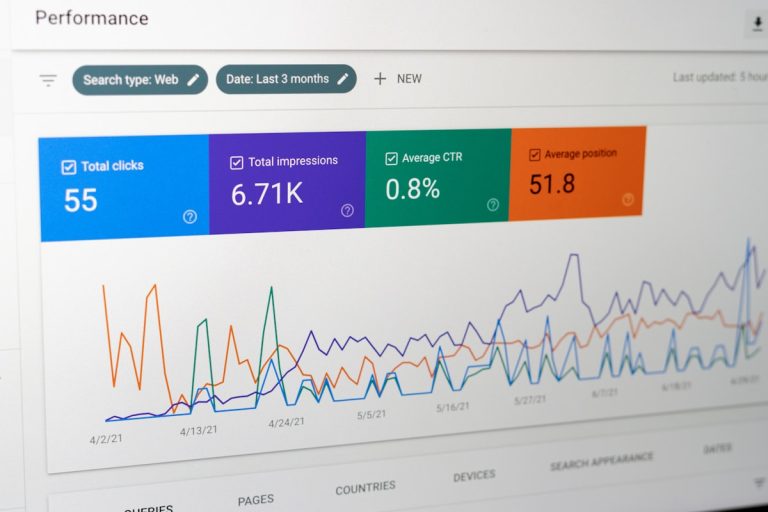
Most marketing dashboards are digital graveyards. You log in, stare at dozens of colourful line charts, check impressions, glance at click-through rates, and then wonder: what do I actually do next? Traditional business intelligence gives you rear-view mirror reporting. It tells you what broke last Tuesday, but leaves you guessing how to fix tomorrow. For small and medium enterprises, this lag is fatal. You end up juggling ten disconnected point tools or paying massive retainers to traditional agencies who spend weeks building monthly slide decks that arrive far too late to change commercial outcomes.
Academic literature in decision science reveals that raw data does not equal actionable intelligence. True intelligence requires moving from descriptive metrics to automated predictive models that guide real-world actions. By embedding machine learning directly into your operational stack, you can replace chaotic spreadsheets with a unified automated analytics dashboard for digital growth. Instead of wondering which campaign drained your budget, modern decision science platforms highlight emerging trends, flag algorithmic search shifts, and suggest verified marketing actions before performance dips.
What Academic Research Tells Us About Decision Systems
A recent foundational study in business intelligence systems (published in the Journal of Integrated Design and Multidisciplinary Integrated Solutions, 2026) outlines a crucial shift in how companies handle data. The researchers highlight that traditional business intelligence systems rely far too heavily on static historical reporting. These standard dashboards show you historical correlations, but they completely lack predictive and prescriptive capabilities.
The academic framework shows that an effective AI-based decision engine must combine five key pillars:
- Continuous Data Harmonisation: Ingesting structured and unstructured signals from search consoles, search engines, and multi-channel marketing campaigns.
- Predictive Analytics: Forecasting ranking shifts and algorithmic changes before they impact sales pipeline volume.
- Automated Insight Generation: Using natural language processing and deep learning to identify genuine anomalies instead of random statistical noise.
- Intelligent Execution Support: Recommending concrete marketing interventions rather than dumping raw numbers on founders.
- Organisational Adaptability: Allowing teams to pivot commercial campaigns in minutes, not quarters.
However, the researchers also issue a clear warning. AI systems should not act as unaccountable black boxes that run wild without oversight. Instead, the ultimate system uses artificial intelligence as an intelligent decision-support tool that enhances human expertise through clear governance, transparent reasoning, and explicit user control.
Moving From Noisy Metrics to an Automated Analytics Dashboard
Let us be completely honest about standard marketing software. You probably have one tool for search keyword tracking, another for social scheduling, a third for local listings, and a messy Google Analytics profile nobody wants to open. None of them talk to each other. When numbers drop, each tool points the finger at the other.
This fragmentation costs British businesses thousands of pounds in wasted hours and missed opportunities. An automated analytics dashboard solves this fragmentation by pulling disparate marketing channels into one clear view. But it does not stop at visualisation. It connects strategy directly to execution.
For example, tracking brand visibility today goes far beyond old-school keyword position tracking. Modern buyers use generative conversational engines and local map packs to find solutions. Understanding your overall footprint requires learning how to check your brand’s AI visibility across diverse search environments so you can react when competitors creep into your territory. When your dashboard notices search visibility slipping in specific postcodes, it does not just plot a red dip; it plans an organic content campaign to recapture that exact market.
To protect regional reach without hiring costly local marketing agencies, teams actively rely on dedicated tools to master GEO targeting with AI across their core commercial territories.
Autonomous Execution with Governed Human Approvals
The biggest hesitation founders have with marketing automation is simple: loss of control. What if an autonomous tool publishes poor copy? What if it targets the wrong audience or breaches tone guidelines?
This is where the concept of “Human-in-the-Loop” architecture comes in. Instead of letting algorithms run unchecked, modern platforms like AI CMO use an intelligent marketing assistant that drafts strategies, plans campaigns, and prepares execution assets, but leaves the final trigger in your hands.
Every operational action, whether it is an on-page SEO adjustment, an updated regional page, or a multi-channel social campaign, is presented in an action log. You review the proposed change, verify the rationale, and sign off. You get the speed of an autonomous agent paired with strict quality control. To see this rhythm across social networks and search channels, you can review how to manage multi-channel with aiCMO to keep workflows organised and completely consistent.
When your execution workflows are tied directly to an automated analytics dashboard, strategy stops being a theoretical exercise and becomes a predictable operational pipeline.
Bridging Search Engine Optimisation and Generative Engine Optimisation (GEO)
Search behaviour is undergoing its biggest structural shift in twenty-five years. Traditional SEO, while still vital, is no longer the sole channel for discovery. Today, your potential customers are asking AI assistants for recommendations, comparing services inside large language models, and using hyper-local mobile queries to find suppliers.
Traditional agencies struggle here. They bill thousands of pounds per month to optimise meta descriptions and build low-grade backlinks, completely ignoring whether your brand is referenced inside generative AI answers.
An intelligent marketing operating system monitors both landscapes continuously:
1. 24/7 Organic Search Operations
Search algorithms change weekly. Keeping pace manually is exhausting. An automated system runs continuous site checks, spots indexing snags, finds keyword opportunities, and stages fresh, optimised articles to protect your core rankings. If you are tired of manual keyword spreadsheets, you can boost your search rankings now using dedicated programmatic systems that monitor your web health day and night.
2. Generative and Local Footprints
If an AI assistant is asked to recommend the top three business software providers in your sector across the UK, does your company appear? Generative Engine Optimisation analyses brand citations, structured data, and topical authority across digital ecosystems. If your local presence needs a measurable boost, you can enhance your local visibility to ensure regional customers find your business before they ever encounter a national competitor.
Integrating these two disciplines ensures you build durable organic authority across both traditional search engines and next-generation conversational discovery tools.
Connecting Data Science to Daily Content Production
Many marketing teams make the mistake of creating content based on vague gut feelings. A manager thinks a topic sounds interesting, commissions a blog post, shares it on social channels, and is met with absolute silence. That is not marketing; that is gambling.
Data-driven marketing links content ideation directly to identified market gaps. When your analytics platform discovers that prospective clients in your industry are asking specific procedural questions that lack comprehensive answers online, it surfaces those opportunities immediately.
From there, the platform helps draft clear, accurate, and brand-consistent articles designed to answer those specific queries. It manages internal linking structures, applies proper schema markup, and stages the post for human review. If you run your web infrastructure on popular content management systems, reviewing how to install and run the aiCMO WordPress Plugin beta illustrates how easily scheduled content moves from the strategic planning queue directly into production.
Instead of burning out your team writing repetitive technical updates, you maintain an active digital presence while your leadership stays focused on high-level operational growth. If you want to put this entire workflow on cruise control, you can automate your SEO with AI and let verified machine workflows handle the operational heavy lifting.
Real-World Impact: What Modern Decision Systems Deliver
What happens when you eliminate the friction between data analysis and campaign execution?
First, operational expenses plummet. Small to medium enterprises frequently spend between £2,000 and £5,000 per month on digital agencies that merely deliver static monthly status reports. Transitioning to a unified AI operating system eliminates opaque retainers while delivering superior operational speed.
Second, campaign response times drop from weeks to hours. When an unexpected ranking drop or technical issue strikes your web presence, you do not have to wait for an agency account manager to schedule a review meeting next month. Your automated monitoring flags the anomaly in real time, diagnoses the root cause, and prepares the exact patch required.
Third, marketing execution becomes relentlessly consistent. Marketing fails when it happens in sporadic bursts followed by months of silence. Autonomous agents maintain consistent publishing schedules, run continuous technical hygiene audits, and track search visibility 24 hours a day, 7 days a week.
| Operational Area | Traditional Agency Approach | Fragmented SaaS Stack | Unified AI CMO Operating System |
|---|---|---|---|
| Data Visibility | Monthly PDF decks, delayed metrics | Multiple logins, noisy dashboards | Unified real-time action feed |
| Strategy Formulation | Manual quarterly planning reviews | DIY analysis across tools | Automated machine intelligence |
| Execution Speed | 2 to 4 weeks turnaround | Fast, but heavily manual | Minutes with signed approvals |
| Monthly Overhead | High recurring agency retainers | Stacking subscription fees | Cost-effective single platform |
| Search Coverage | Basic Google keyword tracking | Separate SEO and social apps | Full traditional SEO + GEO monitoring |
The transition from passive reporting to active execution represents the biggest competitive advantage available to modern businesses today.
Transform Your Marketing Operations Today
The scientific literature is unmistakable: organizations that rely exclusively on static, historical reporting will be outpaced by competitors who leverage automated, prescriptive decision systems. You do not need an inflated marketing department or an overpriced external consultancy to achieve sustained digital visibility. You simply need the right operating system.
By uniting strategic analysis, real-time tracking, and governed execution within a single unified workspace, modern AI systems liberate founders and marketing leaders from operational drudgery. You retain complete strategic control while intelligent agents handle the repetitive groundwork of continuous optimisation.
Step out of the cycle of fragmented tools, ambiguous agency invoices, and chaotic dashboards. Experience the power of full-stack marketing intelligence and configure your automated analytics dashboard to scale your brand with confidence today.