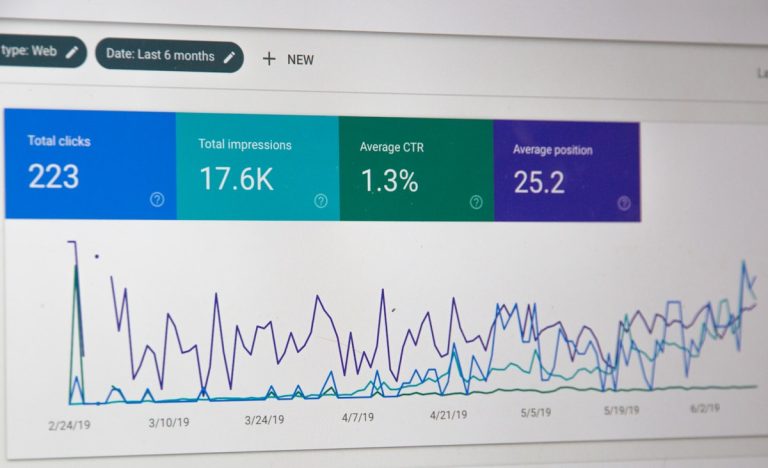
The Dashboard Trap: Why Traditional Competitor Analysis Stalls Growth
We have all been there. You open a legacy analytics platform, download three massive CSV files, and spend your entire Friday cross-referencing keyword overlaps, backlink profiles, and ad spend. By Monday morning, that data is already out of date. Modern digital marketing moves at breakneck speed, yet most businesses still rely on manual, backwards-looking checks. Traditional tools show you what rivals did last month, leaving you to piece together the narrative yourself. This article examines why legacy intelligence workflows break down and how modern automation bridges the gap between raw data collection and live execution.
If your marketing team spends dozens of hours pulling data instead of executing campaigns, your pipeline suffers. Effective competitor analysis should not be a chore that yields static spreadsheets; it must be an active, continuous feedback loop. Rather than logging into disconnected portals and guessing which gaps matter most, brands now need automated systems that spot competitive shifts the moment they occur and generate verified strategies on demand.
What Legacy Intelligence Tools Get Right (and Where They Leave You Hanging)
Enterprise software like Semrush changed the search landscape by indexing massive amounts of SERP data. These platforms deserve credit for mapping the web. They give you keyword difficulty scores, estimate paid budgets, reveal rival backlink networks, and highlight landing pages that attract commercial clicks. If you want a deep diagnostic of an entire industry domain, legacy suites provide that baseline visibility.
Yet there is a fundamental catch. These platforms act as observation decks, not engines. They present charts, heatmaps, and keyword lists, but they leave the operational burden entirely on your shoulders. You must manually spot the keyword gap, draft the briefing doc, allocate budget, create the content, optimise for local intent, and push it live.
For small and medium enterprises, this model breaks quickly. SMEs rarely have dedicated departments to interpret dense dashboards every morning. The data sits idle, subscriptions renew, and competitors continue stealing organic share. Point tools tell you that you are losing ground, but they offer no hands-on execution to fix it.
The Real Shift: Static Reporting vs Autonomous Market Intelligence
To win against well-funded incumbents, you need to turn surveillance into immediate output. The gap between spotting an opportunity and launching a counter-campaign determines who captures market demand.
Manual competitor analysis assumes search habits remain static. In reality, rankings fluctuate daily based on algorithm updates, search generative experiences, and seasonal intent. If a competitor drops out of a valuable query or leaves an informational query poorly answered, you have a narrow window to claim that ranking. An automated engine flags the change immediately, produces content that answers the query better, and prepares the deployment while the opening exists.
To see how seamless tracking connects with channel-wide updates, read our guide on how to manage multi-channel with aiCMO. You can also Automate Your SEO with AI to eliminate manual gap-hunting altogether.
Where Traditional Audits Fail Modern Search: The Rise of AI and GEO Visibility
Traditional competitor research focuses almost entirely on classic blue-link organic search and pay-per-click auctions. While those channels remain vital, customer discovery has fundamentally fragmented. Consumers now rely heavily on conversational AI search models and hyper-local search engines to find vetted providers.
If your rival gets cited as the primary recommendation inside an AI answer engine, standard keyword dashboards will miss it completely. They are blind to generative visibility metrics. You might appear to hold rank four on standard search results while your competitor captures 80% of actual purchases through AI-synthesised summaries.
Modern brands must track both classic rankings and their presence inside generative engines. If you want to benchmark where your business currently sits across language models, explore how to check your brand’s AI visibility. To dominate location-specific and local-intent queries, you can Enhance Your Local Visibility without manually configuring regional landing pages for every town you serve.
Automating the Counter-Strategy: From Raw Metrics to Verified Action
Collecting competitor metrics without a direct bridge to execution is a waste of resources. High-growth teams operate on closed-loop feedback systems where intelligence triggers automated production.
Consider this real-world scenario. Your primary rival publishes a series of comparison guides targeting high-intent commercial keywords in your niche. In a legacy setup, your team might notice this during a monthly audit. You would schedule a strategy call, write a brief, assign a copywriter, and publish a response six weeks later. By then, the competitor has accumulated backlinks, user engagement, and strong topical authority.
An automated marketing operating system handles the situation with urgency:
– Detects the competitor’s newly indexed pages and extracted keywords within 24 hours.
– Assesses search intent, topical depth, and structured schema weaknesses on the rival domain.
– Prepares an authoritative, brand-aligned counter-piece designed to outrank the target page.
– Delivers a structured draft directly into your workspace for review.
By taking this approach, AI CMO: Unified AI Marketing Automation for Digital Growth removes the administrative friction that stalls campaign velocity. The system does the heavy lifting, yet keeps you in command. You maintain complete human-in-the-loop oversight through explicit permissions and signed approvals, ensuring your brand identity remains protected while your publishing velocity outpaces the market.
For straightforward setup instructions to connect your site directly to automated publishing workflows, check how to install and run the aiCMO WordPress Plugin beta.
The Hidden Cost of Agency Overheads and Tool Bloat
When businesses realise that point tools do not execute work, they often turn to marketing agencies. While agencies provide hands, they introduce significant friction: opaque retainers, long turnaround cycles, junior account managers, and endless strategy slide decks that lead nowhere.
SMEs often end up paying thousands of pounds each month simply to receive repackaged reports exported from standard SEO tools. That is not strategic growth; that is expensive administrative reporting.
Instead of burning capital on high markups, forward-thinking businesses use hands-on AI systems to monitor rivals, design content strategies, and prepare technical site improvements. This shift allows lean teams to run sophisticated multi-channel operations that rival enterprise marketing departments. To establish these automated processes efficiently, you can Start Your SEO Autopilot and let governed AI systems protect your organic acquisition pipelines.
Transforming Insights into Market Leadership
Running a business is hard enough without having to decipher analytics dashboards every weekend. Tracking your rivals should not mean drowning in rows of spreadsheet data. It should give you a distinct, clear tactical advantage: knowing what your competitors are doing, identifying their oversights, and deploying counter-measures before they capture your buyers.
Legacy platforms will always have their place for deep manual research, but growth belongs to agile teams that automate their workflow. By combining live competitive monitoring with automated drafting, multi-channel distribution, and strict human governance, you eliminate blind spots and scale your footprint sustainably.
Stop letting valuable market intelligence gather dust in unread dashboards. Take command of your organic strategy, close critical keyword gaps, and Automate Your Competitor Analysis with a platform designed to turn raw data into continuous digital growth.