Stop Drowning in Spreadsheets: The Real Power of Centralised Marketing Intelligence
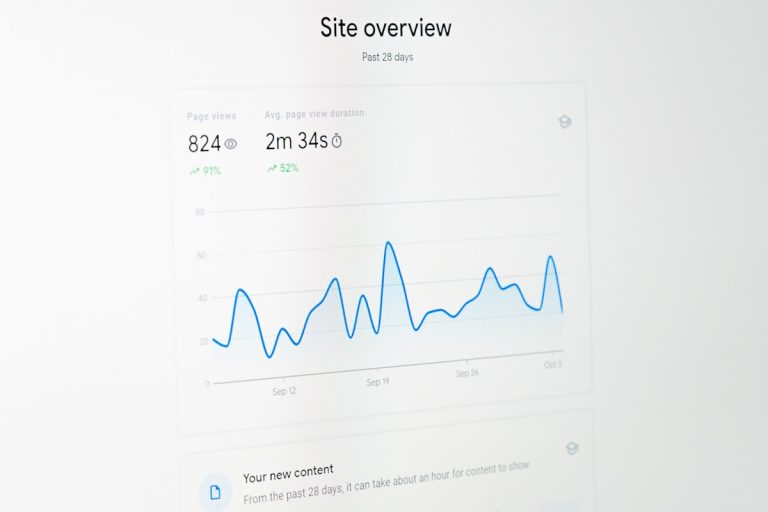
Most modern marketing teams spend Monday morning copying numbers from five different browser tabs into a messy spreadsheet. You check your organic traffic in one portal, pull social impressions from another, dig through local search performance, and hope the formulas still work. It is slow, prone to human error, and frankly exhausting. When your data lives in separate silos, you are never looking at your real performance; you are looking at yesterday’s guesswork. Real-time growth demands a modern automated analytics dashboard that pulls every critical channel into a single live command centre, giving founders and marketing leaders instant clarity without the manual slog.
Instead of paying massive fees to traditional agencies that provide static PDF reports at the end of every month, smart organisations are moving towards autonomous systems. Adopting an automated analytics dashboard for digital growth lets you monitor shifts in real-time, spot sudden ranking dips, and coordinate daily execution smoothly. Traditional business intelligence tools like Domo or Tableau can organise raw metrics, but they leave the hard execution work entirely on your shoulders. Modern enterprises need intelligence connected directly to execution, turning cold data points into immediate, approved marketing actions.
The Flaw in Legacy Business Intelligence Tools
Legacy analytics platforms solved an important problem ten years ago: they built visual connectors for enterprise databases. Tools such as Domo, Tableau, or Power BI are brilliant at aggregating gigabytes of supply chain logs, financial transactions, and server uptimes. Yet when it comes to hands-on digital marketing, these legacy systems reveal significant limitations.
First, standard BI tools require dedicated data engineers just to set up and maintain pipelines. If an API updates or your schema shifts, dashboards break. Second, they are completely passive. A legacy chart might show you that organic traffic dropped 18% in Manchester this week, but it will not diagnose why, nor will it generate optimised content to fix the gap.
Marketing moves too fast for passive dashboards. If your tool only shows you the fire without handing you the fire extinguisher, your team still spends hours troubleshooting. You need a platform that unifies measurement with real, governed marketing tasks.
Why Real-Time Ingestion Changes Everything
Consider what happens during a routine week at a growing SME. You publish three educational articles, roll out local landing pages for high-intent locations, and distribute updates across your social profiles.
With manual tracking, you might wait two or three weeks to review your Google Search Console performance and web traffic logs. By then, any momentum you had is gone.
An automated analytics dashboard operates on continuous ingestion:
- Live Data Pipelines: The moment a search engine indexes a new URL or your local query visibility changes, the dashboard registers the movement.
- Elimination of Human Error: No mistyped conversion rates or broken spreadsheet formulas skewing your board reports.
- Democratised Access: Anyone on the team, from founders to junior managers, can understand performance without needing a computer science degree.
- Integrated Execution Context: Numbers are tied directly to recent campaign changes, so you instantly see which updates drove positive movement.
When your dashboard actively monitors your performance footprint, you can deploy targeted search updates immediately. If you want to cut through manual keyword management, you can automate your SEO with AI and let smart pipelines keep your rankings climbing.
Bridging the Gap: From Data Ingestion to Actionable AI
Data without execution is merely trivia. Knowing your impression count jumped 40% means very little if you cannot trace which customer intent drove that spike.
This is where autonomous AI marketing operations rewrite the rules. Rather than using disconnected point tools (one for analytics, one for writing, one for rank tracking), full-stack platforms link strategy directly to verified execution. For businesses scaling their search presence, learning how to onboard & manage your brand with aiCMO shows how an automated system ingests your brand guidelines, links your data streams, and proposes continuous updates safely.
Modern teams rely on an intelligent automated analytics dashboard that does not just plot lines on a graph, but actively suggests the exact copy edits, blog outlines, and channel tweaks required to keep key metrics green.
Instead of dealing with mysterious “black-box” systems that alter web pages without permission, high-trust platforms use governed workflows. The system monitors live performance, pinpoints opportunities, prepares the required content, and requests clear human approval before publishing. You get complete operational speed while retaining absolute control over your brand voice.
Mastering Modern Search: Traditional SEO Meets GEO Visibility
The search landscape is undergoing its biggest shake-up in two decades. Ranking on standard search engine result pages is no longer enough. Modern buyers turn to conversational engines, map packs, and location-aware assistants to make purchase decisions.
If your reporting setup only tracks desktop web rankings, you are operating half-blind. You must measure how well your brand surfaces in regional and conversational contexts.
| Traditional SEO Tracking | AI-Driven Unified Tracking |
|---|---|
| Focuses on nationwide keyword ranks | Tracks regional, intent-based, and local queries |
| Manual weekly pulls via static tools | Continuous automated data streams |
| Disconnected from publishing tools | Directly tied to continuous content deployment |
| Ignores generative answer visibility | Tracks visibility across AI engines and map packs |
Capturing hyper-targeted local search traffic requires constant, granular monitoring across distinct postcodes and regions. Teams that want to dominate regional discovery can master GEO targeting with AI to guarantee their locations appear right when local searchers are ready to buy.
To maintain real authority across multiple platforms, learning how to manage multi-channel with aiCMO helps your team maintain consistent messaging across blogs, social networks, and local touchpoints without doubling your operational headcount.
What Real Operational Transparency Looks Like
Traditional marketing agencies often hide behind complicated, jargon-filled summaries. They highlight “vanity metrics” like raw impressions while downplaying stagnant organic conversion rates and flat pipeline numbers.
An automated analytics dashboard brings absolute transparency to every marketing initiative:
- Clear Action Logs: Every content update, meta tag revision, and target keyword adjustment is logged against actual performance movements.
- Idempotency and Verification: Updates are verified so that changes do not create duplicate content or overwrite critical structure.
- True ROI Calculation: By calculating the operational hours saved alongside real organic traffic gains, businesses can accurately assess performance value without relying on agency guesswork.
In addition to standard Google performance, tracking presence across modern search tools has become vital. Knowing how to check your brand’s AI visibility ensures you know precisely when modern conversational search engines reference your business.
To accelerate regional performance even further, businesses can boost local search rankings by deploying targeted local content workflows that sync directly with their core reporting suite.
The Future: Autonomous Marketing with Human-in-the-Loop Control
The end goal of modern marketing technology is not to replace human creativity or commercial judgment. It is about removing the repetitive, low-value administrative tasks that prevent teams from doing their best work.
Spending twenty hours a month manually collecting analytics, formatting slides, and running basic audits is an inefficient use of talent. By deploying a comprehensive automated analytics dashboard, you delegate the data aggregation, data cleaning, and performance monitoring to intelligent algorithms.
Your team shifts from frantic spreadsheet wranglers to decisive strategic managers. You review live insights, approve high-impact marketing updates with a single click, and watch your multi-channel digital visibility compound week after week.
Modern enterprises cannot afford to operate on fragmented data or month-old agency slide decks. Connect your channels, streamline your reporting, and drive measurable digital scale by adopting an integrated automated analytics dashboard built for modern business growth.