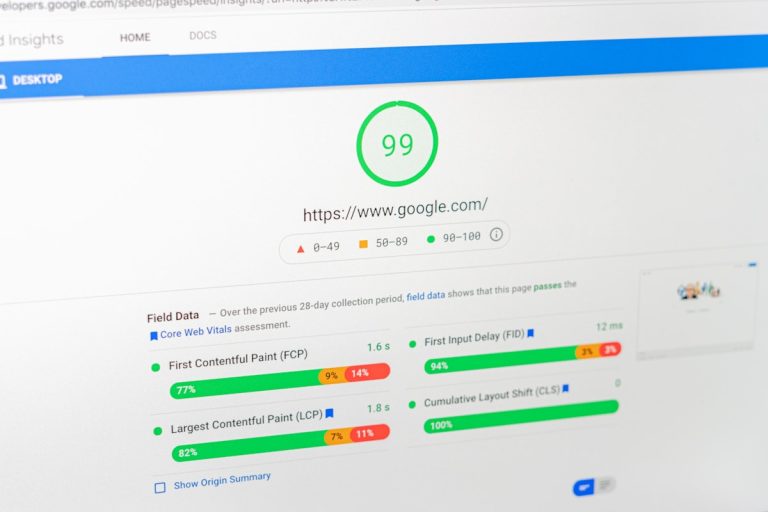
Traditional WordPress SEO autopilot plugins fail at Generative Engine Optimisation (GEO) because they run inside isolated PHP environments built for keyword density rather than cross-web entity corroboration. Conversational answer engines such as ChatGPT, Perplexity, and Google AI Overviews do not simply count keywords on a single web page; they synthesise verified entities, cross-reference external sources, and evaluate real-time authority signals across the wider web. To secure citations in generative search, websites must shift heavy background processing from local server scripts to dedicated cloud architecture designed for multi-source validation.
Escaping the Green Light Trap: The Reality of Modern Search
For nearly twenty years, digital teams followed the exact same ritual. You opened WordPress, drafted an article, stared at the plugin box at the bottom of the screen, and tweaked sentences until a little round light turned green. It felt like honest work, but that green light is pure theatre. Legacy plugins merely confirm whether you repeated a phrase four times, capped a meta description at 160 characters, and remembered to slap alt text on a stock graphic. Conversational AI does not read pages like a 2008 crawler. Systems like Perplexity, Claude, and Google AI Overviews evaluate interconnected facts, assess topical consensus across external sites, and extract structured answers. Running your growth strategy on a local script leaves your company invisible to the models shaping buyer decisions. Modern growth demands true SEO Automation that handles technical indexing and generative discovery off-server without exhausting your hosting resources.
Today, potential buyers rarely browse through ten plain blue links. Instead, they prompt Perplexity for software comparisons, ask ChatGPT for qualified provider recommendations, and read synthesised answers in Google AI Overviews. If your entire discovery strategy depends on a local PHP script running on shared or managed hosting, your content cannot compete. Generative discovery requires monitoring how large language models interpret your brand, generating connected schema, and distributing authority signals across the web. True modern automation unifies traditional organic ranking, direct answer extraction, and generative citations in one streamlined workflow.
Why Local WordPress SEO Plugins Fail at Generative Engine Optimisation
WordPress remains a great content management system, but its underlying architecture dates back decades. Plugins execute using your web server’s resources: your local PHP workers and your MySQL database. When you task a traditional plugin with modern search tasks, you hit structural bottlenecks that actively damage your performance.
1. Excessive Server Resource Consumption
Whenever a local SEO plugin tries to crawl internal links, generate dynamic schema graphs, or run automated audits across hundreds of posts, it consumes local CPU and memory. On typical hosting environments, this causes severe issues:
- PHP worker threads get clogged instantly during automated background scans.
- Time to First Byte (TTFB) frequently exceeds 1,500ms, stalling content delivery.
- MySQL database tables suffer query locks, degrading Core Web Vitals and lowering search rankings.
When a server takes too long to respond, traditional web crawlers reduce their crawl budget. More importantly, real-time AI retrieval bots abandon requests that exceed tight timeout limits.
2. Complete Blindness Beyond the Local Database
A local plugin knows only what exists within its own WordPress database tables. It can verify that your keyword appears in your H1, but it cannot see whether external authority sources corroborate your claims. Generative models evaluate claims by comparing them against authoritative third-party references. If your website claims that your software is an enterprise-grade platform, yet industry directories classify you as an entry-level tool, AI engines spot the contradiction and discard your authority. A local script cannot monitor external consensus or fix cross-platform discrepancies.
3. Lack of LLM Citation and Sentiment Tracking
Traditional tools monitor XML sitemaps and index status. They have zero capability to detect when Claude or Perplexity cites your primary competitor for a commercial query. They cannot alert you if ChatGPT displays outdated pricing or hallucinates details about your services. Operating digital marketing without measuring visibility inside large language models leaves you blind to where modern search traffic actually goes.
4. Low-Quality AI Content Generation Loops
Several recent plugins added a simple API key connection to an LLM and branded themselves as complete autopilots. These tools typically generate repetitive, formulaic content directly into the WordPress post editor. Language models recognise and ignore generic boilerplate. Search engines and AI answer engines look for verifiable data, proprietary insights, and structured entity associations, not low-grade filler designed merely to trigger an on-page plugin checklist.
Traditional SEO vs AEO vs GEO: Understanding Discovery Layers
Search discovery is no longer a simple matter of ranking web pages for single queries. Today, search operates across three distinct computational layers:
Traditional SEO (Search Engine Optimisation)
Traditional SEO focuses on helping search engine crawlers index web pages to rank them in standard search results. Optimisation involves keyword placement, title tags, internal linking, and acquiring backlinks. A user enters a query, and the search engine returns a list of indexed links. This is standard document retrieval.
AEO (Answer Engine Optimisation)
Answer Engine Optimisation focuses on direct factual extraction. It powers featured snippets, voice search answers, and quick reference boxes. Algorithms scan indexed text to find direct, unambiguous answers to specific questions. Succeeding in AEO requires clean definitions, structured lists, and explicit question-and-answer formats.
GEO (Generative Engine Optimisation)
Generative Engine Optimisation governs conversational AI platforms like ChatGPT, Perplexity, Claude, and Google AI Overviews. These systems do not simply pull a pre-written snippet from a single page. They process user queries in real time, fetch information from multiple web sources, evaluate consensus across independent domains, and synthesise a custom response with cited sources. Success in GEO requires building a cohesive brand entity that AI models trust and cite as an authoritative reference. You can review our detailed walkthrough on how to check your brand’s AI visibility to see how models parse entity signals across the web.
| Discovery Layer | Primary User Interface | Core Extraction Mechanism | Primary Success Metric | Operational Scope |
|---|---|---|---|---|
| Traditional SEO | Search result pages (blue links) | Keyword frequency, metadata, backlinks | Organic rank position, organic clicks | Single page or domain |
| AEO | Search snippets, voice assistants | Direct question-to-answer parsing | Featured snippet wins, direct answers | Isolated content modules, FAQ blocks |
| GEO | Conversational LLMs, AI Overviews | Multi-source entity consensus and synthesis | LLM citation frequency, brand sentiment | Full cross-web digital footprint |
How Do AI Search Engines Select Sources to Cite?
Generative search engines do not pick reference links at random. They apply structured multi-step retrieval pipelines before producing an answer. Understanding this process helps explain why local plugins cannot optimise for citations.
Step 1: Query Parsing and Entity Recognition
The AI evaluates the user prompt, strips away conversational filler, and extracts the core commercial entities and user intent. If a user asks for recommendations on business software, the model identifies the category, the target operational scale, and the required functional criteria.
Step 2: Multi-Index Retrieval
The platform queries search indexes, real-time web crawlers, and structured knowledge graphs. It collects passages and summaries from dozens of distinct digital properties, not just a single high-ranking blog post.
Step 3: Cross-Source Corroboration
The model cross-checks facts across separate web domains. When independent industry sites, authoritative listings, and company resources all state the same verifiable facts regarding a service, the model accepts the information as reliable. If a statement appears exclusively on your own domain with no corroborating evidence, the engine discounts it.
Step 4: Contextual Synthesis and Summary Formulation
The engine generates a custom answer tailored to the user’s specific context, combining verified facts from the most reliable sources retrieved during the search phase.
Step 5: Citation Placement
The platform inserts hyperlinked citations pointing back to the pages that provided concise, structured, and corroborated data. If your page provides vague assertions while an alternative resource offers clean, authoritative data, the AI cites your rival instead.
The Architecture of True Modern GEO Infrastructure
You do not need to abandon WordPress to master generative search. You simply need to separate content management from the computational work of search automation. Real GEO infrastructure requires four essential cloud pillars:
1. Off-Server Cloud Processing
Moving heavy automation tasks off your web hosting server protects your performance. Cloud infrastructure handles site audits, builds multi-layered schema graphs, and monitors technical crawlability without touching your PHP workers. Your Time to First Byte stays fast, and your Core Web Vitals remain strong. You can learn how modern systems integrate smoothly by reviewing our guide on how to install and run the aiCMO WordPress Plugin beta.
2. Continuous Generative Search Tracking
You cannot optimise what you do not measure. A modern search strategy requires real-time monitoring of brand citations across conversational engines. Tracking key commercial prompts in ChatGPT, Perplexity, and Google AI Overviews shows you where your brand is recommended, where it is overlooked, and which competitors hold the current advantage.
3. Machine-Readable Knowledge Graphs
AI systems depend on structured entity declarations. Your digital presence requires valid JSON-LD schema that defines your organisation, offerings, and leadership. Linking these definitions across official social profiles and trade directories using schema sameAs properties gives language models the verified connections they need. Combining structured data with dedicated tools ensures regional entity signals are correctly indexed for location-specific AI queries.
4. Cross-Channel Authority Signals
Language models read external discussions and industry channels to gauge brand reputation and authority. When technical claims on your website are supported by active professional discussions on platforms like LinkedIn, conversational models gain greater confidence in your brand authority. Review our documentation on how to manage multi-channel with aiCMO to discover how unified multi-channel signals strengthen domain credibility.
| Technical Feature | Local WordPress SEO Plugin | Unified Cloud AI Platform |
|---|---|---|
| Execution Layer | Local server (PHP and MySQL) | External cloud processing |
| Hosting Impact | Increases TTFB, strains server memory | Zero impact on hosting resources |
| Data Scope | Single domain, on-page copy only | Full cross-web entity footprint |
| LLM Tracking | None; blind to generative models | Continuous citation and sentiment tracking |
| Content Strategy | Keyword density checklists | Fact-dense, structured entity content |
| Multi-Channel Scope | None or fragmented | Integrated multi-channel management |
| Technical Updates | Manual per-page adjustments | Automated background synchronisation |
How AI CMO Delivers Unified Marketing Automation
Rather than forcing marketing teams to balance conflicting plugins, external analytics dashboards, and costly agency fees, AI CMO provides a comprehensive platform that covers traditional search, AEO, and GEO in one place.
SEO & GEO Autopilot
The central engine is the SEO & GEO Autopilot. Operating continuously in the cloud, this module manages technical site health, synchronises structured schema, balances internal link distribution, and formats data for extraction by AI search crawlers. It eliminates manual per-post checklist adjustments, preserves hosting speed, and keeps your search setup aligned with ongoing search engine updates.
AI Visibility Tracker
The AI Visibility Tracker continuously monitors commercial queries across Perplexity, ChatGPT, and Google AI Overviews. It records where your company earns citations, evaluates the sentiment of generated answers, and detects content gaps so you can systematically improve your presence in AI-driven search.
AI Content Strategist & Generator
Winning citations requires factual, well-structured content designed for machine parsing. The AI Content Strategist & Generator builds comprehensive editorial plans based on real search intent. It produces entity-dense guides, detailed comparison tables, and direct factual summaries formatted specifically for AI citation extraction, cutting down manual content creation time.
LinkedIn Chrome Plugin
Search authority works best when connected to commercial outreach. The LinkedIn Chrome Plugin bridges organic search authority with active social networking. It enables your team to automate personalised messaging, monitor relevant discussions, and engage directly with key prospects who discover your brand through organic search channels.
Five Steps to Transition from Local Plugins to Cloud Automation
Upgrading your technical setup does not require rebuilding your entire site. You can transition smoothly by following these five practical steps:
Step 1: Benchmark Your AI Search Visibility
Before modifying site settings, assess your existing footprint across generative search platforms. Open ChatGPT, Perplexity, and Google AI Overviews. Test ten commercial queries that potential customers would naturally use, such as: “What are the most reliable platforms for [your sector]?”
Examine the results:
- Does the AI include your company in its summary?
- Are your core capabilities described accurately?
- Which competitors are recommended ahead of you?
- Which third-party URLs appear as supporting citations?
This simple benchmark clarifies your existing visibility gaps.
Step 2: Remove Resource-Heavy Local Plugins
Deactivate plugins that run regular internal crawls, automated broken-link scans, or real-time keyword analysis directly on your WordPress server. Keep a lightweight tool for custom URL paths and primary page titles, but hand off deep site auditing, complex schema generation, and entity mapping to cloud-based systems. Your server response times and Time to First Byte will improve immediately.
Step 3: Implement Interconnected Schema Markup
AI engines require clear, machine-readable definitions. Ensure your site uses valid JSON-LD schema that details:
- Your legal trading entity, registered address, and canonical website URL.
- Your distinct products or service packages, using standard industry terms.
- Verified sameAs links connecting your domain to social profiles, corporate registries, and authoritative directories.
Cloud automation keeps these structured graphs up to date across all pages without requiring manual edits every time you publish.
Step 4: Restructure Content for AI Extraction
Review your main commercial articles and update them for machine readability:
- Provide immediate answers: Include a concise two-to-three-sentence factual answer right below each primary heading.
- Use clear Markdown tables: Conversational engines parse comparative attributes easily from structured tabular data.
- State facts clearly: Explain key technical terms plainly without unnecessary marketing buzzwords.
- Include concrete details: Replace vague statements with verified numbers and direct specifications.
Step 5: Connect Search Presence to Professional Outreach
Convert organic search visibility into measurable business results. As your website begins securing citations and climbing traditional rankings, maintain an active professional profile. Use the LinkedIn Chrome Plugin to connect directly with decision-makers in your sector, share authoritative content, and turn inbound search interest into commercial opportunities.
Frequently Asked Questions
Can I continue using WordPress if I want to rank in AI search engines?
Yes, WordPress is entirely capable of ranking in generative search engines. The issue is not WordPress itself, but the reliance on local server plugins to handle complex optimisation tasks. By using WordPress for content management while delegating entity management, technical audits, and citation tracking to cloud infrastructure, your site remains fast and accessible for conversational engines.
How does Generative Engine Optimisation differ from traditional SEO plugins?
Traditional SEO plugins evaluate individual pages on your server, checking on-page attributes such as keyword density, meta descriptions, and header tags. Generative Engine Optimisation assesses how large language models comprehend your entire business across the open web, focusing on cross-source corroboration, authoritative citations, and factual synthesis across systems like ChatGPT and Perplexity.
Why do local WordPress SEO plugins slow down web hosting?
Local plugins use your server’s local PHP workers and MySQL database to run background audits, build schema graphs, and scan internal links. When these resource-intensive processes execute, they exhaust server memory and increase Time to First Byte (TTFB). Cloud-based platforms handle these calculations externally, keeping your web server dedicated to loading pages quickly for users and bots.
How can I track whether conversational AI models cite my brand?
Standard analytics tools cannot record conversational queries or zero-click AI responses. Tracking your presence requires specialised tools like the AI Visibility Tracker, which runs simulated commercial prompts across major generative models, records where your company appears in cited sources, and tracks sentiment trends over time.
Building Long-Term Organic Authority
Search behaviour is experiencing its most important evolution in decades. The practice of chasing green plugin lights on local dashboards is no longer enough to maintain organic growth. Generative search summaries and AI assistants are actively guiding customer buying decisions across every industry.
Websites that rely solely on outdated local plugins risk losing traffic as conversational engines answer user questions directly on search pages. In contrast, businesses that adopt cloud-based entity management and comprehensive solutions ensure their content is verified, cited, and recommended.
Take control of your structured data, track your brand across generative engines, and build credible authority across professional networks. Deploy dedicated SEO & GEO Autopilot to protect your server performance and future-proof your digital presence today.