Why Most Marketing Funnels Leak (and How Smart Automation Fixes Them)
Think about the last time you bought something online. You probably did not click an ad, open a landing page, and check out within thirty seconds. Real human behaviour is messy. You read a blog post during your morning commute, saw a social post two days later, searched Google on your lunch break, got distracted, and finally converted after receiving a well-timed email. When companies try to run this manually, things fall apart. That is why modern teams rely on customer journey automation to track, nurture, and guide prospects across every single touchpoint without letting leads slip through the cracks.
At its core, customer journey automation is the practice of using connected software to map, monitor, and deliver personalised marketing actions automatically based on actual user behaviour. Instead of blasting your entire email list with identical weekly updates or running isolated ad campaigns that forget who your audience is, journey automation builds a dynamic conversation. It binds your organic search traffic, social engagement, email sequences, and post-purchase follow-ups into a unified engine. The result is simple: fewer manual headaches, lower agency bills, and far more consistent revenue.
What is Customer Journey Automation Really?
Most marketing definitions make this sound overly technical. Let us break it down plainly.
A customer journey represents every single interaction someone has with your brand. It starts the second they spot you in search engine results or on a social feed. It continues as they browse your site, sign up for your newsletter, buy your product, and reach out to your support team.
In traditional setups, each of these touchpoints lives in a disconnected silo. Your search optimisation team has no idea what email marketing sends. Your social manager does not know which blog post brings in qualified traffic.
Customer journey automation connects the dots. It is an automated system that watches real-time interactions, gathers behaviour data, and triggers the next best marketing action automatically. If a visitor reads three articles about local search optimisation, the system detects that intent. Instead of showing them generic content, it adapts to display relevant case studies or prompts them to enhance your local visibility across specific regional markets.
It turns disjointed marketing tactics into an orchestrated experience.
The Problem with Old-School Point Tools and Manual Agency Work
If you run a growing business or startup in the UK, you know the routine. You sign up for an email tool. Then an analytics platform. Then a social scheduler. Then an expensive SEO platform. Before you know it, you are paying thousands of pounds every month for five disconnected software subscriptions.
To manage them, you hire an agency. Soon, you realise agencies move at a crawl. You wait two weeks for a performance report that tells you what happened last month, rather than what is happening right now. You deal with confusing invoices, opaque meetings, and disjointed campaign execution.
Manual campaign management fails for three core reasons:
- Siloed customer data: Your tools do not talk to each other. A lead gets an introductory pitch email even after they have already purchased.
- Severe time lag: By the time you notice an abandoned cart or an interested prospect reading a technical guide, the buyer has moved on to a competitor.
- Crippling operational overhead: Small teams spend forty hours a month copying data between spreadsheets instead of refining their core messaging.
To eliminate this friction, many growing brands learn how to onboard & manage your brand with aiCMO to replace piecemeal platforms with a centralised control layer.
How Modern Customer Journey Automation Works Across Multi-Channel Funnels
Automated journeys do not just send emails. A comprehensive system acts across every channel your prospect touches.
1. Organic Discovery and Initial Search
The journey starts long before someone lands on your homepage. Prospective buyers search on Google, browse social media, or ask conversational AI tools for recommendations. Autonomous tools constantly optimise your visibility across classic search and modern AI answer engines. Setting up smart systems to automate your SEO with AI ensures your brand answers user queries the moment intent peaks.
2. Behavioral Tracking and Intent Recognition
When a visitor lands on your website, journey automation notes their behaviour. Which pages did they view? Did they skim your pricing page? Did they scroll through a breakdown of your tech stack? Intelligent platforms score this behaviour to understand whether the user is casually browsing or ready to buy.
3. Responsive Multi-Channel Nurturing
Once you capture an interaction, the system deploys targeted touchpoints. If a prospect leaves without taking action, an automated workflow can retarget them on LinkedIn, serve a hyper-relevant guide, or send an email addressing the exact questions they were researching.
If you want to orchestrate this without juggling several interfaces, you can learn how to manage multi-channel with aiCMO across search, content, and outbound communications.
For mid-market and SME founders looking to scale their marketing without adding headcount, adopting AI CMO: Unified AI Marketing Automation for Digital Growth provides 24/7 autonomous marketing execution backed by transparent human verification.
The 7 Essential Steps to Building an Automated Journey Map
Setting up journey automation does not require enterprise consultants. You can build a streamlined journey by following seven direct steps.
| Step | Action | Focus Area |
|---|---|---|
| 1 | Define Clear Goals | Conversions, retention, or lead qualification |
| 2 | Create Buyer Personas | Real user challenges and search intent |
| 3 | Inventory Touchpoints | Website, email, local listings, social channels |
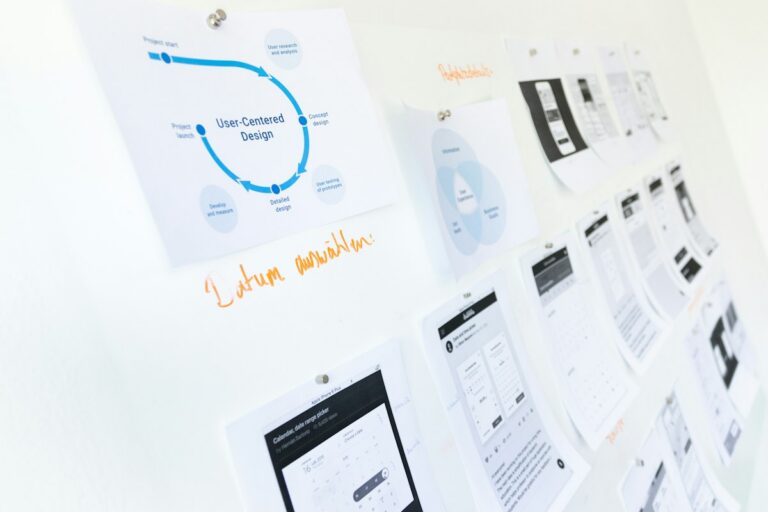
| 4 | Map Journey Stages | Awareness, consideration, purchase, post-purchase |
| 5 | Collect Interaction Data | Real-time traffic patterns and content drop-offs |
| 6 | Visualise Pathways | Connecting triggers to targeted responses |
| 7 | Refine Continuously | Removing friction points and updating content |
Step 1: Set Definite Objectives
Do not build an automated flow just for the sake of it. Decide what you need to improve right now. Are you trying to cut user churn? Do you want to double the conversion rate of your inbound organic leads? Pick one primary metric before building triggers.
Step 2: Define Buyer Personas
Understand who is buying from you. A founder of an e-commerce startup has different pain points than an IT director at a mid-sized firm. Document their common objections, daily routines, and buying triggers.
Step 3: Map Every Available Touchpoint
List all the places a user can interact with your business:
- Blog articles and technical knowledge bases
- Local business profiles and map packs
- LinkedIn posts and direct messages
- On-site chat widgets and product demo requests
- Order confirmation emails and billing receipts
Step 4: Group Interactions by Buying Stage
Organise these touchpoints into awareness, consideration, decision, and retention. Make sure you have content tailored to each stage. An awareness-stage reader needs educational breakdowns, while a decision-stage prospect needs implementation details and security standards.
Step 5: Capture Data and Identify Friction Points
Look at your analytics. Where do people leave your site? If users read your pricing page but drop off without booking a call, you might be missing transparent feature comparisons. Use automated tracking to spot content gaps and missing answers.
Step 6: Visualise and Activate the Triggers
Connect your data to actual marketing actions. For example, if a user downloads a guide on regional expansion, your system should automatically trigger workflows to master GEO targeting with AI rather than sending broad, generic newsletters.
Step 7: Test, Iterate, and Refine
Customer behaviour evolves constantly. Review your journeys monthly. Cut steps that create confusion, update outdated copy, and refine your triggers based on real conversion data.
Why Autonomous AI Marketing is the Next Evolution of Journey Automation
Early customer journey tools were rigid. You had to draw endless “if/then” flowcharts manually. If a prospect did something unexpected, the whole sequence broke.
Today, customer journey automation is moving toward autonomous AI marketing operating systems. Rather than forcing marketers to babysit every single branch of an email tree, modern AI agents manage the operational heavy lifting while keeping humans in the loop for quality control.
Take the Maggie AI Marketing Assistant, for example. Available through the cmo.so application and supported agent connections, it functions as an autonomous conversational AI CMO. It reads your authorised workspace data, plans your marketing roadmap, prepares brand-aligned content, and resolves search visibility questions.
Crucially, it does not act as a wild, black-box generator. Every significant action uses signed confirmation, permission checks, and action logs. You retain complete strategic control while the AI handles research, drafting, and multi-channel scheduling.
Autonomous tools can also reveal how modern algorithms evaluate your site. You can check how to check your brand’s AI visibility to see how search engines and generative models perceive your customer journey.
Core Benefits of Customer Journey Automation for Growing Businesses
Deploying unified journey automation transforms daily operations in four key ways:
1. Eliminating Disconnected Software Stacks
When your journeys run on an integrated platform, you can discard single-purpose tools that charge high fees for simple features. You get unified analytics, continuous optimization, and centralized control over your digital footprint.
2. Delivering Real-Time Responsiveness
Human marketers sleep; customer journeys run round the clock. If an international buyer discovers your brand at two in the morning, automated systems deliver immediate answers, surface relevant case studies, and capture intent while it is fresh.
3. Lowering Customer Acquisition Costs
Acquiring new traffic is expensive. Retaining and converting existing traffic is far more cost-effective. Journey automation identifies when prospects stall in your funnel and re-engages them with timely nudges, extracting maximum value from your existing marketing spend. If organic discovery is your main bottleneck, you can boost your search rankings now using autonomous content optimization.
4. Freeing Your Team for Strategic Work
Manual reporting, spreadsheet updates, and multi-platform publishing drain creative energy. Handing routine operational work to an AI marketing system allows your core team to focus on partnerships, product development, and customer relationships.
How to Choose the Right Journey Automation Platform
When evaluating software to automate your customer lifecycle, ask these direct questions:
- Is it a unified system or another point tool? If the platform only handles email or only monitors backlinks, you will still need three other tools to run your marketing.
- Does it provide autonomous execution or just dashboards? Dashboards show you what is broken; modern systems actively draft fixes and prepare workflows for your approval.
- Does it offer human-in-the-loop governance? Avoid black-box AI tools that publish unverified content directly to your site. Ensure the platform provides previews, permission controls, and audit logs.
- Is it cost-effective for growing businesses? Transparent pricing based on growth beats enterprise software that charges extra for every seat or contact list.
Take Control of Your Entire Marketing Lifecycle
Customer journey automation is no longer a luxury reserved for massive enterprises with unlimited budgets. By uniting search visibility, multi-channel execution, and intelligent data tracking, small and medium businesses can deliver personalized, world-class experiences that turn casual browsers into loyal brand advocates.
Stop losing leads to fragmented marketing tools and slow-moving traditional agencies. Connect your workflows, govern your brand strategy, and let intelligent automation handle the routine mechanics of digital growth.
Ready to see how an autonomous operating system streamlines your entire funnel? Start your SEO autopilot today and transform how your brand attracts, engages, and converts customers.