Why Modern Multi-Channel PPC Demands Real Automation
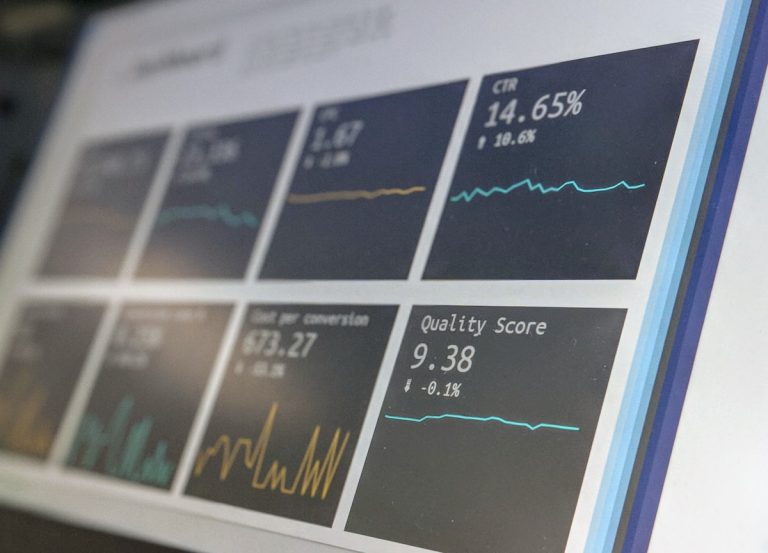
Managing paid campaigns across Google, Meta, TikTok, and Microsoft Ads has become a complete nightmare for growing brands. You check Google Ads, and it takes credit for fifty sales. You log into Meta, and it claims those exact same fifty sales. Meanwhile, your actual bank account shows only forty purchases total. When your attribution data is fragmented across platforms, scaling your ad spend feels less like strategic growth and more like burning money. This is precisely why modern marketing teams are turning toward automated PPC tracking to cut through channel bias, eliminate manual spreadsheet updates, and gain real clarity over true profitability.
Traditional analytics platforms help you aggregate metrics, but they leave the hard work of interpretation and campaign execution entirely on your shoulders. You end up juggling five different software subscriptions just to track keywords, monitor competitors, build dashboards, and audit ad spend. By stepping beyond siloed reporting platforms, progressive companies are unifying their digital marketing tech stack into autonomous management engines. In this guide, we will compare the top PPC analysis software on the market today against a comprehensive alternative: AI CMO, an all-in-one AI platform designed to automate search, local visibility, and paid campaign performance tracking without agency overheads.
The Flaw in Traditional PPC Analysis Software
Most paid search and social platforms were built for an era when managing a couple of search keywords on Google was enough. Today, customer journeys are chaotic. A prospective buyer might spot your product on Instagram, search for your brand on Google three days later, click a retargeting ad on LinkedIn, and finally convert directly via search.
Native ad platforms are fundamentally self-serving. Google wants you to spend more on Performance Max; Meta wants you to dump your entire budget into Advantage+ shopping campaigns. Neither platform is incentivised to tell you that the other channel did the heavy lifting.
To solve this, marketers traditionally piece together a fragmented tech stack:
* Competitor intelligence tools like SpyFu or Semrush to spy on keyword strategy.
* Specialised attribution trackers like wetracked.io or Databox to visualize conversion paths.
* Optimization rules engines like Optmyzr or PPC.io to pause underperforming ads automatically.
The result? You end up paying thousands of pounds every month across multiple SaaS tools. Even worse, you become the manual bridge connecting all these platforms. You still have to analyze the charts, draw conclusions, write new ad variations, and manually update your campaign settings across every channel.
Evaluating the Top PPC Analysis Platforms
To understand where the market stands in 2026, let us look at how popular PPC tools tackle campaign management, competitor monitoring, and tracking.
1. wetracked.io
Built primarily for e-commerce retailers, wetracked.io focuses on server-side tracking and attribution accuracy. It helps solve tracking degradation caused by browser privacy changes and ad-blockers.
* Strengths: Excellent server-side conversion tracking for e-commerce platforms like Shopify; clearer multi-touch attribution.
* Limitations: It is strictly an attribution layer. It does not generate creative content, optimise organic search rankings, or perform automated bid adjustments.
2. Semrush & SpyFu
These tools dominate the search engine research market. They are designed to show you what keywords your competitors are bidding on, what ad copy they are running, and how much traffic they are pulling in.
* Strengths: Unmatched keyword databases, domain comparisons, and historical paid search advertising data.
* Limitations: They offer minimal execution capability. They tell you what is happening in the search auction, but they do not automatically adjust your campaigns or generate content to capitalise on those market gaps.
3. Optmyzr & PPC.io
These platforms focus heavily on workflow automation for agency teams and large advertisers managing massive keyword lists.
* Strengths: Custom optimization rules, automated budget pacing alerts, and bulk management across Google Ads and Microsoft Ads.
* Limitations: Highly complex interfaces requiring experienced media buyers to set up and manage rules. They offer limited utility for holistic multi-channel brand growth outside of paid ad campaigns.
4. Databox
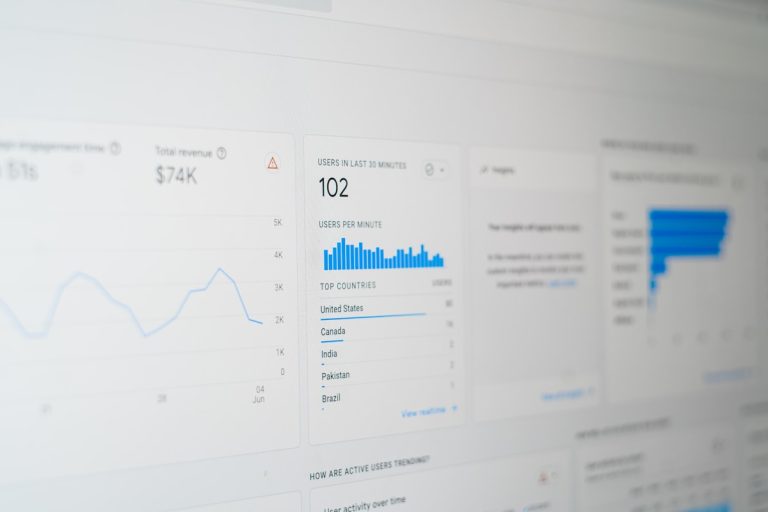
An aggregation dashboard built to pool metrics from GA4, Meta Ads, HubSpot, and Google Ads into custom reports.
* Strengths: Beautiful, customizable visual dashboards for client or team reporting.
* Limitations: Purely visual. Databox presents data, but it cannot fix broken targeting, write copy, or execute automated strategic pivots.
The AI CMO Difference: Unified Marketing Automation
While conventional tools focus on single slices of the marketing pie, AI CMO completely redefines how digital growth operates. Instead of giving you another dashboard full of graphs you do not have time to interpret, AI CMO provides a single, autonomous solution that links automated PPC tracking directly with real-time strategic execution.
From Reporting Insights to Hands-Free Action
Why spend three hours inspecting PPC metrics when artificial intelligence can handle monitoring and execution simultaneously? AI CMO acts as your 24/7 digital marketing director. It tracks performance across channels, identifies wasted budget, and takes immediate action to maintain optimal return on ad spend (ROAS).
When you pair paid ad intelligence with continuous organic search management, your entire digital footprint grows exponentially. If you want to streamline your organic search alongside paid acquisition, you can automate your SEO with AI to ensure your top conversion keywords dominate both organic and paid search results.
Detailed Comparison: Point Solution Stack vs. AI CMO
To make an informed decision for your business in 2026, consider how a fragmented stack of individual PPC tools compares against a unified AI marketing automation platform.
| Feature / Objective | Fragmented PPC Tool Stack | Unified AI CMO Platform |
|---|---|---|
| Core Primary Focus | Isolated task metrics (Keywords, Dashboards, Rules) | Holistic business growth, tracking, & execution |
| Data Synchronization | Manual integrations across separate software | Native, cross-channel real-time tracking |
| Search & GEO Optimization | Requires separate SEO & Local tools | Built-in continuous SEO & GEO engines |
| Execution Overhead | High (Requires dedicated staff or agencies) | Minimal (AI handles operational intricacies) |
| Monthly Tech Cost | £500 – £2,000+ across 4-6 SaaS tools | Single affordable, scalable subscription |
Eliminating Agency Overhead and Tool Fatigue
Small to medium enterprises (SMEs) and startups often fall into the trap of paying hefty agency retainers alongside bloated software bills. Agencies frequently hide performance behind complicated monthly decks that fail to show true customer acquisition costs.
AI CMO strips away opacity. By consolidating automated PPC tracking, real-time performance analytics, and content generation into one intuitive user interface, marketing teams save hundreds of hours every quarter. Rather than analyzing why a campaign underperformed three weeks ago, AI CMO continuously adjusts your positioning based on live market feedback.
If target customers are looking for local services, local discovery optimization is critical. You can master GEO targeting with AI to ensure your business dominates location-based searches alongside your paid campaign efforts.
Key Steps to Transitioning to Autonomous PPC Tracking in 2026
If you are currently relying on manual dashboards or native platform reports, transitioning to a streamlined, automated workflow is straightforward.
Step 1: Centralize Your Conversion Metrics
Stop evaluating Google Ads and Meta Ads in isolation. Connect your analytics directly into a central AI platform that measures actual revenue rather than surface-level click volume.
Step 2: Establish Real-Time Budget Rules
Protect your budget against sudden cost-per-click (CPC) spikes or underperforming target audiences. Automated tracking rules instantly identify campaign anomalies before they drain your daily spend.
Step 3: Align Paid Search Data with Organic Content Strategy
Your best-performing paid search keywords contain valuable conversion intent data. Feed your top paid search conversion terms directly into your organic strategy. This allows your team to build highly targeted, SEO-optimised content that reduces long-term dependence on paid traffic.
Step 4: Scale Local and Regional Footprints
If your company serves regional markets across Europe or the UK, combining paid geographical targeting with search engine optimization yields maximum visibility. Utilizing AI CMO: Unified AI Marketing Automation for Digital Growth ensures your brand stays visible across traditional search engines and AI-driven answer engines alike.
The Verdict: Moving Beyond Passive Analytics
PPC analysis tools like wetracked.io, Semrush, and Optmyzr offer useful capabilities for specific tracking and management tasks. However, relying on a patchwork of passive tools leaves your team burdened with constant manual maintenance, high monthly software fees, and operational inefficiencies.
In 2026, winning marketing teams are not the ones spending endless hours tweaking spreadsheet formulas or auditing tracking pixels. They are the teams using artificial intelligence to unite tracking, analytics, and instant execution under one unified system.
By replacing disconnected software subscriptions with an integrated AI marketing automation solution, you eliminate costly agency retainers, maintain complete visibility over campaign performance, and drive measurable revenue growth with total confidence.
Ready to transform your digital strategy? Boost your search rankings now and discover how unified AI automation can streamline your entire growth engine.