The Search Landscape Has Changed: Traditional SEO Meets Generative AI
Remember when getting to page one of Google was the ultimate marketing flex? You spent months researching keywords, building backlinks, and polishing title tags. Then, you watched your rankings climb inside your analytics dashboard. For years, standard search engine tactics ruled digital marketing. But the search engine results page looks completely different today. Millions of users now ask ChatGPT, Perplexity, and Google Gemini for direct answers instead of clicking through ten blue links. If you want to keep growing, you need to understand both traditional methods and modern AI visibility. To stay ahead of the competition, you should master your SEO performance tracking with AI CMO to keep every channel aligned.
This shift means your potential customers might never visit a traditional search engine to find your business. They ask an artificial intelligence model for a recommendation, get a short list of brands, and make a decision right there. So, how do you measure your brand presence when search engines rank web pages, but AI models generate custom answers? You need to combine structured web monitoring with generative engine evaluation. In this guide, we will break down the differences between traditional methods and AI model monitoring, explain why both matter, and show you how to streamline your entire strategy without paying for dozen different tools.
What Is Traditional SEO Performance Tracking?
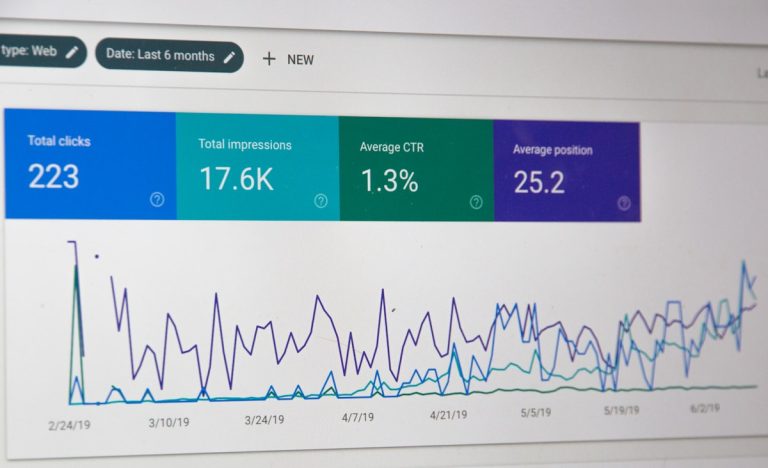
Traditional web tracking focuses on measuring how well your site ranks on traditional search engines like Google and Bing. It is a mature, quantitative discipline. You target specific search terms, publish content, and monitor how high your pages appear when someone searches for those exact phrases.
When you run standard monitoring, you focus on predictable, clear numbers:
- Keyword positions: Where your pages rank for specific search terms.
- Organic traffic: How many visitors arrive on your website from search engines.
- Click-through rate (CTR): The percentage of users who click your link after seeing it in search results.
- Domain metrics: The overall authority and backlink profile of your website.
- Technical performance: Page load speed, mobile usability, and crawling health.
Marketing teams often use tools like Google Search Console, Google Analytics, Ahrefs, or Moz to gather this data. These platforms show you numeric trends over time. If your rank drops from position two to position five for a valuable phrase, you notice it immediately and adjust your on-page content.
This form of measurement is essential because search engines remain a primary driver of web traffic. However, it only gives you half the picture. Knowing your Google rank does not tell you if ChatGPT recommends your product when a user asks for the best software in your niche. If you want to scale your organic presence automatically, you can automate your SEO with AI and save hours of manual analysis every week.
Entering the Era of LLM Tracking and Generative Engine Optimization
LLM tracking, often called Generative Engine Optimization (GEO), measures how Large Language Models perceive and present your brand. When a user asks an AI model like Claude or Perplexity for advice, the model does not return a list of links. It generates a plain-text answer based on its training data and real-time web retrieval.
Measuring your presence inside generative AI requires a completely different mindset. Instead of counting link positions, you analyse context, perception, and citations.
Key metrics in AI engine tracking include:
- Brand mentions: How frequently your brand appears in generated answers for industry queries.
- Sentiment analysis: Whether the AI speaks about your brand in a positive, neutral, or negative tone.
- Competitive frequency: How often the AI recommends you compared to your top market rivals.
- Citation sources: Which web pages, articles, or directories the AI cites to prove its point.
- Contextual relevance: The specific scenarios, industries, or user problems where the AI suggests your offer.
Tracking these signals is tricky because AI answers are dynamic. Ask ChatGPT a question at 9:00 AM, and you might get a slightly different answer at 2:00 PM. The prompt structure, user context, and model updates all impact the final output. That is why static tracking tools fail when applied to generative engines. To build strong regional authority across these AI systems, you can enhance your local GEO visibility across dynamic discovery channels.
SEO Tracking vs LLM Tracking: Key Differences Compared
To build a solid modern digital strategy, you must understand how these two approaches compare side by side.
| Feature / Metric | Traditional SEO Tracking | LLM & GEO Tracking |
|---|---|---|
| Primary Goal | Rank on page one of search engine results | Get cited and recommended in AI answers |
| Data Type | Quantitative (clicks, impressions, position numbers) | Qualitative (context, sentiment, brand mentions) |
| Output Stability | High (ranks stay stable day-to-day) | Variable (answers change based on prompts) |
| Main Platforms | Google, Bing, Yahoo | ChatGPT, Perplexity, Gemini, Claude |
| Control Level | High (via technical tweaks and content edits) | Indirect (depends on training data and sources) |
| Primary Metric | Organic traffic volume and CTR | Mention frequency and recommendation quality |
Traditional metrics tell you if people are finding your website through Google. AI metrics tell you if artificial intelligence trusts your brand enough to vouch for it. You cannot swap one for the other; you need both to win modern organic marketing.
Why Managing Both Manually Will Break Your Brain (and Budget)
Here is the frustrating reality for startups, small businesses, and busy marketing teams. Managing traditional search performance requires one stack of tools. Tracking your AI visibility often requires checking multiple AI platforms manually or buying brand-new, expensive niche tools.
If you try to manage all of this manually, you run into severe bottlenecks:
- Tool fragmentation: You end up paying separate subscriptions for keyword rank trackers, site audit tools, backlink checkers, and AI monitoring software.
- Agency bloat: Hiring traditional agencies to handle both standard optimization and generative AI strategy can cost thousands of pounds every single month.
- Data silos: Your search engine rankings sit in one dashboard, while your AI brand mentions sit in a spreadsheet, making it impossible to see the big picture.
- Wasted time: Copy-pasting prompts into ChatGPT, Perplexity, and Gemini to see if your brand pops up takes hours you should spend running your business.
When you are trying to scale efficiently, you need a single system that handles routine tasks automatically. You need a centralized platform to track and improve your SEO performance tracking seamlessly without toggling between a dozen browser tabs.
How AI CMO Unifies SEO and GEO in One Platform
This is where AI CMO changes the game. AI CMO is a comprehensive marketing automation platform built specifically for small to medium enterprises, startups, and modern marketing teams. Instead of forcing you to use separate platforms for search engines and generative models, AI CMO unifies both disciplines into a single, automated workflow.
Here is how AI CMO helps you master both search channels without the operational headaches:
1. 24/7 Operations for Search and Generative Engines
AI CMO operates around the clock. It continuously monitors your search engine presence alongside your AI engine mentions. It runs background audits, spots drops in rankings, and identifies missing citations across language models automatically.
2. Automated Content and GEO Targeting
You do not need to manually guess what content will satisfy search algorithms and AI models. AI CMO creates data-driven, custom content strategies tailored to your exact industry. It structures your articles, landing pages, and business information so search engine crawlers index them easily, while generative models crawl them for reliable facts. To stay ahead on every channel, you can start your SEO autopilot to handle daily content creation and optimization automatically.
3. Real-Time Unified Performance Tracking
Instead of cross-referencing three different analytics platforms, AI CMO provides a clean dashboard that connects organic search growth directly to AI recommendation share. You can see how your Google rank improvements correlate with increased mentions inside ChatGPT or Perplexity.
4. Direct Cost Savings
By replacing fragmented software subscriptions and expensive external agency retainers, AI CMO lowers your operational costs significantly. You get an automated marketing assistant that handles operational execution, allowing your team to focus on business strategy.
If you want to dominate dynamic search results without increasing your team size, you should master GEO targeting with AI to protect your brand presence everywhere users look for answers.
Actionable Steps to Audit Your AI Visibility Today
If you want to evaluate your current digital presence across both standard search and generative engines, follow these practical steps:
Step 1: Benchmark Your Traditional Search Baseline
Start by reviewing your standard metrics in Google Search Console. Identify your top ten converting keywords, check your average CTR, and fix any technical indexing errors. Ensure your site loads quickly and functions smoothly on mobile devices.
Step 2: Test Core Industry Prompts in AI Engines
Open ChatGPT, Perplexity, and Google Gemini. Type in broad questions your customers ask when looking for solution providers (e.g., “What are the best software options for [your industry] in Europe?”). Note whether your brand appears in the answers, what tone the AI uses, and which sources it cites.
Step 3: Optimize Your Structured Data and Facts
Generative engines love clear, factual, and well-structured information. Add Schema markup to your website, publish clear FAQs, and ensure your business details are consistent across major industry directories and review sites.
Step 4: Automate Your Strategy
Stop checking rankings and prompts manually every week. Switch to an automated system like AI CMO to run continuous tracking, generate optimized content, and manage your visibility automatically across every search landscape.
Conclusion: Master Your Complete Digital Presence
Digital marketing is no longer a choice between standard search engine strategies and new AI technology. Search engines provide steady organic traffic, while AI engines shape user perception and drive direct decisions. To win in today’s market, you must track, measure, and optimize both channels side by side.
Managing these moving parts manually leads to bloated budgets, fragmented analytics, and burnt-out teams. With AI CMO, you get a powerful, automated platform that handles your traditional search optimization and modern generative visibility in one place. You can eliminate expensive agency fees, streamline your workflow, and grow your brand presence faster than ever before.
Ready to streamline your entire digital growth engine? Visit AI CMO today and start unifying your SEO performance tracking and GEO strategy to take full control of your digital visibility.