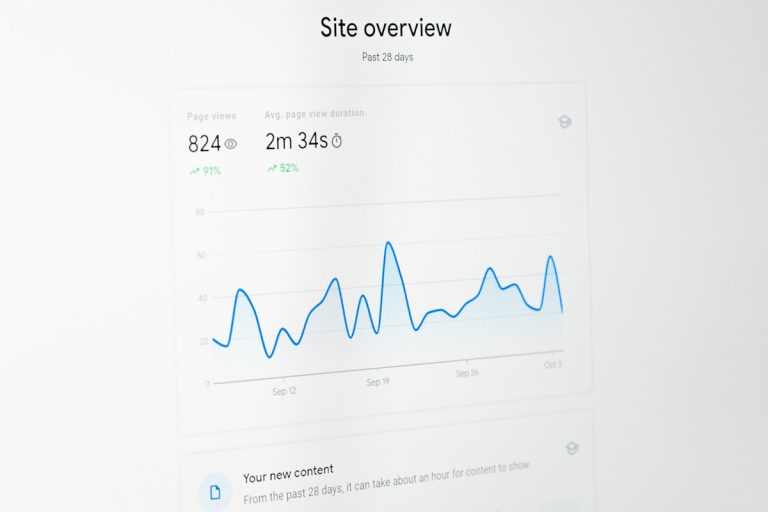
SEO automation examples demonstrate how modern digital growth teams run continuous technical checks, internal linking, content decay audits, and artificial intelligence visibility monitoring without spending days trapped inside manual spreadsheets. By combining event-driven triggers with rules and machine learning pipelines, teams routinely save 15 to 20 hours every week while safeguarding rankings on Google, Perplexity, and ChatGPT. These automated sequences repair broken redirects, flag stale copy, track large language model citations, and rebalance site architecture automatically.
Why Settle for Spreadsheet Drudgery? The Modern Search Workflow
We have all spent a sunny Friday afternoon stuck inside a clunky, lagging spreadsheet. You sit there checking canonical tags one by one, pasting status codes, and writing meta tags until your eyes hurt. It is boring, draining, and thoroughly unproductive. Worst of all, it keeps your sharpest minds from speaking to actual buyers, testing fresh messaging, and building high-converting campaigns. Looking closely at real SEO automation examples reveals that steady organic traffic does not require endless manual input; it needs dependable background systems that handle heavy data while you focus on growth decisions. If you want a platform that unites continuous tracking, editorial planning, and technical fixes in one spot, explore AI CMO: Unified AI Marketing Automation for Digital Growth.
Organic discovery has shifted dramatically. Rolling core updates, strict Core Web Vitals targets, and conversational answer engines mean running search campaigns entirely by hand is an uphill struggle. Legitimate search automation has nothing to do with spinning thousands of spammy, robotic blog posts that trigger immediate algorithmic penalties. Sustainable automation is about building reliable pipelines that audit technical health, map search intent, update structured data, and track brand citations day and night. Let us look at what keeps these workflows stable, then break down seven concrete SEO automation examples that deliver steady search performance without administrative burnout.
What Makes an SEO Automation Workflow Truly Reliable?
Before digging into specific workflows, let us clear up a common myth. Reliable automation is never an unmonitored script that spews out thin, generic articles. Dumping programmatic rubbish onto your site invites swift algorithmic penalties and builds massive technical debt. That is not smart automation; that is a trap.
True automation tackles the repetitive, data-heavy chores that exhaust your team: checking server logs, inspecting page load metrics, categorising query intent, and auditing backlink profiles. Handling this work in the background gives human marketers space to speak with industry experts, inject authentic voice into long-form pieces, and refine conversion journeys. Solid setups rely on a three-part framework:
- A Clear Trigger: An automated event starts the sequence. This might be a fresh URL published in your CMS, a sudden dip in impressions, a 404 response code, or a core algorithm update.
- An Intelligent Action: A rule-based system or language model evaluates the data by validating schema markup, parsing metadata, running a synthetic browser crawl, or sorting user intent.
- A Tangible Output: The workflow produces an immediate operational outcome. This could be a corrected redirect rule, an updated internal link, a structured content brief, or an instant Slack alert sent straight to your developers.
When your operations follow this trigger-action-output design, you eliminate human error and prevent technical decay before it hurts your bottom line. Here are seven practical SEO automation examples that give growth teams complete operational confidence.
1. Automated Intent Mapping and Continuous Content Audits
Manually reviewing hundreds of live URLs to see if they match true search intent is painful. An analyst opens a massive spreadsheet, copies URLs, scans the copy, guesses the reader’s goal, and checks whether the call to action makes sense. By the time they finish checking page fifty, the search engine data for page one is already out of date.
Automating your content audits turns an exhausting quarterly project into a quiet background routine. Modern crawlers extract page data directly from your XML sitemap, passing headings and copy through natural language models to categorise every URL by genuine search intent: informational, commercial investigation, transactional, or navigational.
How Does Automated Intent Auditing Function Day to Day?
An automated intent pipeline connects directly to your published content repository and runs through four practical stages:
- Data Extraction: The crawler pulls the live URL, title tags, heading elements, body copy, and conversion points.
- Intent Classification: A language model compares your copy against live search query patterns, scoring page relevance and identifying the user’s exact stage in the buying cycle.
- Journey Gap Detection: The system compares your existing page structure against your ideal customer journey, highlighting major imbalances, like publishing fifty beginner-level informational guides while lacking comparison pages.
- Instant Action Flags: The tool flags every page where content clashes with intent, such as an informational tutorial that hits readers with aggressive checkout forms before answering their initial query.
Instead of wasting weeks trapped in spreadsheet purgatory, your marketing department gets a real-time visual map of your site hierarchy. You catch user experience friction early and focus editorial resources on commercial queries that actually produce pipeline revenue.
2. Continuous Technical Site Health and Core Web Vitals Monitoring
Search engines demand fast, accessible, and clean digital experiences. Google measures Core Web Vitals, including Largest Contentful Paint (LCP), Interaction to Next Paint (INP), and Cumulative Layout Shift (CLS), as direct ranking signals. Yet many organisations still rely on periodic manual audits, leaving revenue-critical pages exposed to performance bottlenecks, broken redirects, and script errors for months.
Continuous technical tracking transforms website maintenance into a self-healing operational pipeline. Instead of waiting for search impressions to drop, you can run scheduled headless browser checks daily across your key templates. You can Start Your SEO Autopilot to eliminate routine technical bottlenecks and let machine learning handle your background maintenance.
Deploying a specialised tool like the SEO & GEO Autopilot ensures your technical foundations remain solid. It handles technical maintenance, keyword optimisation, and Generative Engine Optimisation (GEO) continuously, replacing the need for a full-scale manual SEO department.
How Do Automated Audits Prevent Traffic Disasters?
Automated synthetic browser checks simulate real desktop and mobile users. The system monitors server response times, heavy third-party tracking scripts, and unexpected layout shifts before search engine crawlers encounter them. If a site release accidentally strips canonical tags or adds a rogue noindex directive to your commercial pages, the system sends an immediate alert to your developers via Slack. You resolve technical debt in minutes rather than discovering traffic drops six weeks later.
| Technical Maintenance Task | The Traditional Manual Approach | The Modern Automated Pipeline |
|---|---|---|
| Technical Audits | Running desktop crawlers once a month | Scheduled synthetic daily background crawls |
| Core Web Vitals | Spot-checking isolated URLs manually | Programmatic site-wide performance tracking |
| Indexation Checks | Reviewing Search Console weeks after traffic drops | Real-time alerts for 404 errors or accidental noindex tags |
| XML Sitemaps | Compiling and uploading XML sitemaps manually | Dynamic XML regeneration upon every page release |
3. Generative Engine Optimisation (GEO) and AI Citation Tracking
Traditional search tracking stops at standard search engine result pages. However, prospective buyers are increasingly turning to conversational artificial intelligence platforms like ChatGPT, Claude, and Perplexity for product comparisons, service recommendations, and industry advice. Generative Engine Optimisation (GEO) ensures your brand is recognised, cited, and recommended by these large language models.
Tracking your visibility across conversational platforms by hand is impossible. A human marketer cannot spend eight hours every day typing hundreds of prompt variations into multiple AI chatbots to see if their company shows up in answers. Automated GEO systems solve this problem by querying models systematically and recording entity strength, citation frequency, and market sentiment.
Using an analytics tool like the AI Visibility Tracker monitors how large language models perceive your digital footprint. When AI platforms answer questions about your industry, the system analyses whether your business appears in the text and whether your domain is cited as an authoritative source.
- Citation Share: How frequently does your brand get cited when prospective buyers ask about your niche?
- Sentiment and Positioning: Are conversational platforms describing your features, pricing, and capabilities accurately?
- Entity Knowledge Gaps: What facts, structured schema properties, or case studies do competitors publish that make AI models recommend them over you?
When your tracking system spots an AI engine recommending a competitor for a specific problem, it pinpoints the missing information across your published pages. You can quickly add structured schema markups and factual entity references to help conversational models verify your expertise. You can Enhance Your Local Visibility to build a durable, multi-model presence across local and regional discovery engines.
4. Dynamic Keyword Cluster Discovery and Automated Brief Generation
Managing static lists of target keywords in spreadsheets is an outdated approach. Search volume shifts, user query phrasing changes, and competitors constantly target new angles. Automated keyword discovery workflows scan search engine results pages (SERPs) continuously to surface emerging clusters and intent changes before they saturate.
Rather than manually combining keywords in third-party tools, an automated setup clusters queries based on semantic relationships. When a cluster achieves sufficient commercial interest, the system passes the raw data directly to an automated brief creation module.
How Does an Automated Brief Pipeline Accelerate Content Velocity?
The moment an emerging keyword cluster triggers an alert, the data is pushed straight into the AI Content Strategist & Generator. Instead of spending half a day digging through competitor pages, your editorial team receives a structured brief containing:
- The primary query and high-value semantic variations.
- Recommended heading structures (H2s and H3s) derived from competitor gaps.
- Precise search intent guidelines matching user expectations.
- Recommended internal links pointing to relevant commercial landing pages.
This end-to-end automation reduces the time from keyword discovery to article assignment from two weeks down to a few minutes. Your team skips the mundane administrative work and focuses on adding nuanced subject-matter expertise and sharp editing.
5. Multi-Channel Prospecting and Automated Backlink Monitoring
Link acquisition and digital PR are notoriously resource-heavy. Marketers spend hours manually hunting for relevant websites, finding contact emails, vetting domain metrics, and tracking outreach across disjointed spreadsheets. Even worse, once you finally acquire an editorial backlink, you rarely discover if the webmaster deletes it or flips the link attribute to nofollow.
Automating your digital PR operations removes the friction of building domain authority. You can run automated verification tools that monitor active backlinks 24/7, notifying your outreach specialist immediately if an authority link drops or returns an error.
Combining Social Touchpoints with Outreach Automation
Link building converts best when you engage site owners across multiple channels. Using smart workflows alongside the LinkedIn Chrome Plugin, growth teams merge email outreach with professional social touches. The browser extension allows you to find relevant editors, monitor interactions, and organise prospect pipelines directly inside your normal browsing flow.
- Target URLs, anchor texts, and destination pages are catalogued automatically.
- Scheduled background pings verify that backlinks remain live and indexed.
- If a referring domain removes your link during a redesign, an alert triggers an automated re-engagement task.
- Outreach responses and acquired metrics tie directly into your primary reporting interface, proving the direct commercial value of your digital PR.
6. Programmatic Regional and Local Page Personalisation
If your company serves multiple territories or cities, maintaining local search performance can turn into an operational bottleneck. Building dedicated landing pages for twenty, fifty, or one hundred distinct locations traditionally means copying templates, updating phone numbers manually, and praying that nobody pasted the wrong address schema on the wrong page.
Programmatic regional automation eliminates manual template copying. A centralised system dynamically builds geo-targeted landing pages using structured location datasets. Every page renders correct regional telephone details, localised opening hours, geographic modifiers, and valid LocalBusiness schema markups without human intervention.
Coordinating Multi-Channel Regional Campaigns
Local search dominance works best when supported by regional engagement across supplementary channels. Automated workflows coordinate your regional landing pages with localised outreach and email campaigns:
- Personalised Sequences: A visitor on a city landing page can trigger a territory-specific follow-up workflow.
- Coordinated Updates: Local service announcements and case studies publish across your site and social channels at the same time.
- Dynamic Budgets: Conversion metrics from regional pages feed into automated rules, shifting resources toward top-performing territories.
Rather than running regional campaigns as separate projects, automation lets a lean marketing team run a multi-location strategy from a single dashboard. You can Automate Your SEO with AI to keep your regional landing pages, technical markups, and rankings synchronised without manual overhead.
7. Contextual Internal Linking and Content Decay Detection
As your content library expands beyond dozens of published posts, maintaining a healthy internal link architecture by hand becomes impossible. New posts go live without connections to your high-converting product pages, while older articles gather dust in your archives, slowly losing search authority as facts and search trends evolve.
Automated internal linking workflows use natural language models to scan your published database whenever a new article goes live. The system identifies contextually relevant paragraphs across historical articles and suggests or automatically injects internal links pointing to your fresh content.
How Does Content Decay Automation Protect Your Traffic?
Content decay happens to every website eventually. Competitors publish fresher content, search algorithms shift, or user behaviour changes. An automated maintenance system monitors traffic baselines for every URL, spotting drops before they turn into major organic losses.
When an article dips below its baseline traffic over a rolling 90-day window, the system triggers an alert. The editorial team receives an automated refresh brief detailing which keyword rankings dropped, which competitor subtopics are missing, and which facts need immediate updating. Your writers spend their energy updating copy rather than digging through analytics reports.
Comparing Manual Search Operations to Automated Workflows
To understand why modern growth teams are moving away from manual methods, let us compare routine operations side by side:
- Site Health Checks: The manual approach involves running desktop crawlers monthly and sorting through thousands of rows of raw technical data. The automated approach runs synthetic checks continuously in the background, alerting your team only when an issue demands attention.
- Tracking AI Citations: Manual teams have zero visibility into whether generative models cite their brand. Automated systems use the AI Visibility Tracker to query language models systematically, track citation share, and evaluate brand sentiment.
- Intent Auditing: Manual teams guess search intent while updating messy spreadsheets. Automated pipelines use NLP to categorise every published page by funnel stage, highlighting gaps in your conversion path.
- Content Brief Creation: Traditional writers spend half their day researching search results, checking competitor headings, and writing outlines. Automated setups use the AI Content Strategist & Generator to transform search data into production-ready briefs in minutes.
- Link Management: Traditional link acquisition involves manual tracking sheets and forgotten follow-ups. Automated systems coordinate outreach with tools like the LinkedIn Chrome Plugin, monitoring live links and alerting you if a backlink breaks.
Step-by-Step Guide: How to Build Your Automation Stack Safely
Automation saves hundreds of hours, but rushing in without guardrails causes issues. Trying to automate your entire marketing stack overnight leads to fragmented data, alert fatigue, and low-quality output. Follow this three-step blueprint to build a sustainable automated search engine operation.
Step 1: Start with Repetitive Technical Bottlenecks
Do not try to automate your creative content on day one. Begin with tasks that are rule-based, repetitive, and purely operational. Technical site health monitoring, 404 detection, Core Web Vitals checks, and XML sitemap updates are perfect starting points.
Configure automated checks to monitor site stability. Make sure alerts route to the right team members on Slack or email, and refine your notification thresholds to filter out noise. Once your technical monitoring runs smoothly, your team gains back hours every week without altering your editorial process.
Step 2: Implement Dynamic Briefs with Human Editorial Review
Once technical monitoring is established, introduce automation to your content planning. Connect your keyword tracking tools to brief generation workflows. Let machine learning analyse top-ranking pages, spot entity gaps, and assemble structured outlines.
Crucially, keep a skilled human writer and editor in the loop. While automated platforms can structure briefs, detect semantic phrases, and suggest initial drafts, human review ensures the final writing matches your brand tone, provides authentic perspective, and engages your readers. Automation does the heavy lifting: humans provide the voice and polish.
Step 3: Document Trigger Conditions and Review Rules Quarterly
Every automated workflow must have clear, documented logic. Write down the specific conditions that govern each automation:
- What percentage drop in rolling organic traffic triggers a content refresh brief?
- Which team members receive alerts when Core Web Vitals fall below thresholds?
- What domain metrics qualify a target website for outreach?
Schedule a quarterly review to audit your active pipelines. Turn off notifications that your team ignores, update your target keyword clusters, and adjust your regional targeting to match your business goals. Keeping your operational logic tidy ensures your automated systems continue to drive measurable commercial results.
Frequently Asked Questions About SEO Automation
Can SEO automation result in Google penalties?
Pure technical automation, internal linking rules, and health monitoring will never trigger penalties. Risk only arises when companies use unmonitored scripts to mass-produce low-quality, programmatic content that fails search quality guidelines. Keeping human editors involved in content creation prevents algorithmic issues.
How much time does implementing SEO automation actually save?
A standard setup eliminates between 15 and 20 hours of manual administration per week. Time previously lost to spreadsheet data entry, manual Core Web Vitals spot-checks, and keyword grouping can be redirected to strategic marketing execution.
What is Generative Engine Optimisation (GEO) and why automate it?
GEO focuses on making your brand visible and cited inside artificial intelligence engines like Perplexity, Claude, and ChatGPT. Because these models generate dynamic conversational responses instead of static link lists, manual monitoring is virtually impossible. Automated systems query models systematically to track entity sentiment and citation share.
Which SEO process should a team automate first?
Start with critical technical health monitoring: 404 detection, redirect monitoring, Core Web Vitals tracking, and automated sitemap updates. These are deterministic, rule-based processes where automation provides immediate risk prevention with minimal setup complexity.
Consolidate Your Growth Pipeline for the AI Era
Search marketing is no longer about isolated keyword spreadsheets and manual monthly reports. Modern growth requires rapid technical execution, deep semantic authority, and consistent visibility across both Google and generative AI engines. Managing this across a disconnected collection of single-purpose tools drains your budget and distracts your team.
By uniting your search operations around automated workflows, you eliminate repetitive administrative work and give your marketing leaders the bandwidth to focus on brand positioning and commercial execution. Combining systems like the SEO & GEO Autopilot, the AI Visibility Tracker, the AI Content Strategist & Generator, and the LinkedIn Chrome Plugin provides everything your team needs to scale organic traffic sustainably. To secure your organic presence and outpace slower competitors, Boost Your Search Rankings Now with continuous, intelligent automation.