Why Modern Marketers Need True Automated Campaign Reporting
If you are still spending hours every Monday morning manually exporting CSV files, copying figures across spreadsheets, and building slide decks for stakeholders, you are doing marketing in the dark ages. Traditional dashboards promise clarity, but they usually give you extra homework. You stare at fragmented charts from Google Analytics, paid search platforms, and email clients, trying to piece together what actually drove sales last week. This is where modern automated campaign reporting changes everything. By pulling raw performance data together in real time, intelligent automation removes human error, saves dozens of admin hours, and gives your team immediate, actionable feedback on every marketing initiative.
Moving beyond static dashboards requires an operational shift. Rather than looking back at what happened three weeks ago, modern businesses use continuous insight loops to adapt campaigns on the fly. When you leverage AI CMO: Unified AI Marketing Automation for Digital Growth, your automated campaign reporting moves past basic surface analytics. You get an intelligent assistant that tracks cross-channel results 24/7, flags underperforming touchpoints instantly, and connects marketing activity directly to revenue. Instead of managing a patchwork of tools, growing companies can now rely on a single system to measure performance, refine search engine strategies, and scale up acquisition fast.
The Hidden Drain of Manual Dashboards and Legacy Metrics
Let us be completely realistic about legacy marketing reporting. Most teams spend far too much time collecting data and almost no time interpreting it. Manual reporting creates several operational bottlenecks that limit business expansion:
- Data Fragmentation: Your email metrics sit in one browser tab, your search rankings in another, and your social conversion figures in a third. Connecting these data streams manually is tedious and error-prone.
- Delayed Action: By the time you notice a keyword rank dropping or a paid ad campaign fatiguing, you have already wasted ad spend for days or weeks.
- Vanity Metric Overload: Native dashboards love displaying impression counts and total clicks because they look impressive. However, they rarely connect those figures to actual bookings, sales conversions, or customer acquisition costs.
- High Agency Overhead: Many small and medium enterprises pay expensive external agencies thousands of pounds every month simply to clean up spreadsheets and deliver basic summary decks.
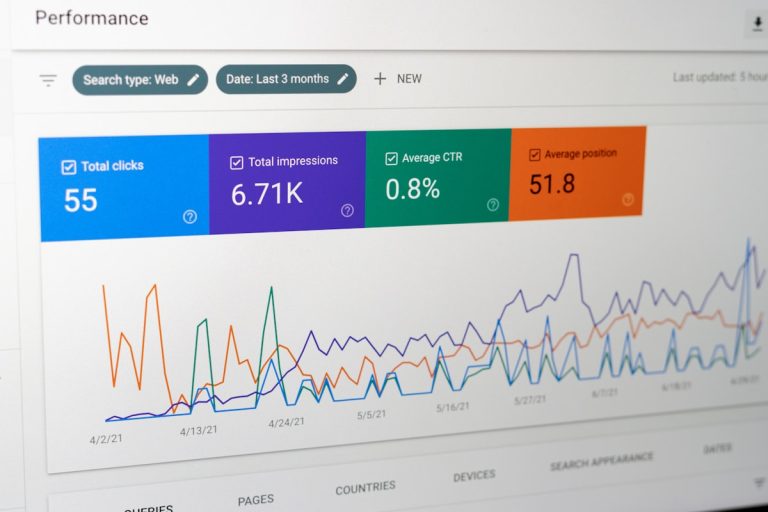
Traditional tools like Google Search Console or platform-specific analytics show raw numbers, but they leave the strategic work entirely to you. When you rely solely on manual exports, you are always reacting to old news.
How AI CMO Transforms Automated Campaign Reporting Across Channels
AI CMO replaces static reporting with an active, continuous intelligence engine. Instead of requiring you to build custom report templates or write complex database queries, AI CMO processes your multi-channel performance data instantly. It gives you direct visibility across search engine optimisation (SEO), generative engine optimisation (GEO), email outreach, and digital campaign tracking.
When setting up your tracking infrastructure, taking advantage of SEO Automation allows your team to discover ranking shifts immediately, avoiding hours of manual keyword research.
Connecting Search, Local GEO, and Conversion Metrics
Modern search engines and AI engines answer customer questions directly. That means tracking traditional Google keyword positions is no longer enough. AI CMO evaluates your online authority in standard search engine results pages (SERPs) alongside your visibility in generative engine responses.
By unifying these signals, your automated campaign reporting reflects direct audience interaction across every digital platform. You see which blog posts bring in qualified leads, which local search terms convert best, and where your brand content needs refining.
Setting Up High-Impact Automated Reporting: A Step-by-Step Guide
Transitioning from manual spreadsheets to automated campaign reporting does not need to be complicated. Here is a practical framework to streamline your reporting workflow:
Step 1: Consolidate Your Data Sources
Stop reviewing tools individually. Connect your core distribution channels into one primary interface. Ensure that website traffic, lead captures, and organic visibility metrics feed into a single location.
Step 2: Establish True Business KPIs
Ignore vanity numbers like raw impressions. Focus on metrics that impact your financial bottom line:
* Customer Acquisition Cost (CAC) by Channel: Know exactly how much you spend to gain a customer from search versus paid ads.
* Organic Search Conversion Rate: Track visitors converting directly from SEO and local search queries.
* Content Attribution Revenue: Identify specific blog posts, landing pages, and resources that initiate buying journeys.
Step 3: Implement Continuous Real-Time Auditing
Set up active alerting system triggers. When an campaign underperforms or a key ranking drops, your setup should flag the exact cause immediately.
If you want to dominate localized search queries without adding headcount, you should Master GEO Targeting with AI to stay visible in local search panels and AI-generated maps.
Comparing AI CMO with Traditional Marketing Analytics
Many popular tools offer reporting features, but most stop short of executing strategy. The table below illustrates how a dedicated AI-driven tool compares against established tools in the market:
| Feature / Capability | Legacy Platforms (e.g., HubSpot, Marketo) | Analytics Tools (e.g., SEMrush, Ahrefs) | AI CMO Ecosystem |
|---|---|---|---|
| Data Aggregation | Manual integration setups required | Primarily SEO and backlink analytics | Unified multi-channel and GEO data |
| Reporting Speed | Daily or weekly scheduled summaries | Periodic platform updates | 24/7 real-time continuous feedback |
| Generative Engine Insights | Limited or absent | Basic tracking capabilities | Native GEO and AI search visibility |
| Strategic Execution | Requires user analysis and planning | Requires manual search optimization | Automated suggestions and task execution |
| Cost Efficiency | High monthly platform costs | High cost for simple monitoring | Affordable unified workspace |
While traditional analytics tools tell you what went wrong, AI CMO explains why it happened and shows you what to do next. Halfway through your monthly growth targets, relying on continuous automated campaign reporting ensures your spending stays aligned with profit margins, so you never waste marketing budgets on outdated assumptions.
Actionable Tips for Better Data-Driven Decisions
To get maximum value from your automated reporting setup, keep these best practices in mind:
- Filter Out Internal Noise: Always exclude internal team IP addresses and staging site visits to protect data accuracy.
- Combine Short-Term and Long-Term Windows: Look at weekly performance for fast tactical tweaks, but review 90-day trends for major content and brand strategy decisions.
- Bridge the Gap Between SEO and Local Visibility: Ensure your localized business profiles match your broader search engine optimizations. You can readily Enhance Your Local Visibility across maps and directory databases to ensure near-me queries turn into foot traffic and calls.
- Review Conversion Paths Regularly: Look at multi-touch conversion attribution. Very few customers purchase on their first visit. Use reports to see how informational content nurtures leads down the sales funnel.
Replacing Fragmented Agency Reports with AI Autopilot
Working with conventional agencies often means waiting until the end of the month for a polished PDF report. Unsurprisingly, those reports frequently highlight glowing metrics while ignoring areas that missed targets.
AI CMO shifts power back to small businesses, founders, and lean marketing teams. By automating operational reporting, you eliminate middle-man delays. You get complete transparency into campaign health, keyword visibility, and lead generation without paying steep retainers.
When manual admin work disappears, your marketing team can redirect its energy toward product innovation, audience development, and offer positioning. Automation does not replace strategy, it frees up time so you can focus on strategy.
Take Control of Your Marketing Performance Today
Relying on manual spreadsheets and outdated reporting dashboards is a fast track to lost revenue and stagnant growth. Modern competitive advantage belongs to businesses that evaluate performance continuously and adjust their marketing moves in real time. Intelligent automated campaign reporting equips your organisation with deep, continuous insights across search, GEO, and multi-channel engagement campaigns.
By replacing disjointed legacy systems with a unified platform, you cut software costs, lower agency reliance, and gain total oversight of your business growth. Stop guessing what works and start knowing exactly where your marketing revenue comes from.
Ready to transform your analytics workflow? Start Your SEO Autopilot and discover how effortless, AI-driven automated campaign reporting delivers measurable market growth starting today.