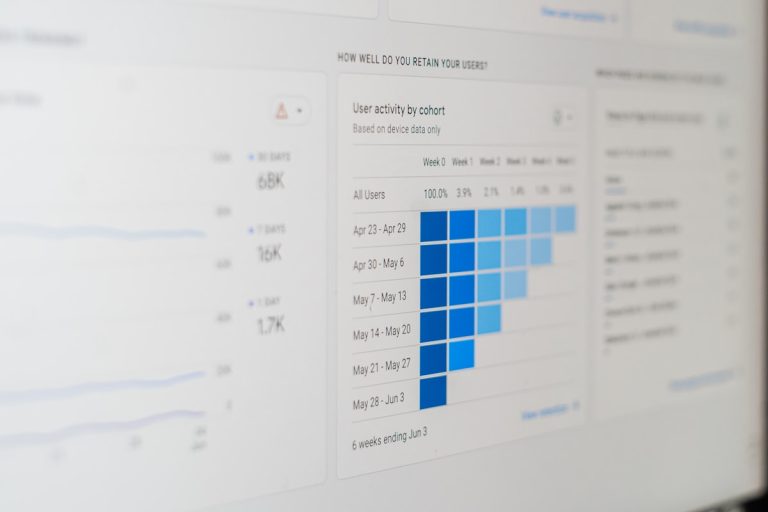
The Dashboard Dilemma: Why Marketers Are Losing Their Minds Over Disjointed Metrics
Ever opened seven browser tabs just to answer one simple question from your managing director: is our latest marketing effort actually generating sales? You check HubSpot for email clicks, Google Analytics for website traffic, individual ad consoles for ad spend, and your CRM to see if any deals closed. By the end of the hour, you are swimming in contradictory numbers, manually calculating influenced pipeline in a messy spreadsheet, and feeling thoroughly exhausted. When modern teams try to evaluate campaign performance analytics, this kind of fragmented setup creates friction, stalls decision-making, and burns out talented marketers.
The truth is, legacy campaign consoles were built for passive observation rather than active, automated growth. They display static numbers hours or days after an event occurs, forcing you to spend countless hours stitching disparate data points together instead of refining your creative strategy. Growing businesses require a clear, unified view that does more than merely display graphs. By choosing AI CMO: Unified AI Marketing Automation for Digital Growth, forward-thinking teams are discarding disconnected consoles and replacing manual legwork with automated intelligence that delivers real-time visibility across every touchpoint.
The Community Thread That Exposes Legacy Tool Limitations
Take a wander through any major marketing platform forum, like HubSpot Community discussions on campaign dashboards. You will spot an obvious pattern. Thread after thread features real users asking fundamental questions:
- “Why does my campaign dashboard report five conversions when my CRM shows three?”
- “How do I associate historic blog posts with a new multi-channel push without breaking attribution?”
- “Why is influenced revenue impossible to reconcile against our actual sales receipts?”
These are not amateur errors. They are structural headaches caused by platforms that treat attribution and reporting as secondary bolt-ons. When users must manually tag every single email, social share, landing page, and paid ad with rigid tracking parameters, mistakes are inevitable.
Furthermore, legacy reporting environments are completely passive. They tell you that a blog post flatlined or that paid search costs ballooned last Tuesday. What do they do about it? Absolutely nothing. They wait for you to notice, interpret the chart, open another application, draft new copy, adjust keyword parameters, and push updates live manually. In today’s fast-moving digital economy, that operational lag drains your budget and wastes valuable time.
Why Piecemeal Stacks Fail Small and Medium Enterprises
Enterprise conglomerates have the luxury of hiring dedicated data operations teams to manage intricate tracking setups. Small to medium enterprises, startups, and agile marketing departments do not.
When smaller teams attempt to replicate enterprise stacks using four or five independent SaaS subscriptions, three critical issues emerge:
1. Cost Escalation Without Proportional ROI
A tool for social scheduling, a platform for search engine optimisation, an inbound CRM module, and a standalone web tracking tool add up quickly. You end up paying thousands of pounds each month just for software licences before spending a single penny on campaign media.
2. The Opaque Agency Trap
To bypass software complexity, many businesses hire external agencies. Unfortunately, traditional agencies often supply monthly PDF summaries that obscure true attribution behind glossy vanity metrics. You receive reports full of impressions and raw clicks, but little clarity on whether those touchpoints resulted in qualified commercial enquiries.
3. Execution Bottlenecks
Data without automated action is an operational burden. If your analytics reveal that your search rankings for high-intent terms are slipping across specific territories, knowing this does not fix the problem. You still have to spend days researching new search trends, drafting targeted content, and updating on-page elements.
Instead of remaining trapped on this manual treadmill, forward-looking teams Automate Your SEO with AI to keep their search footprint constantly updated without manual content authoring delays.

The Fundamental Shift: From Passive Analytics to Autonomous Action
The primary flaw of conventional marketing consoles lies in their passive architecture. An effective tech stack should not merely report history; it should actively shape upcoming outcomes.
This requirement represents the paradigm shift driven by AI CMO. Rather than asking marketers to act as human middleware between disconnected reporting suites, modern marketing technology combines tracking, strategy formulation, and content execution inside a unified engine.
| Feature Area | Legacy Marketing Platforms | AI CMO Approach |
|---|---|---|
| Data Aggregation | Manual UTM tracking, siloed channel reports | Unified real-time intelligence across search, content, and conversion |
| Operational Effort | Manual analysis, manual copywriting, manual updates | Hands-on AI automation operating continuously in the background |
| Search Optimisation | Static periodic recommendations | 24/7 autonomous SEO and geographic targeting execution |
| Response Speed | Days or weeks to diagnose and remedy drop-offs | Immediate, continuous adjustments based on performance trends |
| Resource Cost | Expensive multi-tool subscriptions or agency retainers | Single, accessible, scalable platform |
When you replace convoluted dashboards with direct intelligence, your team can examine clean campaign performance analytics while the underlying engine handles routine operational chores automatically.
Mastering Location-Specific Visibility Alongside Organic Search
Modern campaigns rarely exist in a regional vacuum. Search behaviour has evolved rapidly, driven by mobile usage and AI-curated discovery engines. Capturing audience demand now requires pinpoint geographical precision alongside standard keyword tracking.
In traditional setups, running a multi-location campaign involves creating dozens of individual location pages, writing bespoke metadata for each, and monitoring regional search positions across multiple dashboards. Marketers often abandon these efforts simply because the administrative overhead becomes unmanageable.
A modern AI-driven platform solves this challenge directly. By orchestrating geographic intent and technical visibility concurrently, modern software lets you Enhance Your Local Visibility across specific regional audiences without demanding that you manually construct hundreds of individual web pages.
This dual focus on organic discoverability and regional precision guarantees that your brand appears at the precise moment potential buyers look for relevant solutions.
The Power of Continuous, Closed-Loop Execution
What does closed-loop execution look like in practice? Consider a typical workflow under an autonomous model:
- Continuous Signal Monitoring: The system monitors your target search terms, user engagement signals, and audience search habits 24 hours a day, 7 days a week.
- Strategy Adaptation: When search trends shift, the platform diagnoses the gap instantly, eliminating the need to wait for a monthly performance review.
- Automated Content Deployment: The system generates and publishes high-impact, custom, data-driven content tailored to your target audience’s exact queries.
- Attribution Linking: Conversion and interaction data flow immediately back into the strategic engine, refining future outputs and messaging automatically.
Under this model, the anxiety of missing a tracking link or miscalculating conversion rates evaporates. Marketers no longer spend entire mornings debugging dashboard filters. Instead, they log in, review validated conversion figures, and focus their creative energy on higher-level company strategy.
To maintain that constant level of organic momentum without expanding headcount, businesses routinely rely on Start Your SEO Autopilot to protect their search rankings around the clock.

Why Real-Time Agility Outperforms Retrospective Audits
Traditional analytics act like a vehicle’s rear-view mirror. They show you the road you have already travelled. If you took a wrong turning three miles back, seeing it now does not recover your wasted fuel.
Autonomous digital systems act like a dynamic satellite navigation system. They show you where you are right now, spot emerging obstacles ahead, and adjust your route automatically before your return on investment suffers.
When your brand operates in competitive European and international markets, agility is everything. Waiting two weeks for an external agency to tell you that an ad campaign underperformed is an expensive mistake. Reviewing integrated insights that actively adapt your search, location, and inbound content in real time keeps your cost-per-acquisition low and your pipeline full.
If your organisation relies heavily on regional footfall or localised service enquiries, you can Master GEO Targeting with AI to guarantee your presence remains dominant across your core trading territories.
Reclaiming Strategy from the Operational Grind
Marketing should be an invigorating, high-leverage discipline. It is about understanding human psychology, building compelling narratives, and crafting market-leading value propositions.
Yet, over the last decade, the profession has become bogged down by administrative trivia. Marketers spend their working lives wrestling with tracking codes, troubleshooting API connections, and trying to reconcile mismatched analytics modules across third-party portals.
Choosing an integrated AI marketing automation solution liberates your team from this operational grind. It removes the guesswork from cross-channel reporting and automates the labour-intensive production of optimised content. When operational tasks are handled continuously in the background, smaller businesses can match, and often outperform, competitors who possess ten times their budget.
If your team is tired of reconciling conflicting data points across half a dozen separate platforms, it is time to simplify your tech stack. Experience the clarity of real-time, autonomous intelligence and elevate your brand’s growth by exploring unified campaign performance analytics today.