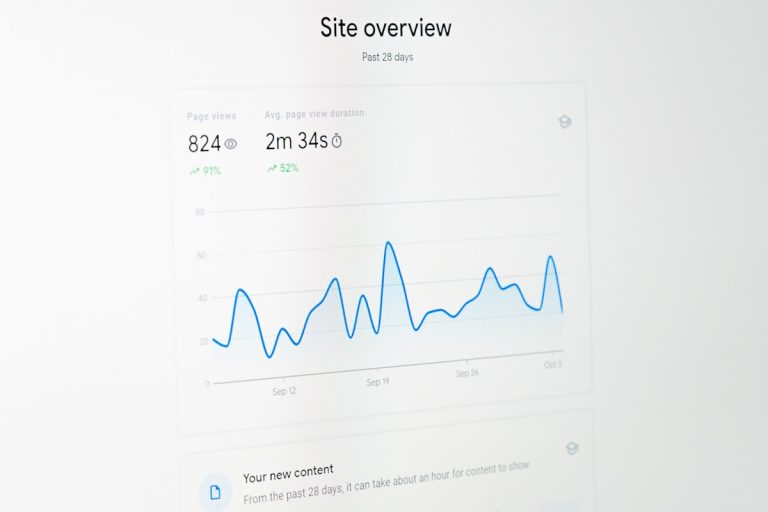
The High Cost of Clunky SEO Stacks: Modern Content Performance Tracking
Let us be completely honest about modern enterprise search marketing. For years, businesses have poured tens of thousands of pounds into massive platforms like BrightEdge or sprawling agency retainers, hoping to dominate search rankings. These legacy suites offer gigantic databases, complex opportunity forecasting, and pages of technical audit checklists. Yet, mid-sized companies and growing businesses still find themselves stranded. You get dozens of dashboards, but no one to actually execute the fixes without burning through another budget cycle. True content performance tracking should not require an army of data analysts just to tell you that your blog post dropped three positions last Tuesday.
Legacy platforms treat search as an isolated reporting exercise rather than an active operational workflow. They hand you recommendations, leave the heavy lifting to your exhausted team, and send an eye-watering invoice at the end of the quarter. Modern digital growth requires a nimble setup that pairs actionable intelligence with autonomous, verified execution. If your team is bogged down by complex dashboards while rankings stall, exploring AI CMO: Unified AI Marketing Automation for Digital Growth gives you a direct path to hands-on execution without the agency bloat.
The Enterprise SEO Illusion: Millions of Data Points, Zero Execution
Platforms like BrightEdge built their empires on enterprise scale. They cater to Fortune 100 brands with multi-layered hierarchies, dedicated data teams, and massive retainer allowances. Tools like the Data Cube map competitors, calculate share of voice, and generate predictive opportunity models.
On paper, this sounds fantastic. Who would not want a bird’s-eye view of organic market share?
In practice, for small-to-medium enterprises and ambitious startups, this infrastructure becomes an expensive bottleneck:
- Analysis paralysis: You log in and encounter millions of data points, complex pivot tables, and endless reports. Which task actually moves the needle today? Nobody knows.
- The missing hands: Enterprise platforms flag that forty meta descriptions are sub-optimal, or that twenty articles need internal links. They do not write the updates. They do not push them to your CMS. You still need an internal copywriter, an SEO specialist, and a developer to get those recommendations live.
- Opaque pricing structures: Enterprise contracts lock businesses into rigid yearly retainers, often charging hefty fees for onboarding and customer support reps you rarely have time to speak with.
When you look closely at standard legacy platforms, you notice a common thread: they are diagnostic engines, not execution engines. They tell you where your website hurts, hand you a medical dictionary, and wish you the best of luck with the surgery.
To break out of that endless audit loop, proactive brands rely on SEO Automation to handle routine ranking tasks directly rather than letting recommendations gather dust on a dashboard.
Bridging the Gap: Autonomous Execution Meets Human Governance
The real bottleneck in digital marketing is almost never a lack of data. Most marketing leads already know which keywords they want to win. The real issue is the bandwidth required to research, write, optimise, publish, and track content consistently across multiple channels.
A modern full-stack AI marketing operating system flips the legacy model completely. Instead of expecting you to interpret raw graphs, an autonomous marketing workflow operates around the clock:
- Continuous scanning: It reviews search trends, site health, and competitive shifts in real time.
- Context-rich drafting: It prepares brand-aligned articles, meta assets, and updates tailored to existing content gaps.
- Governed approvals: Crucially, nothing goes live in a black box. The system drafts work, surfaces it for explicit human approval via signed confirmations, and records every action in a clean log.
- Instant deployment: Once approved, it distributes content directly across web and social channels.
This closed loop removes the need to juggle four separate SaaS subscriptions just to run an organic campaign. Rather than paying an external agency thousands each month for basic updates, smart teams learn how to onboard & manage your brand with aiCMO to keep workflows streamlined under one unified roof.
Content Performance Tracking in the Era of AI Search and GEO
Search is no longer just ten blue links on a desktop monitor. The rise of conversational engines, like Perplexity, ChatGPT, and Google AI Overviews, has changed discovery patterns. Traditional enterprise tools are scrambling to retrofit citation tracking into legacy architectures built nearly two decades ago.
Simultaneously, location-specific visibility remains critical. If your business serves regional clients or multi-location territories, generic national rank trackers leave you blind.
Modern content performance tracking must monitor performance across classic search engines, local territory maps, and AI citation engines simultaneously. When an engine quotes your domain as a trusted source for an industry question, that citation drives commercial intent. Tracking that footprint allows you to double down on the formats and topics that search algorithms favour.
For regional enterprises that cannot afford to lose local footfall or territorial leads, it pays to Master GEO Targeting with AI so your business remains visible wherever prospective clients search.
Smarter Workflows: Beyond Fragmented Marketing Toolkits
Consider the daily routine of an in-house marketer managing a standard stack.
Monday begins by opening an SEO audit suite to review broken links and dropped rankings. Then comes a social scheduler to draft updates, followed by an analytics tab to cross-reference traffic conversions. Next is a separate generative tool to spit out generic content outlines that still require hours of heavy editing.
By Friday afternoon, you have spent thirty hours switching tabs, copying data between spreadsheets, and paying four separate software invoices.
By unifying research, strategy, drafting, and attribution, businesses eliminate operational drag. You can discover how to manage multi-channel with aiCMO without burning internal energy on repetitive tasks.
Instead of treating social media, blogs, and technical site health as isolated silos, an integrated engine ensures every blog post instantly feeds your social channels, while every ranking drop triggers an immediate content refresh.
For businesses seeking an end-to-end operational engine, upgrading your workflow with content performance tracking provides clear clarity on which marketing tasks generate actual commercial pipeline.
Comparing the Approaches: Enterprise Suites vs AI CMO
To understand why nimble businesses are migrating away from legacy enterprise stacks, let us compare how work actually gets finished across these platforms:
| Feature / Capability | Legacy Enterprise SEO Suites | Modern AI CMO System |
|---|---|---|
| Primary Focus | Data aggregation, auditing, enterprise reporting | Autonomous execution, optimization, and content creation |
| Operational Effort | High; requires specialist analysts and copywriters | Low; human-in-the-loop approvals with automated drafting |
| Search Engine Coverage | Traditional search engines (Google, Bing) | Hybrid; classic engines, AI search engines, and GEO local maps |
| Deployment Speed | Slow; weeks to move from audit to CMS deployment | Fast; live updates within minutes upon human sign-off |
| Cost Predictability | High yearly retainers with opaque add-on tiers | Transparent, scalable software pricing built for growing firms |
| Multi-Channel Sync | Minimal; purely focused on search and web pages | Native; links blogs, social distribution, and brand updates |
The core difference is clear. Legacy platforms produce homework. Modern systems complete the assignments, asking only for your strategic sign-off before hitting publish.
If your priority is running an organic campaign that works without daily micromanagement, choosing to Automate Your SEO with AI frees your schedule so you can focus on broader commercial growth.
Verifiable Impact: Why Transparency Wins
Marketers are understandably sceptical of AI solutions that promise instant magic. The internet is flooded with low-quality, automated generators that dump thousands of poorly written words onto sites, only to get penalized during the next search engine core update.
Real marketing automation does not mean turning your brand over to a black box. True efficiency requires transparent checks:
- Action Logs: Every content edit, metadata tweak, and scheduled post must be visible before and after it happens.
- Granular Approvals: You retain absolute authority over what represents your brand voice.
- Deterministic Metrics: Real-time visibility tracking ties content updates to tangible impressions, position shifts, and organic conversions.
When you track content correctly, you can watch your rankings recover after an update, measure which informational posts generate newsletter sign-ups, and see how regional searchers discover your services. You can also explore real-world outcomes across diverse sectors by browsing the Case Studies to see how businesses replace agency overhead with automated organic workflows.
Businesses looking to capture local customer demand across distinct territories can Enhance Your Local Visibility to turn nearby search intent into measurable revenue.
Taking Control of Your Marketing Operations
Marketing teams at growing businesses do not need another £40,000 yearly dashboard subscription that sits idle because nobody has time to translate charts into blog posts. Nor do they need opaque agency contracts that produce vanity reports while organic traffic stalls.
The future of digital marketing belongs to agile, autonomous systems that respect your time. By pairing continuous market research with fast, governed content production, you bridge the gap between knowing what to do and actually getting it live on your site.
Eliminate the guesswork, remove operational bottlenecks, and get your team out of spreadsheet maintenance. Experience real-time marketing clarity today by setting up content performance tracking and see how an autonomous operating system accelerates your brand’s growth.