The Search Revolution: Scaling Beyond Cookie-Cutter Pages
If you run an online shop, you know the absolute grind of organic search. You stare at thousands of SKUs, dozens of collections, and a content calendar that feels completely impossible to finish. That is usually when online store founders look into standard programmatic SEO tools to turn spreadsheet rows into thousands of category pages overnight. It sounds brilliant on paper, yet modern search engines are far too clever for basic keyword-swapping templates. Thin content gets penalised, indexation drops off a cliff, and you end up managing a mountain of technical debt instead of driving real sales.
Scaling an e-commerce brand today requires a comprehensive strategy that connects organic search, regional discovery, and intelligent automation into one unified engine. You do not just need more URLs; you need pages that match real buying intent and drive conversions across every customer touchpoint. By moving past isolated, generic software and exploring modern programmatic SEO tools with AI CMO: Unified AI Marketing Automation for Digital Growth, modern online shops can finally automate their entire growth workflow without babysitting broken templates or burning cash on bloated agencies.
Why E-Commerce Brands Hit a Wall with Traditional Programmatic SEO
Let us talk about how standard programmatic setups actually work. Traditional tools take a database (say, brand names, product types, and colours) and plug them into rigid templates:
- [Brand] [Category] for [Audience]
- Cheap [Product] in [Location]
- Best [Item] under [Price]
At first, you feel unstoppable. You upload a CSV, configure a database schema, and hit publish on 1,500 new landing pages. Organic sessions tick up for three weeks, and everyone celebrates.
Then the algorithmic update hits.
Search crawlers quickly spot that your 1,500 pages share the exact same sentence structure, the same repetitive buyer guide, and nothing genuinely unique except two swapped nouns. Google stops indexing your URLs. Your crawl budget vanishes down a black hole of low-value pages, pulling down the organic authority of your primary product listings with it.
Traditional programmatic setups miss the forest for the trees. They treat search as a mathematical string replacement problem rather than a merchandising and customer intent challenge. If a shopper lands on a programmatic page, they want real product context, helpful comparison points, and immediate relevance. When standard software fails to deliver that context, bounce rates soar, and conversion rates sink to zero.
Deconstructing Competitor Platforms: The Similar AI Approach
Tools like Similar AI have attempted to resolve these template issues by introducing autonomous agents. They analyse product catalogues, group search queries, and match inventory to search demand through automated category pages.
Their model definitely offers perks over basic spreadsheets:
* You get automated page generation tailored to e-commerce inventories.
* Internal linking and basic structured schema are handled automatically.
* It bridges the gap between raw catalogue data and live web pages.
Yet, this approach still retains significant operational limitations for growing brands.
First, these platforms are isolated silos. They build pages on your site, but they do not connect with your multi-channel marketing efforts. Second, they focus heavily on traditional desktop search intent, completely ignoring local search algorithms, geo-targeted store discovery, and AI-driven conversational search engines.
Perhaps the biggest drawback is the operational overhead. You are still juggling a fragmented tech stack: one tool for programmatic pages, another for your primary blog, a third for analytics, and an agency on retainer to pull the strings. When you run an SME or an emerging retail brand, that fragmentation creates friction, inflates your software bill, and scatters your focus.
Instead of piling more single-purpose software onto your plate, you can simplify everything by learning how to Automate Your SEO with AI across your entire catalogue without manual maintenance.
The Paradigm Shift: Moving from Page Generators to an AI CMO
Imagine swapping out half a dozen disconnected tools and high-priced agency retainers for an intelligent, continuous marketing engine. That is the fundamental difference between standard page builders and an AI CMO.
An AI CMO does not just churn out isolated pages; it acts as your continuous digital marketing director. It handles SEO, GEO (generative engine optimisation), and multi-channel strategies from a unified platform.
Here is how the two approaches compare side-by-side:
| Feature / Capability | Traditional Programmatic SEO Tools | AI CMO Unified Marketing Automation |
|---|---|---|
| Primary Method | Static templates with database token replacement | Intent-driven AI content strategies adapted in real time |
| Channel Scope | Web landing pages only | Full multi-channel alignment (Search, GEO, Content) |
| Local / GEO Search | Rigid location-string insertions | Deep regional optimisation and generative AI search readiness |
| Operational Effort | High technical setup, schema design, database maintenance | Hands-on, simple dashboard running 24/7 autonomous marketing |
| Cost Efficiency | Requires extra tools, developers, or specialised agencies | Replaces fragmented software stacks and costly retainers |
| Content Quality | Repetitive text structures vulnerable to search penalties | Contextual, value-rich copy aligned with buyer intent |
When your marketing software thinks holistically, your organic visibility transforms. Instead of worrying whether your programmatic templates look spammy, the system continuously refines your on-page positioning based on real-time performance indicators.
To build an organic moat that actually survives algorithm updates, smart merchants choose advanced programmatic SEO tools with real-time optimisation over old-school database tricks.
Unlocking Regional Revenue with GEO Targeting
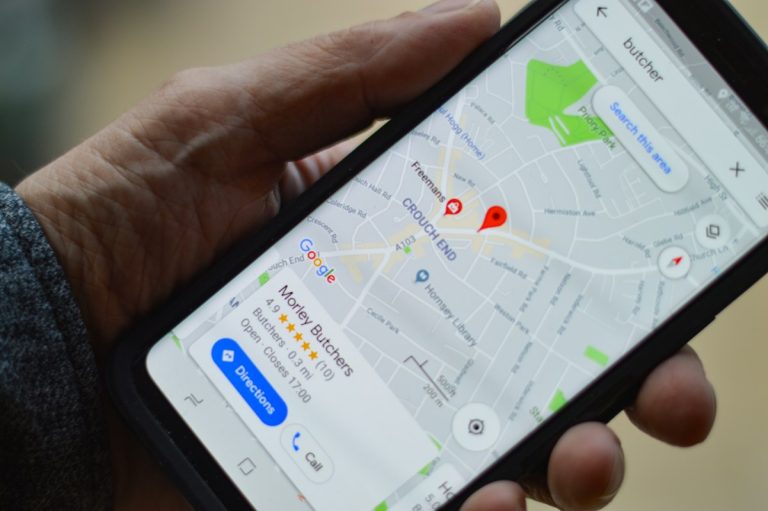
For modern e-commerce stores, geographic targeting is no longer just for physical high street shops. Digital shoppers expect region-specific shopping experiences. They search for local availability, specific delivery terms, and regional trends.
Traditional programmatic tools tackle this by generating generic pages for every town in the country. “Best Running Shoes in Manchester,” followed by the exact same text for Birmingham, Leeds, and Bristol. Search engines hate this tactic, and modern shoppers see right through it.
True GEO targeting goes much deeper. It optimises your brand to appear naturally in location-aware queries and modern AI search answers. If an AI search assistant is recommending where to buy specialist sportswear in the UK, your pages need to show genuine topical relevance, regional stock indicators, and authentic local intent.
Taking control of regional search algorithms means you can Master GEO Targeting with AI, making sure your brand surfaces right when local buyers are ready to check out.
4 Practical Steps to Automate Your E-Commerce Search Strategy
Ready to modernise your organic acquisition without getting bogged down in manual copy creation? Follow this practical blueprint to build a scalable, safe search engine strategy.
1. Map Intent Patterns Instead of Plain Keywords
Stop grouping your products by simple search volume metrics. High search volume often hides low commercial intent. Instead, identify long-tail patterns where buyers clearly know what they want. Look for specific combinations like material, use-case, and regional context.
2. Prioritise Modular Value Blocks Over Fixed Boilerplates
If your page template only swaps three words in a 500-word article, scrap it. Effective automated pages need modular content blocks:
* Dynamic sizing and buying considerations.
* Contextual product comparison tables.
* Direct answers to niche customer questions.
* Real-time stock status and shipping expectations.
3. Establish a 24/7 Autonomous Content Cadence
Search rankings are not static; your competitors constantly publish fresh guides, comparison pieces, and category updates. Relying on an agency to write one piece per week leaves your brand behind.
You need an autonomous operational engine that handles research, drafting, and on-page technical tweaks round the clock. You can Start Your SEO Autopilot today to ensure your store consistently captures fresh, high-intent traffic without pulling you away from core business operations.
4. Unify Your Metrics into One View
Do not analyse your programmatic pages inside an isolated plugin while tracking your main site in a separate dashboard. Monitor crawl depth, organic indexation rates, regional engagement, and assisted conversions inside one central interface. When you eliminate silos, you can spot underperforming collections and patch them before rankings slide.
The Future of E-Commerce Search: Unified, Autonomous, Scalable
The old days of hacking search engines with simple database exports and bloated templates are officially behind us. Search algorithms are faster, smarter, and far more focused on helpful user experiences. At the same time, maintaining a fragmented stack of disconnected marketing tools is simply too expensive and time-consuming for growing e-commerce teams.
You do not need more point solutions that solve only one tiny sliver of your marketing workflow. You need a comprehensive, hands-on system that handles the heavy lifting of SEO, GEO visibility, and content creation 24/7.
Take control of your organic acquisition, cut out bloated agency fees, and discover what a unified marketing intelligence platform can do for your business. Explore modern programmatic SEO tools and start scaling your store with AI CMO today.