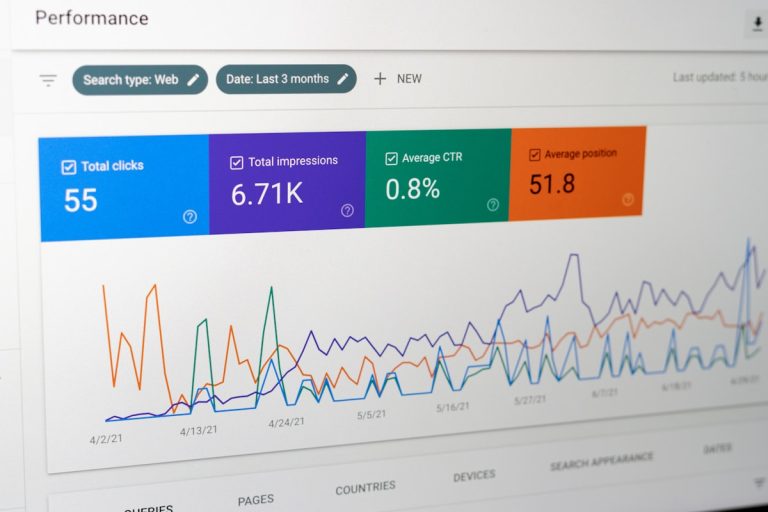
The New Frontier of Content Performance Tracking: Beyond Blue Links
Search has shifted on its axis. For two decades, we played a predictable game: find keywords, write copy, build backlinks, and watch the standard Google blue links climb. If you hit position one, you took home the prize. But today, buyers ask Microsoft Copilot, ChatGPT, Perplexity, and Gemini for direct answers. If those large language models do not reference your business, you simply do not exist in their consideration set. To stay relevant, modern teams must rethink their approach to content performance tracking to capture citations, grounding sources, and conversational mentions across intelligent search engines.
Generative Engine Optimisation (GEO) is no longer a theoretical exercise for tech tinkerers; it is the core discipline of making sure your brand gets recommended by AI. Traditional analytics packages leave you blind here because they only count site visits after a click occurs. When an AI engine provides a complete answer directly in the interface, standard metrics collapse. By adopting AI CMO: Unified AI Marketing Automation for Digital Growth, forward-thinking businesses can measure their true footprint across generative engines, automate routine promotional tasks, and run a modern marketing department without hiring an army of expensive agencies.
Why the Old Analytics Playbook Fails in the Age of Generative Engines
Let us be completely honest with ourselves. Standard web analytics tools were built for an internet that is slowly disappearing. They tell you pageviews, bounce rates, and session durations. They show you referral strings from search engines. But what happens when an AI model digests your technical whitepaper, summarises your key insights, and gives the user the solution without them ever touching your server?
Traditional dashboards show a drop in raw traffic. You might think your content strategy failed. In reality, your content might be powering the answer for thousands of prospective clients every single day.
Generative search engines retrieve content to ground their answers in real-world facts. They search their index, grab excerpts, and stitch together a response with footnotes. If you only look at your web logs, you miss the critical citation event. This is why you need to learn how to check your brand’s AI visibility and track the metrics that actually matter in an AI-first web ecosystem.
To survive this transition, your measurement stack must evolve. You need to know:
* How many times your domain was selected as an authoritative source.
* Which specific URLs feed answers to generative prompts.
* What queries trigger your inclusion in AI overviews.
* How your brand entity ranks against rivals when users ask comparative questions.
When you want to capture these conversational opportunities at scale, you can Automate Your SEO with AI to keep your pages continuously aligned with both traditional search criteria and modern machine-learning models.
Understanding Generative Engine Optimisation (GEO)
GEO is the practice of structuring and enriching your digital presence so generative AI engines naturally prefer your content when formulating answers.
Think of an LLM as an extremely busy researcher. If you give that researcher a messy, jargon-filled, unstructured wall of text, they will likely ignore it. But if you present clear data points, clean tables, logical headings, and verifiable claims, the researcher can quickly cite your work with confidence.
The Anatomy of an AI Citation
Why does an algorithm pick one page over another? Through recent diagnostic tools like the AI Performance preview in Bing Webmaster Tools, we now know that engines rely on grounding queries to retrieve factual data. When an engine constructs an answer, it breaks down the user prompt into sub-queries. It fetches matching documents, parses the text for factual density, and integrates quotes or references.
To win these citations, your content must satisfy three criteria:
1. Factual Clarity: Direct, unambiguous statements that answer specific questions immediately.
2. Structural Accessibility: Clean Markdown, semantic HTML, bullet lists, and comparison charts that machine parsers read effortlessly.
3. Domain Authority: External validation, fresh updates, and consistent brand information across multiple platforms.
If your local details are muddled across business directories, for instance, an AI engine will not take the risk of recommending your opening hours or location to a user. You can fix this gap when you Master GEO Targeting with AI across your target regions.
Bridging the Gap: AI Performance Insights vs. Full Execution
Recently, major platforms began rolling out specialised dashboards to show where publisher pages are cited across generative summaries. These tools give us valuable visibility into:
* Total Citations: How often an engine references your URLs in its AI summaries.
* Average Cited Pages: The daily count of unique pages an engine relies on.
* Grounding Queries: The background search queries the model used to locate your pages.
* Page-Level Activity: The exact articles delivering results.
This data is useful, but it highlights a massive operational bottleneck. Knowing you were cited 42 times this week does not write next week’s content. It does not update out-of-date blog posts, fix missing metadata, publish case studies, or push social updates to support your organic reach.
Most marketing tools are mere dashboards: they show you that your engine is smoking, hand you a wrench, and walk away. That is why enterprise teams spend thousands of pounds on disparate tools like SEMrush, Moz, or HubSpot, and then hire agencies to translate the data into actual work.
To overcome this, smart operators turn to platforms like the AI Visibility Tracker, which combines deep diagnostic reporting with direct execution capabilities. Instead of spending your weekend copy-pasting numbers between spreadsheets, you gain a system that spots the gap and drafts the fix.
To maintain real competitive momentum across channels, modern teams use content performance tracking to connect live visibility data with dynamic publishing schedules.
Practical Tactics to Optimise for AI Citations
If you want your website to become a primary citation engine, you must write for two audiences at once: human readers who want answers fast, and machine scrapers that parse semantic entities.
1. Lead with Direct Answers
Do not bury the lede behind 600 words of background history. If your article addresses how to track digital performance, provide the fundamental formula or framework in the very first paragraph. Generative models look for immediate relevance when executing grounding queries.
2. Introduce Unambiguous Structure
Break down broad topics into modular subheadings. Use bullet points for steps and concise tables for comparative data. When an AI needs to present options to an end user, it defaults to structured sections that can be excerpted cleanly without altering the context.
3. Maintain Fresh Content Pipelines
Out-of-date content gets pruned from generative outputs. If your best guide was published three years ago and refers to legacy tools, modern LLMs will discount its validity. Using fast-indexing tools and active update schedules helps ensure that search bots index your latest changes within hours rather than weeks.
4. Back Up Every Claim with Evidence
LLMs are penalised by their developers for hallucinating false facts. Consequently, retrieval systems look for authority signals: reference studies, distinct statistics, and verified domain expertise. If you make a claim, support it. The more verifiable your data, the more likely you become the cited source.
If your business manages content across varied markets or local hubs, check our guide on how to manage multi-channel with aiCMO to keep your messaging aligned without duplicate effort.
How the AI CMO Operating System Solves the Execution Problem
Most small to medium enterprises do not have fifty hours a week to analyse grounding queries and rewrite copy. They cannot afford a bespoke strategy consultancy, nor do they want to navigate four separate dashboards every morning.
This is where the unified platform from AI CMO completely transforms day-to-day operations. Rather than acting as a passive dashboard, it functions as an autonomous operating system for your marketing.
The platform handles continuous digital optimisation by linking strategic insights directly to real-world tasks. It monitors your traditional search visibility, observes GEO citation trends, spots opportunities where your competitors are being referenced instead of you, and plans content improvements automatically.
Whenever you need to expand your local footprint and capture conversational market share, you can Enhance Your Local Visibility through guided optimisation workflows designed for real impact.
Because the system uses governed approvals, you always remain in full control. The AI suggests the changes, writes the copy, plans the promotional roadmap, and waits for your confirmation before publishing. You get the speed of automation with the editorial security of human oversight. If you want to protect your time while expanding your pipeline, choose to Start Your SEO Autopilot and let intelligent systems manage the routine legwork.
The Future of Marketing: Strategy Stays Human, Execution Goes Autonomous
The old days of vanity metrics are finished. Ranking for a high-volume keyword means very little if zero-click generative search engines answer the prompt before a visitor reaches your site. The future belongs to brands that secure inclusion inside the answer itself.
To win this game, your business needs an end-to-end strategy:
* Real-time monitoring of AI citations and grounding queries.
* Continuous structural updates to make your pages machine-friendly.
* Multi-channel distribution that establishes topical authority everywhere your buyers look.
* Automated systems that handle the heavy lifting without ballooning your overhead.
Do not wait for your conventional search traffic to dwindle before you pay attention to generative search. Master modern search dynamics, take control of your digital visibility, and deploy unified systems that convert insights into revenue. Explore what full marketing autonomy looks like by visiting AI CMO: Unified AI Marketing Automation for Digital Growth today.