The Science of Multi-Channel Marketing: Moving from Theory to Revenue
Ever read a 40-page academic paper on marketing dynamics and wondered how on earth to apply it on Monday morning? Marketing journals are packed with empirical gold. Researchers spend years analysing consumer touchpoints, psychometrics, and multi-channel attribution models. Yet most founders and small business teams are stuck manually toggling between five different dashboards, guessing what works, and burning through cash. If you want sustainable growth, mastering multi-channel marketing requires bridging the gap between empirical data science and daily execution.
The disconnect is real. Academic studies in journals like the Journal of Business Research prove that customer perception, autonomy, and cross-channel synergy directly boost brand equity and pricing power. But without operational muscle, theories remain useless diagrams on a screen. Modern businesses do not have the time to decipher regression models or pay massive retainers to traditional agencies. Instead, adopting an AI CMO: Unified AI Marketing Automation for Digital Growth allows growing companies to turn complex academic frameworks into automated, scalable workflows that drive actual sales.
The Academic Blueprint: What Empirical Research Actually Tells Us
Academic researchers have spent decades studying why single-channel marketing fails over time. The literature highlights several critical mechanisms that separate flourishing brands from those that hit a plateau.
The Dynamics of Brand Perception Across Channels
When researchers examine consumer behaviour, they look at multi-dimensional constructs: authenticity, status, utility, and consistency. A seminal 2019 study on brand dynamics demonstrated that consumer attitudes, word-of-mouth advocacy, and willingness to pay price premiums depend heavily on how cohesive a brand appears across disparate touchpoints.
If your messaging on search engines conflicts with your social channels or local business listings, consumers subconsciously register friction. This friction destroys conversion rates. Academic findings show that consistency across channels signals authority and operational reliability.
Cross-Channel Reinforcement and Touchpoint Fatigue
Scholars often talk about the halo effect in touchpoint economics. One channel rarely closes a sale in isolation:
- Organic search builds initial trust and provides immediate answers to high-intent queries.
- Contextual local presence reassures buyers of regional relevance and physical proximity.
- Ongoing updates and content syndication maintain brand salience during prolonged evaluation cycles.
When these touchpoints operate as isolated silos, message decay occurs. You waste budget shouting into the void because channel A has no idea what channel B is doing.

Why Small Businesses Struggle with Academic Models
The science is crystal clear, yet small and medium enterprises (SMEs) struggle to implement it. Why? Because the tools and resources required to pull it off have traditionally been out of reach.
The Fragmented Tool Trap
The average digital marketing stack is an absolute mess. You might use one platform for keyword tracking, another for content drafting, a third for local maps, and a fourth for social distribution.
Each tool produces separate analytics. None talk to each other intelligently. You end up spending hours copying numbers into spreadsheets instead of acting on customer feedback. You can easily bypass this operational friction when you Automate Your SEO with AI, consolidating repetitive visibility tasks into a single rhythm.
The Agency Retainer Problem
The traditional alternative to juggling software is hiring an agency. But agencies bring their own headaches:
- High monthly retainers that drain working capital before delivering results.
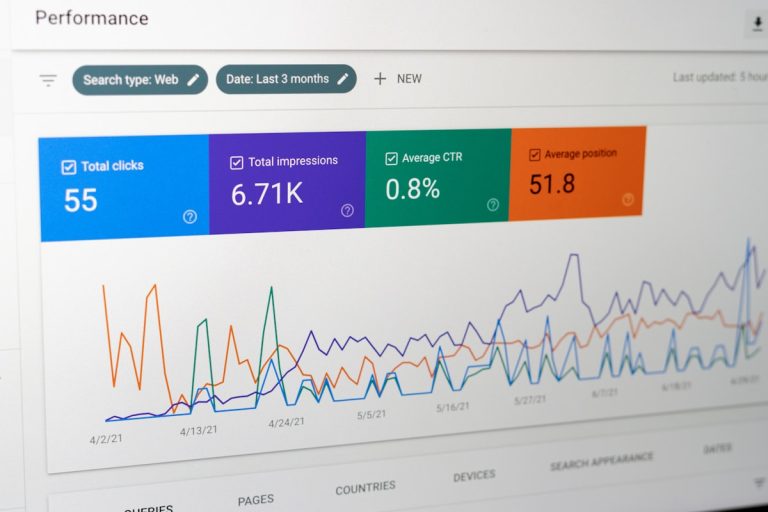
- Opaque reporting full of vanity metrics like impressions rather than revenue impact.
- Slow turnaround times where a single content campaign takes six weeks to clear revisions.
Agencies treat academic principles as trade secrets to justify high hourly rates. In reality, most of their legwork involves mundane data pulling and basic copywriting.
Operationalising Data Science: The Role of AI CMO
To turn theoretical multi-channel marketing into actual commercial growth, you need an engine that synthesises data, creates assets, and optimises performance around the clock. This is where an AI CMO changes the game.
Rather than treating digital channels as independent islands, an AI CMO functions as a central nervous system. It monitors your market positioning, evaluates incoming search trends, and continuously pushes targeted messaging across the digital ecosystem.
Continuous 24/7 Organic Optimisation
Search engines do not sleep, and neither do your competitors. Traditional SEO workflows rely on monthly site audits. By the time an agency spots an organic ranking drop, you have already lost four weeks of qualified leads.
Automated systems track search engine volatility in real time. They adjust internal links, refine keyword targets, and publish helpful, highly structured content continuously. To stay ahead of regional algorithm updates and protect your organic footprint, modern teams Start Your SEO Autopilot to maintain constant momentum without burning internal resources.
Localisation and Contextual Distribution
Multi-channel dominance requires local relevance. Academic literature frequently points out that purchase intent spikes when content addresses regional nuances, currency conventions, and local market culture.
If you sell across Europe or target distinct municipal markets, generic copy falls flat. Using an AI-driven workflow allows you to Master GEO Targeting with AI, crafting hyper-targeted landing pages and geographic assets that convert neighbourhood searches into paying customers.
You do not need an army of regional field marketers to accomplish this. You simply need structured data that scales automatically.

How Unified Automation Beats the Competition
Let us look at the current software landscape honestly. Established platforms like SEMrush, Moz, and Ahrefs are fantastic at gathering data. They tell you backlink counts, keyword difficulty scores, and traffic estimations down to the decimal point.
HubSpot and Marketo provide expansive pipelines for managing leads once those prospects enter your database. Mailchimp handles transactional and promotional emails effectively.
What do all of these legacy tools have in common? They demand manual labour. They are passive toolboxes. They hand you a hammer, a saw, and a pile of timber, leaving you to design and construct the house yourself.
An AI CMO flips this dynamic entirely. Instead of handing you raw data and expecting your team to write articles, structure schema, and link assets, an AI CMO executes the strategy. It bridges analytics and execution directly. You move from diagnosing problems to deploying solutions in seconds. You can easily deploy multi-channel marketing built for scale to coordinate every single piece of content without manual intervention.
Step-by-Step: Implementing an Academic Multi-Channel Framework
Ready to apply empirical research to your company? Follow this operational blueprint to build an automated multi-channel system.
Step 1: Map Core Brand Pillars and Authority Themes
Begin by defining what makes your business genuinely distinctive. In academic papers, this is known as establishing unique brand identity dimensions:
- Identify the primary business problem your product solves.
- List five auxiliary topics that logically support this core solution.
- Establish your brand tone of voice (pragmatic, technical, or conversational).
Feed these parameters into your central AI marketing system. This ensures that every blog, social post, and page update adheres to the exact same brand narrative.
Step 2: Establish Regional and Search Dominance
Next, lock down discoverability. Buyers must find your brand whether they ask broad industry questions or search for localized services within their city.
Ensure your technical foundations, structured data, and content silos are updated automatically. If you want to outpace competing regional businesses in local map packs and organic results, Boost Local Search Rankings by deploying automated, geo-optimised landing pages.
Step 3: Automate Continuous Asset Generation
Do not rely on erratic bursts of creative inspiration. Consistent publishing frequency signals authority to both search algorithms and human visitors.
Configure your engine to research emerging search queries, draft authoritative articles, integrate relevant visual assets, and cross-link related topics. If you are keen to rank for competitive terms without hiring freelance writers, you can Boost Your Search Rankings Now by letting machine intelligence handle production workflows.
Step 4: Monitor and Adapt with Real-Time Data
Finally, eliminate subjective quarterly reviews. Academic models work because they rely on empirical feedback loops.
Track leading indicators:
* Impressions for target transactional keywords.
* Movement in competitive search positions.
* Regional search share across specific territories.
* Time-on-page and engagement markers.
When the system detects a decline in interest or a sudden jump in search volume for a new keyword, it dynamically adjusts content generation to capture that emerging demand instantly.
The Future of Brand Scale: Autonomous Strategy
The transition from academic marketing theory to commercial reality used to require deep pockets, specialised statistical analysts, and bloated agency rosters. Those days are gone.
By leveraging an integrated platform that connects search intent, automated production, and geo-targeted distribution, small and medium enterprises can finally execute sophisticated multi-channel campaigns on par with global enterprises. You eliminate fragmented software subscriptions, slash overheads, and run campaigns based on proven data science rather than guesswork.
Stop wrestling with disconnected marketing apps and start operationalising real data. Take control of your customer acquisition channels today by partnering with AI CMO: Unified AI Marketing Automation for Digital Growth.