Why Modern Ad Campaigns Fail Without Intelligent Feedback
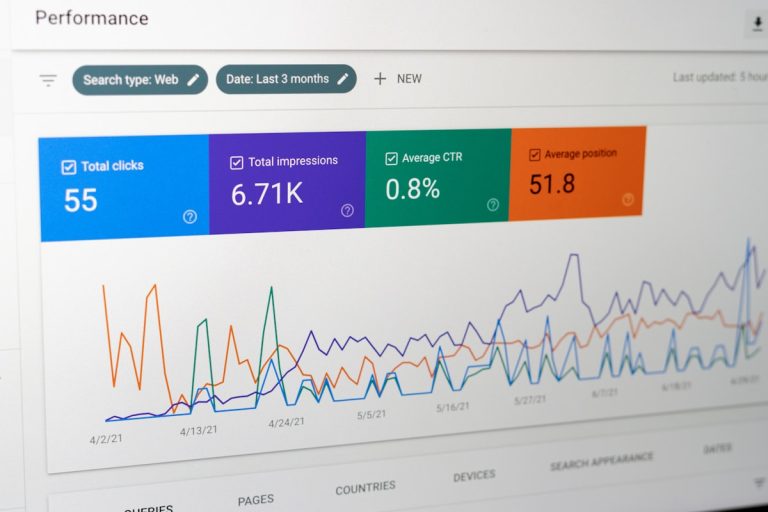
Most paid growth campaigns bleed cash for a simple reason: they are completely static. Traditional marketing teams set up ad variants on Monday, glance at the analytics dashboard on Wednesday, and tweak bids on Friday afternoon. By the time someone notices that click-through rates fell off a cliff, hundreds or thousands of pounds have vanished into thin air. Marketing in fast-moving European markets demands continuous adjustment. If you want sustainable growth, you cannot rely on manual spreadsheets or rigid rules. You need true machine learning principles driving real-time choices. The answer lies in sophisticated, self-teaching models that constantly calibrate content, bidding, and audience segments. You can harness this cutting-edge approach directly by choosing to integrate dynamic ad optimisation into your marketing engine.
Dynamic ad optimisation is not just about swapping headline variants; it is about building an autonomous feedback loop that actively learns from audience behaviour. Recent scientific research into high-stakes sports sponsorships and dynamic digital media shows that multi-modal reinforcement learning beats static rule sets every single time. Instead of relying on a human team to guess which creative angles work best, autonomous models test, analyse, and adapt every second of the day. For small and medium enterprises, this level of algorithmic decision-making levels the playing field against massive legacy corporations. It eliminates bloated agency retainers, slashes wasted expenditure, and turns marketing into an automated, predictable revenue engine.
The Academic Blueprint: What Reinforcement Learning Actually Does
What is reinforcement learning, stripped of all the academic jargon? Think of it like training a clever puppy. You do not give the puppy an instruction manual detailing how to run. Instead, you reward it with a treat when it sits, and you withhold the treat when it jumps on the sofa. Over time, the puppy works out the exact series of actions that earns the maximum number of treats.
In digital marketing, the artificial intelligence agent is the puppy. The digital advertising landscape is its environment. The reward is your return on investment, user engagement, or raw conversion volume. Traditional programmatic software relies on basic supervised rules: if metric A drops, then lower bid B. That is myopic. It only looks at what just happened, ignoring delayed outcomes.
Reinforcement learning behaves completely differently:
* It looks at long-term cumulative gain rather than single, immediate wins.
* It constantly balances exploration (testing new copy, novel creative hooks, fresh audiences) with exploitation (doubling down on whatever is converting best right now).
* It factors in time delay, understanding that a touchpoint today might drive a high-value transaction tomorrow.
Recent scientific literature examining dynamic brand exposure highlighted that algorithms using hierarchical frameworks outperform standard greedy rules by double digits. When algorithms make sequential choices across separate time horizons, overall campaign efficiency climbs dramatically.
Moving Past Superficial Metrics: The Power of Multi-Modal Inputs
Real human beings do not make purchasing decisions based on text alone. They respond to colours, video pacing, contextual emotional tones, and brand sentiment. Most legacy platforms treat creative elements and user data in isolated silos. They examine click data in one tool, check social sentiment in another, and track image assets manually.
Modern dynamic ad optimisation brings all these streams together through multi-modal intelligence:
1. Computer Vision and Visual Elements
Visual models examine which graphic assets, colour palettes, and logo placements draw real visual attention. In academic testing, vision models identify brand placement during live video broadcasts to measure actual visual share. In digital advertising, the model learns whether bright lifestyle photography or product-focused imagery converts best for specific demographics.
2. Natural Language Processing for Context and Sentiment
Natural language systems read the room. They evaluate public commentary, audience sentiment, and live conversational trends across social platforms. If public sentiment shifts or a specific pain point begins trending, the language model flags it immediately. You can streamline this workflow and automate your SEO with AI to keep your organic presence running hand-in-hand with your paid campaigns.
3. Graph Interactions and Audience Networks
Your potential buyers do not exist in isolation. They belong to professional networks, industry communities, and social circles. Graph neural models map how information flows between audience clusters, determining how peer recommendations and community trends influence buying decisions.
When an artificial intelligence system fuses visual cues, language sentiment, and relational graphs into a unified state, dynamic ad optimisation stops being guesswork. It becomes exact mathematics.
Hierarchical Decision-Making: Strategic, Tactical, and Operational
A common flaw in modern advertising software is trying to solve every problem with a single calculation. You cannot decide overall annual budget allocation using the exact same logic you use to change an ad bid for a user browsing a smartphone on a Tuesday evening.
Academic frameworks solve this puzzle through hierarchical reinforcement learning. This framework separates actions into three distinct tiers:
- Strategic Level (Long-Term): The macro view. The system decides how to split total marketing resources across distinct channels, countries, and major product lines over weeks or months.
- Tactical Level (Medium-Term): The campaign view. The model adjusts campaign pacing, swaps out declining creative themes, and reallocates resources based on seasonal shifts.
- Operational Level (Real-Time): The micro view. This is where dynamic ad optimisation executes split-second decisions. It determines precise bid multipliers, selects exact visual layouts, and tailors the headline for an individual impression.
By decoupling these three tiers, the system avoids erratic swings. An operational hiccup during a slow morning will not derail your high-level commercial objectives. Instead, each layer supports the others, delivering stable, continuous growth. To guarantee that this intelligence reaches local markets, brands often master GEO targeting with AI, allowing location-specific parameters to guide the operational tier.
Tackling the Flaws of Fragmented Tool Stacks and Traditional Agencies
For small to medium enterprises and growing startups, accessing this advanced technology used to be impossible. Marketers were trapped between two frustrating options:
- The Costly Agency Route: Traditional agencies charge hefty monthly retainers. They assign your account to junior executives who manually tweak settings once a week. Reporting arrives as a curated PDF weeks after your budget has already been spent. There is minimal transparency, high operational overhead, and no real dynamic responsiveness.
- The Fragmented Tool Stack: You subscribe to an SEO audit tool, a PPC management dashboard, a social media scheduler, and a separate analytics engine. None of these systems talk to one another cleanly. Your marketing team spends forty hours a week copying figures between platforms rather than focusing on high-level commercial strategy.
This broken workflow is precisely why unified platforms are taking over digital marketing. By using AI CMO: unified AI marketing automation for digital growth, founders and marketing leads eliminate operational chaos. You do not need five different logins or an expensive outsourced team to manage complex campaigns. An integrated platform runs dynamic ad optimisation continuously in the background, freeing you to focus on product development, brand vision, and customer relationships.
How Dynamic Ad Optimisation Drives Tangible Business Returns
Let us look at what happens when businesses swap static campaigns for reinforcement learning mechanics. The differences are not minor, theoretical fractions; they represent massive operational advantages.
Eliminating the “Greedy” Pitfall
Standard programmatic ad software is fundamentally greedy. In computer science, a greedy algorithm simply picks whatever option offers the biggest immediate payout at that exact instant. If a particular demographic clicks an ad cheaply right now, a greedy tool pours the entire daily budget into that single pocket.
The problem? Cheap clicks rarely equal high lifetime value. The greedy approach burns through ad inventory, inflates your acquisition costs over time, and overlooks lucrative, slow-burn customer segments. Reinforcement learning agents evaluate delayed rewards. They recognise that nurturing a higher-value corporate lead over three days yields superior commercial results compared to harvesting immediate, low-intent clicks.
Continuous Adaptation Without Human Fatigue
Human beings get tired. They go on holiday, clock off at the weekend, and miss subtle fluctuations in cost-per-click trends. An artificial intelligence system monitors market indicators twenty-four hours a day, seven days a week. If a competitor pauses their campaigns on a Sunday night, the system capitalises on the drop in bidding competition instantly. If search intent changes rapidly in a key European territory, the platform adapts ad copy right away.
To expand this level of organic reach without drowning in manual writing tasks, savvy operators boost your search rankings now by aligning automated search content with real-time conversion trends.
Practical Steps to Implement Dynamic Optimization Today
You do not need a doctorate in mathematics to take advantage of reinforcement learning principles. The technology has matured, and the execution models are now accessible to lean teams. Here is the practical blueprint for putting these concepts to work:
Step 1: Consolidate Your Marketing Signals
Stop looking at your organic search data, paid ad metrics, and audience conversion paths as isolated islands. Feed clean, unified data into an integrated system. Dynamic ad optimisation relies on accurate feedback signals. If your conversion tracking is broken, the algorithm learns bad habits. Ensure your event tracking records revenue accurately so the reward function prioritises real commercial value.
Step 2: Establish a Multi-Channel Feedback Loop
Organic search performance informs paid ad success, and paid ad tests reveal search intent. Use your paid campaign findings to identify high-converting angles, then reinforce those themes across your organic search footprint. Localised relevance is crucial here; businesses often choose to enhance your local visibility so that geographical intent matches paid conversion campaigns perfectly.
Step 3: Shift from Micromanagement to High-Level Strategy
Your job as a business leader or marketing director is not to adjust cost-per-click bids by three pence. Your job is to define the commercial parameters: target profit margins, strategic customer personas, and overall brand narrative. Let intelligent automation execute the operational minutiae while you concentrate on partnerships and core offerings.
The Future of Marketing: Autonomous, Unified, and Transparent
The academic research published in scientific journals is not just an intellectual curiosity. It provides a clear glimpse into where the entire digital marketing industry is heading. Rigid rule sets, gut-feeling media buying, and opaque agency retainers are becoming obsolete.
Tomorrow belongs to agile businesses that treat marketing as an intelligent, evolving system. By uniting multi-modal inputs, hierarchical reinforcement learning, and automated execution, you protect your budget from waste and scale your presence systematically. You can outmanoeuvre larger competitors, operate leanly across international borders, and achieve reliable, predictable revenue.
Take the leap towards modern, automated marketing today. Experience hands-on, multi-channel intelligence and scale your business with AI CMO dynamic ad optimisation.