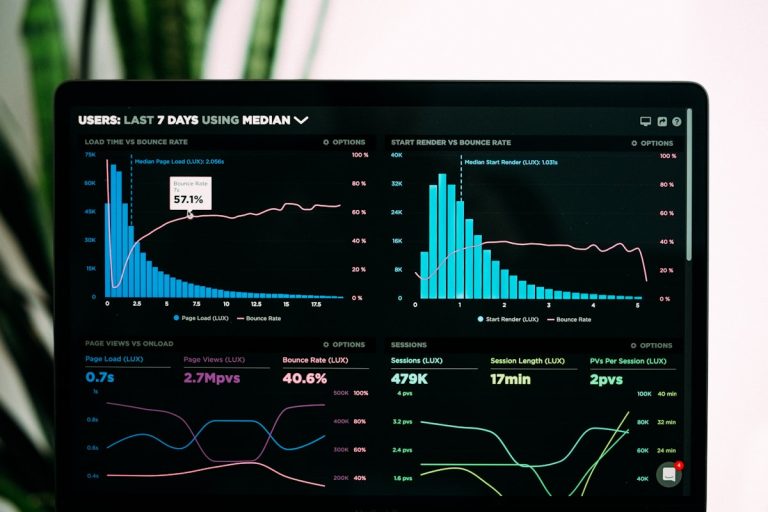
Why Most Marketing Analytics Collect Dust on Modern Desks
Let us be completely honest for a moment. Most businesses drown in data while thirsting for actionable insight. Academic computer science journals publish incredible breakthroughs in statistical machine learning, regression analysis, and behavioural clustering every month. University researchers build brilliant models showing how to predict buyer intent weeks before a transaction happens. Yet, back in the actual trenches of running a company, most small and medium enterprises still guess their next blog post or ad campaign. Bridging this exact gap requires moving past raw theory into hands-on execution. When you deploy genuine predictive marketing analytics with AI CMO, you stop staring at historical graphs and start turning mathematical forecasts into real organic search dominance.
The core breakdown happens because standard analytics tools tell you only what happened yesterday. That is descriptive data at best. It is basically an autopsy of your past web visits. What growing businesses actually need is the capability to predict future consumer interest, understand how algorithms reward fresh topics, and systematically create relevant content before competitors notice the trend. Instead of running expensive data science experiments in-house, modern brands can translate theoretical data science straight into automated customer acquisition, keeping marketing overhead low while maintaining superior search authority.
The Academic Pipeline: Breaking Down the Four Tiers of Analytics
Academic literature, including foundational work across computer science and data intelligence, splits data processing into distinct developmental layers. Each tier builds on the previous one, but very few commercial platforms make it all the way to the top.
- Descriptive Analytics: Answers the simple question, what happened? This includes your standard web traffic overviews, bounce rates, and monthly visitor tallies. It tells you that your article lost 20% of its traffic last month, but offers zero reasons why.
- Diagnostic Analytics: Answers the critical question, why did it happen? Researchers use correlation analysis and anomaly detection to identify patterns behind the drops or spikes. Perhaps an algorithm update shifted visibility, or a competitor built more authoritative links.
- Predictive Analytics: Answers the forward-looking question, what will happen in the future? By leveraging time-series forecasting, regression models, and behavioural pattern recognition, systems calculate probable market trends and buyer demands before they mature.
- Prescriptive Analytics: Answers the final practical question, what specific action should we take now? This is where decisions get made automatically based on predictive findings, prescribing exact campaigns, keywords, and structural changes.
Most legacy marketing suites stop dead at descriptive reporting. They give you a mountain of colorful charts and then abandon you to figure out the actual strategy yourself. For resource-stretched teams, this creates endless analysis paralysis.
Why Big Data Fails Lean Commercial Teams
Every business owner knows that hiring an army of data scientists, SEO consultants, and agency account managers is extraordinarily expensive. Traditional agency arrangements are frequently opaque, sluggish, and fragmented. You pay massive monthly retainers, only to receive generic slide decks explaining past traffic blips without a clear roadmap for next week.
Furthermore, juggling disparate subscriptions for backlink checkers, rank trackers, and keyword explorers creates operational drag. You end up with five dashboards that rarely communicate with one another. To overcome this friction, lean marketing operations rely on direct SEO Automation to elevate content creation, handling technical keyword targeting and drafting without operational chaos.
When your marketing stack cannot predict where search demand is moving, you spend your time reacting to changes rather than dominating new territory. Predictive models solve this challenge by evaluating historic search intent, search frequency patterns, and consumer interest velocity to identify the exact themes your buyers care about today.
Turning Mathematical Algorithms into Real Search Rankings
How do we take academic principles, such as regression analysis, clustering algorithms, and natural language processing, and convert them into measurable commercial growth? The answer lies in unifying data discovery with instant operational execution.
Supervised Learning and Regression for Intent Modelling
Academic studies use multivariate regression to establish direct links between independent variables (such as technical site speed, semantic keyword density, content freshness, and topical depth) and target outcomes (like ranking positions and conversions). In practical content marketing, these models predict which specific article topics will yield the highest organic search return for your precise domain authority.
Rather than producing ten guesswork articles that generate zero qualified traffic, predictive models pinpoint the two high-yield opportunities likely to rank fast.
Clustering for Audience Segmentation and Topical Authority
Unsupervised clustering algorithms, such as k-means or agglomerative hierarchical grouping, organise unstructured audience interactions into distinct behavioural buckets. In digital marketing, clustering groups semantic search queries by user intent:
1. Informational queries seeking immediate educational answers.
2. Navigational queries trying to locate specific resources.
3. Commercial research queries evaluating competitive alternatives.
4. Transactional queries ready to purchase right now.
By mapping content production directly to clustered queries, your brand builds comprehensive topical authority. Modern search engines evaluate topic depth across an entire website rather than inspecting isolated pages. Systematically covering whole topic clusters signals deep subject expertise, pushing your overall search profile higher.
To ensure your visibility reaches local buyers who are actively searching within your geographic market, implementing GEO Visibility through AI-driven targeting enables rapid local market capture alongside broader informational reach.
The AI CMO Advantage: Automation Over Guesswork
This transition from complex data theory to automatic execution is the bedrock of our platform. Traditional marketing solutions like SEMrush, Ahrefs, or Moz supply vast quantities of raw data, yet they leave the entire burden of content writing, on-page optimisation, and multi-channel distribution completely on your shoulders. Meanwhile, enterprise suites like HubSpot manage CRM workflows but lack continuous, hands-free organic content automation.
Our approach bridges this divide by providing unified predictive marketing analytics via the AI CMO platform, uniting data ingestion, keyword forecasting, and production into one seamless interface.
Instead of managing four separate tools, our platform operates 24/7 in real time. It monitors algorithmic volatility, tracks competitive keyword movements, and continuously aligns your organic content pipeline to address the queries real buyers are typing.
Eliminating Wasteful Agency Retainers
Traditional agencies often charge thousands of pounds each month to compile manual monthly reports. With an automated AI marketing system, the operational costs collapse. You retain complete strategic control while the artificial intelligence manages the operational intricacies. The platform extracts actionable insights and acts upon them instantly, publishing optimised content that addresses shifting user demand without delays.
By adopting continuous SEO Autopilot solutions, businesses streamline their entire organic growth workflow, keeping their publication schedule consistent while protecting internal resources.
Real-World Strategic Comparison
To understand how unified AI marketing differs from fragmented tools and traditional agencies, consider this side-by-side comparison:
| Operational Dimension | Fragmented Legacy Toolkits | Traditional Marketing Agencies | Unified AI CMO Platform |
|---|---|---|---|
| Primary Focus | Data analytics, manual reporting | Retainer billing, bespoke campaigns | Continuous, autonomous organic execution |
| Data Processing | Descriptive (what happened) | Diagnostic (manual root-cause analysis) | Predictive & Prescriptive automation |
| Execution Speed | Manual implementation by team | Slow, multi-week approval cycles | Real-time automated adjustments |
| Local Search Relevance | Requires manual geo-audits | Often overlooked or expensive extra | Built-in GEO targeting and localisation |
| Cost Efficiency | Multiple subscription fees add up | High monthly management retainers | Scalable, unified platform with low overhead |
When you replace siloed tools with integrated machine learning systems, your marketing operations move from erratic and reactive to structured, predictable, and scalable.
Practical Steps to Put Predictive Content into Practice
If you want to move your marketing strategy from retrospective guessing to predictive accuracy, start with these practical operational steps:
- Audit Your Current Toolchain: Identify how many separate subscriptions your team pays for just to track, analyse, and publish content. Strip out duplicate tools that only supply descriptive metrics.
- Shift Focus to Search Velocity: Stop targeting static keyword volumes alone. Look at search velocity and emerging customer trends to identify queries gaining traction before keyword difficulty spikes.
- Connect Your Analytics Directly to Creation: Eliminate the disconnect between what your analytics reveal and what your editorial calendar includes. When predictive data flags a rising topic, generate content immediately.
- Deploy Local Geo-Targeting Automatically: If your customer base is regional, ensure your search visibility is tailored to local search contexts using enhanced local GEO targeting tools.
- Monitor and Refine continuously: Modern search rankings fluctuate continuously. Rely on automated tracking that adjusts your content strategies dynamically as search engine criteria evolve.
Stop Looking Backwards: Command Your Market Growth Today
The academic world has already demonstrated that advanced data science, neural networks, and pattern recognition transform how organisations interact with markets. The challenge has never been the validity of the data science, it has been the difficulty of putting sophisticated predictive techniques to work without hiring an army of technicians.
You do not need to spend your working hours untangling spreadsheets or debating recommendations with expensive agency reps. By bringing data intelligence and hands-on content execution under a single roof, you give your company the tools to anticipate consumer demand, outpace legacy rivals, and secure reliable organic rankings.
Ready to leave historical reporting behind and transform your digital visibility? Discover how straightforward it is to deploy cutting-edge predictive marketing analytics through AI CMO, and build a resilient, automated search engine presence that grows your business day and night.