Why Traditional Analytics Break Down (And How True Revenue Tracking Solves It)
Let us be completely honest about marketing analytics. You spend weeks building campaigns, creating content, and trying to pull in qualified traffic. Yet, when someone asks how much actual income your latest SEO strategy generated, everyone stares blankly at a dashboard full of page views, bounce rates, and arbitrary goal completions. Traditional analytics tools often force you to rely on bloated code libraries, complicated event models, and manual tag managers just to map a simple purchase back to the initial search query. It is messy, fragile, and drains engineering hours that small to medium businesses simply cannot spare.
Real clarity happens when you ditch the fragmented puzzle of plugins and adopt automated revenue tracking powered by unified AI marketing automation. Instead of wrestling with custom event payloads, you connect organic acquisition directly to real transactions. By streamlining this data flow, modern teams eliminate the guesswork, link content directly to sales growth, and finally stop treating marketing as an unmeasurable expense.
The Developer Tax: Why Traditional Product Analytics Hurt Marketing Teams
Platforms like Amplitude or Mixpanel are fantastic at what they do. They dissect product metrics down to the millisecond. But when you look at their documentation for tracking revenue events, reality sets in fast.
To track a purchase properly in traditional tools, your engineering team must manually wire up calls across multiple SDKs. You have to specify exact parameters: price, quantity, ISO currency codes, product identifiers, and revenue types. If you handle in-app purchases, you must configure shared secrets, license public keys, and receipt validation pipelines to separate verified purchases from unverified errors. If your developer makes a small typo in a payload, or if an ad blocker intercepts a client-side call, your data breaks.
Here is the real problem: marketing teams are not software engineers.
When you want to know if a specific search term brought in paying customers, you should not need to submit a developer ticket. You should not have to wait two product sprints just to verify whether a campaign drove sales. When traditional platforms demand custom payloads for every micro-action, your team ends up spending more time maintaining tracking code than actually optimising campaigns.
The Attribution Trap: Traffic Does Not Pay the Bills
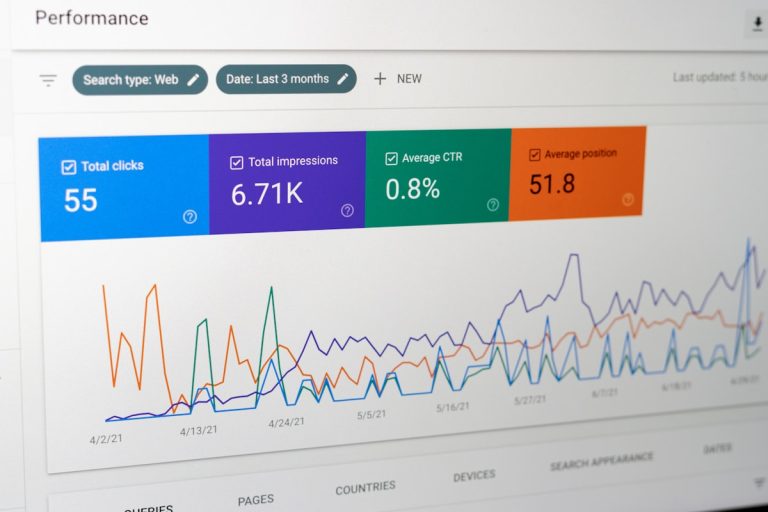
Most analytics platforms encourage vanity metrics. They show pretty graphs of climbing traffic sessions, but traffic alone means nothing if visitors bounce without buying.
Marketing agencies love to hide behind these numbers. They will present monthly decks showing a 40% jump in organic impressions, yet your bank account looks identical to last quarter. That disconnect exists because conventional SEO tools stop monitoring the moment a user lands on the page. They analyse keywords and backlink counts, but they do not connect those signals to closed revenue.
When you switch on SEO automation that scales your search performance, you remove that wall between discovery and commercial intent. An automated engine does not just aim for raw volume; it monitors search intent that correlates with purchasing habits. By connecting search optimization directly with incoming business value, you stop spending money on empty keywords that drive casual browsers instead of buyers.
How AI CMO Streamlines Revenue Tracking Without the Engineering Overhead
The entire concept behind an AI CMO is simple: automate tedious execution so you can focus on strategy. You do not need five separate subscriptions for keyword research, rank monitoring, user tracking, and CRM syncing.
Traditional product analytics treat revenue as an isolated client event; our platform approaches tracking as a complete journey:
- Continuous Discovery: It scans search opportunities, evaluates competitor movements, and creates optimised content automatically.
- Zero-Code Attribution: Instead of manual SDK instrumentation, conversions are linked across the customer lifecycle without messy JavaScript snippets slowing down your site.
- Intent Matching: Content strategies adjust dynamically based on which topics generate actual pipeline value, not just casual clicks.
- Unified Reporting: You get a clear, single view of acquisition costs, lead value, and overall return on marketing investment.
This approach gives lean teams the operational power of a complete enterprise marketing department. When your platform handles continuous optimization in the background, you never have to guess whether your organic efforts are returning real value.
Comparing Approaches: Manual SDKs vs. Autonomous AI Marketing
Let us look at how traditional manual revenue tracking stacks up against an automated AI system:
1. Implementation Speed
- Traditional Analytics: Requires backend developers to set up SDKs, write verification functions, and debug client-side discrepancies between payment processors and analytics dashboards.
- AI-Driven Platform: Plugs directly into your digital footprint, automating organic search visibility and attribution without custom code sprints.
2. Ongoing Maintenance
- Traditional Analytics: Breaks whenever you update your checkout flow or rename an event. Deprecated functions require continuous code reviews.
- AI-Driven Platform: Self-healing workflows adapt to site changes, keeping your conversion tracking steady while you run your business.
3. Actionable Insights
- Traditional Analytics: Gives you raw numbers, charts, and tables. You still have to spend hours interpreting the data to decide what to do next.
- AI-Driven Platform: Evaluates conversion patterns automatically, continuously tweaking your search content and regional targeting to drive maximum commercial return.
If you are expanding across multiple territories, integrating GEO visibility to capture local search revenue makes this insight even stronger. Localised search habits vary wildly, and automated regional targeting ensures your brand shows up where buying intent is highest.
Connecting Organic Strategy Directly to the Bottom Line
Why does organic marketing fail so often for growing businesses? Because teams execute in silos.
A content writer drafts an article based on general topic volume. An SEO specialist checks keyword densities. A developer tries to set up conversion scripts. Meanwhile, the business owner wonders why inbound leads are flat.
By unifying your marketing stack, you close that gap. The system spots what your audience searches for, writes targeted content that answers their questions, and tracks which pages move prospects toward a checkout or demo request. When you see exactly which topics produce revenue, you can double down on high-performing themes and ditch underperforming pages entirely.
You can verify your pipeline growth and test revenue tracking with unified marketing automation without hiring costly external agencies that charge hefty retainers for static monthly reports.
Taking Control of Your Marketing Operations
Marketing should not be an endless cycle of confusing dashboards, disjointed tools, and expensive agency fees. When you remove manual SDK setups and fragmented reporting tools, you give your team the freedom to focus on big-picture business goals.
Small to medium enterprises and growing startups do not have the luxury of wasting budget on vanity metrics. You need clear, unvarnished insight into what works, what converts, and where your money goes.
Automating your search presence and operational analytics changes the entire dynamic. You no longer have to wait on engineering to deploy tracking scripts or interpret complicated event properties. Everything connects naturally, giving you an honest look at your return on investment from day one.
Ready to cut through the noise, automate your organic growth, and track genuine sales impact? Explore how an AI CMO automates your revenue tracking and growth today.