The Death of the Blue Link: Why Generative Engine Optimisation Changes Everything
Let us be completely honest with each other: checking keyword positions on traditional search engine results pages is rapidly losing its punch. When potential buyers want answers today, they do not click through ten distinct blue links. Instead, they ask ChatGPT, consult Perplexity, or scan Google AI Overviews. If your business is absent from that generative answer, you simply do not exist in the buyer’s journey. Mastering GEO campaign optimization has transformed from a quirky digital experiment into survival territory. Generative engine optimisation requires you to teach large language models to cite your brand, recommend your services, and quote your data as authoritative facts.
Measuring this success, however, feels like catching smoke. Traditional analytics platforms were built for tracking simple website clicks, not conversational mentions inside AI models. You cannot merely pop open an old-school dashboard to see where you rank in a dynamic conversation that adapts to every user. To stay competitive without burning endless budget on fragmented tools or bloated agency retainers, modern brands need to scale your GEO campaign optimization with AI CMO. By combining continuous content creation with automated AI search tracking, you can systematically dominate AI conversational summaries.
The Paradigm Shift: Traditional SEO Versus Generative Engine Optimisation
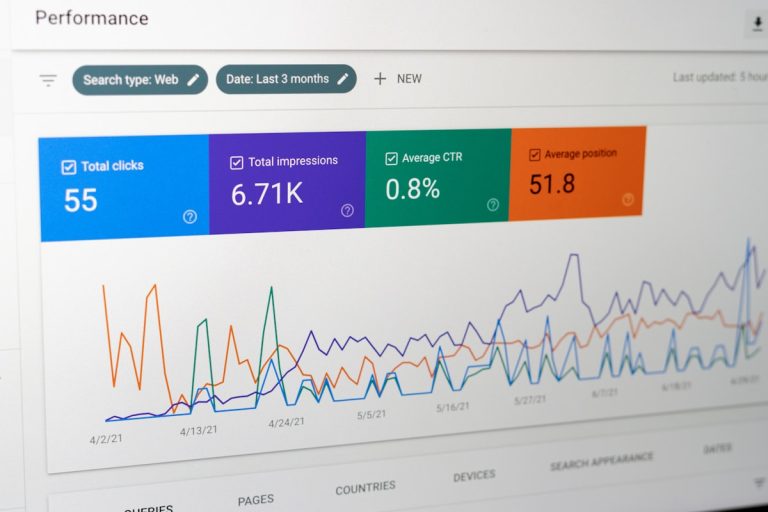
Traditional search engine optimisation relies on straightforward mechanics. You target a specific search phrase, build relevant backlinks, polish technical metadata, and hope Google places you on page one. You measure your performance with impressions, click-through rates, and average rank position. It is simple, linear, and remarkably predictable.
Generative engines throw that neat formula out of the window. When an LLM processes a prompt, it gathers diverse sources, processes their semantic authority, and synthesises a single, cohesive answer. In this environment, your success hinges on citation frequency, sentiment, and context.
Here is what really counts when measuring generative performance:
- Citation frequency: How often does the AI directly reference your domain or brand name?
- Share of Model (SoM): When users ask about your niche, what percentage of the answers include you versus your direct rivals?
- Contextual sentiment: Is the model mentioning your software as a premium market leader, or merely listing you as an afterthought?
- Prompt variation visibility: Does your brand appear across multiple variations of the same query, or only on hyper-specific prompts?
Traditional SEO monitors whether you appeared on a screen. GEO measures whether the machine actually trusted your brand enough to recommend it to a prospect. When you want to secure these mentions systematically, you can boost search rankings now through automated SEO and build the underlying domain authority that language models depend upon.
The Technical Core: How LLMs Select Sources
Language models do not crawl the web the same way web spiders do. They consume content to understand relationships between entities. To become a recurring citation inside these models, your content must hit specific semantic milestones.
1. Information Density and Factual Authority
LLMs love clear, data-backed assertions. Fluffy 3,000-word articles filled with corporate jargon get compressed into oblivion. Generative algorithms favour concise definitions, structured tables, verified statistics, and straight-to-the-point answers.
2. Digital Consensus and Brand Co-Occurrence
An engine like Perplexity or ChatGPT cross-references multiple digital sources before making a recommendation. If your brand is continuously mentioned alongside your core category across multiple platforms, directories, and trade publications, the algorithm builds a strong probabilistic association. This is where you can master GEO targeting with AI to guarantee your brand appears consistently across local, regional, and vertical digital spaces.
3. Structural Clarity
If your pages are difficult for conversational scrapers to parse, they will simply pull answers from your competitors. Clean schema mark-up, clear H2 headers, bullet points, and authoritative conclusions make it effortless for an engine to lift your content directly into its response snapshots.
The Tracking Dilemma: Why Legacy Dashboards Fall Short
Most marketing teams still spend tens of thousands of pounds each year on legacy enterprise toolkits. They buy subscriptions to Moz, Ahrefs, SEMrush, or HubSpot, alongside an assortment of boutique tracking plugins. Then they hire an agency to decode the reports.
Yet, when a board member asks, “How often are we recommended by ChatGPT when someone asks for our exact service?”, the room goes completely quiet.
Legacy toolkits focus heavily on historical analytics, backlink indices, and keyword search volume. They do not monitor conversational outputs in real time. They cannot show you how your market share fluctuates across generative queries, nor do they automate the remedial content creation needed to fix visibility gaps. Managing half a dozen disconnected dashboards results in delayed action, escalating operational expenses, and missed market opportunities.
If your strategy relies on periodic, manual prompt checking, you are operating blindly. Prompt results fluctuate based on real-time retrieval parameters, model updates, and conversational context. A unified, real-time approach is non-negotiable.
Real-Time AI Search Visibility with AI CMO
This measurement gap is precisely why the unified AI CMO platform was developed. Instead of treating research, content production, and analytics as separate chores split between expensive consultants and isolated tools, AI CMO automates the complete lifecycle.
The system continuously audits how leading conversational engines respond to high-intent buyer prompts in your vertical. It tracks brand citations, monitors sentiment, and flags shifts in visibility the moment they happen. If a competitor starts eating into your conversational share of voice, the platform does not merely alert you; it actively formulates and executes the counter-strategy.
You can streamline your entire workflow and leverage unified AI marketing automation with AI CMO, running 24/7 autonomous operations that keep your brand prominently cited across modern search environments. The platform bridges the gap between raw data collection and hands-on execution, freeing modern business owners and marketing leaders from tedious operational drudgery.
Core Metrics for Evaluating Your GEO Campaign
To prove the return on investment of your generative engine optimisation initiatives, you must track concrete, defensible metrics. Here are the primary indicators you need to assess regularly:
AI Share of Voice (AI-SoV)
Track the percentage of relevant queries where your brand is explicitly recommended compared to your top competitors. If there are 100 conversational queries typical of your target customer, and you are cited in 42 of them, your AI-SoV is 42%. Tracking this weekly reveals whether your algorithmic authority is expanding or shrinking.
Direct Referral Traffic from Conversational Interfaces
While many AI searches result in zero-click answers, conversational platforms still send substantial, highly qualified referral traffic. Monitor your server logs and web analytics for referral paths coming from platforms like perplexity.ai, chatgpt.com, and conversational web interfaces. Users clicking these sources have usually already been informed that your product is the top solution; their conversion rates tend to be exceptionally high.
To support this steady influx of high-intent traffic, it is vital to enhance your local visibility with AI so prospects in your target territory find aligned information when switching between generative summaries and regional searches.
Sentiment Score and Positioning Context
Being cited is only half the battle. If an AI engine lists your company alongside the note that your pricing is confusing or your platform is outdated, your citation is working against you. Track whether your mentions are categorised as recommended, neutral, or unfavourable.
Conversion Attribution from AI-Assisted Journeys
Customer paths to purchase are messy. Buyers frequently use AI tools for early discovery before searching for your brand name directly. Look for correlations between rising generative visibility and spikes in direct traffic, branded search volume, and demo requests.
How to Optimize Content for Ongoing AI Search Dominance
Optimising for conversational discovery is not a one-time project; it requires continuous adjustments. When you discover drops in your citation rates, use this practical framework to restore your visibility:
- Extract the Generative Consensus: Look at the answers currently winning the generative snapshot. What data sources are they quoting? What angles do they take?
- Publish Direct, Unambiguous Answers: Build dedicated resources that answer buyer comparisons, pricing inquiries, and implementation questions without evasive marketing fluff.
- Deploy Schema Mark-Up Methodically: Make sure your technical markup highlights your organisation, reviews, products, and services clearly to remove ambiguity for semantic parsers.
- Automate Publishing Velocity: AI models prioritise fresh, accurate data. Stale sites fall out of citations quickly. You can easily automate your SEO with AI to keep authoritative, search-optimised articles rolling out consistently without overloading your internal team.
Taking Action: Turning Visibility into Business Growth
The rapid emergence of artificial intelligence in search is unsettling for businesses tied to obsolete practices. Traditional marketing agencies charge massive retainers while delivering reports that ignore generative search entirely. Meanwhile, trying to piece together a workflow using multiple disconnected single-purpose tools burns through company capital and creates operational friction.
You do not need an army of consultants or an exorbitant tech stack to compete in this new era. By centralising your search engine optimisation, local geotargeting, and generative search tracking within a single automated platform, you gain speed, precision, and immense cost savings.
Real-time visibility monitoring tells you exactly where you stand inside the world’s most popular AI models, while hands-off automation ensures your site produces the exact data structures and high-value content required to maintain top positioning. Stop guessing how artificial intelligence interprets your brand. It is time to achieve measurable digital growth using AI CMO and secure your position at the forefront of modern search.