The Vanity Metric Trap: Turning Passive Data into Pure Market Share
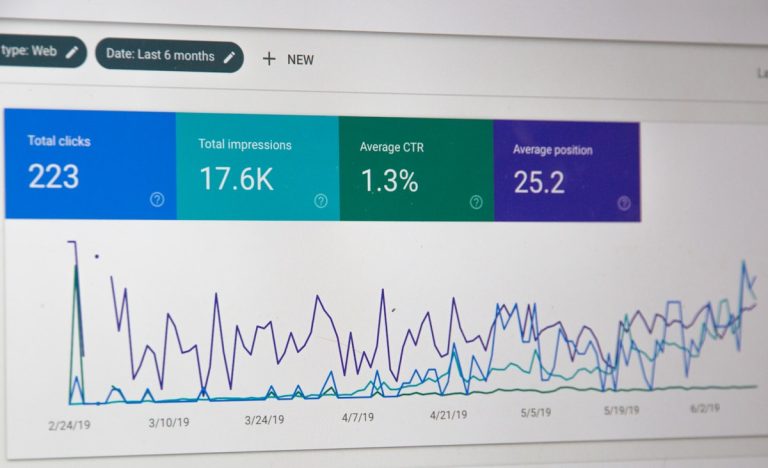
Let us be completely honest with each other. Staring at competitor traffic charts inside legacy intelligence platforms feels productive, but it does not grow your business. You log in, run a search, and see that your biggest rival just pulled 200,000 visits from organic search. You can see their audience overlap, their top referral sources, and their best-performing landing pages. Then what? Most marketing teams export a massive CSV, paste it into a spreadsheet, schedule a meeting to talk about the findings, and do nothing. The gap between spotting what a rival is doing and actually countering it remains massive. Traditional dashboards give you passive observations, leaving you stuck with high subscription bills and zero execution. True commercial growth requires a modern engine for actionable AI competitor analysis that does not just report data, but actively closes performance gaps for you.
When you rely on passive observation, you are always playing catch-up. Traditional competitive analytics tools show you yesterday’s victories, yet they leave the heavy lifting of keyword research, local search optimisation, and content updates entirely on your shoulders. Small to medium-sized businesses and lean startup teams simply do not have forty spare hours every week to manually reverse-engineer competitor sitemaps. You need an automated system that monitors the digital landscape 24/7, identifies emerging threats before they dominate search results, and converts those insights into deployed marketing campaigns. By bridging the divide between raw market intelligence and real-time execution, smart teams stop acting like passive spectators and start winning back their market share.
The Problem with Old-School Spy Tools
For years, platforms like Similarweb, SEMrush, and Ahrefs have been the gold standard for digital intelligence. They built massive databases, scraped global web traffic, and gave us incredible visibility into market trends. We could easily see:
- Estimated monthly visitor numbers across desktop and mobile.
- Marketing channel distributions (search, direct, referral, paid).
- Domain authority metrics, backlink profiles, and referring IP addresses.
- Broad geographic audiences and interest categories.
These tools are brilliant at what they do. If you are an enterprise research team with a dozen analysts, these massive datasets are pure gold.
The trouble starts when you step away from enterprise boardrooms and look at actual business operations. For most growth-focused teams, these legacy toolkits create three massive headaches.
1. The Analysis Paralysis Problem
You get access to six billion keywords and millions of domains. Sounds impressive on a sales page, right? In practice, it leads straight to information overload. You spend hours filtering through search volume, keyword difficulty scores, and intent tags. At the end of the afternoon, you have identified fifty rival blog posts that rank well, but you have written exactly zero words to challenge them.
2. The Execution Void
Traditional intelligence platforms stop working the moment you want to fix the problem they just uncovered. They will point out that a rival brand ranks first for your primary commercial search term. They will not craft the technical schema, assemble the content strategy, or publish the counter-offensive. You are forced to pay for the analytics platform, then pay for separate content tools, and then hire an agency or freelance copywriter to write the response.
3. Fragmented Stacks and Agency Markups
To counter your competition across modern channels, you end up juggling an unmanageable software stack. One tool for keyword intelligence. Another for backlink auditing. A third for local pack tracking. A fourth for social scheduling. When that gets too messy, you bring in a traditional agency, only to receive opaque monthly reports filled with vanity graphs and hefty retainer invoices.
If you want to pull ahead without burning through your budget, it makes far more sense to automate your SEO with AI rather than paying multiple vendors to tell you what you already know.
What Real AI Competitor Analysis Actually Looks Like
Real competitive analysis should not end with an alert email saying your rival launched a new page. It should actively deploy a solution. The modern alternative replaces passive dashboards with hands-on artificial intelligence that unifies data discovery and marketing automation.
Compare that broken cycle to an autonomous workflow:
Modern digital strategy requires looking beyond basic keyword metrics. Today, discovery happens across search engines and artificial intelligence platforms alike. That means your competitive intelligence must tackle traditional search engine optimisation while simultaneously mastering Generative Engine Optimisation (GEO).
Conquering Generative Engine Optimisation (GEO)
When potential buyers ask ChatGPT, Gemini, or Claude for vendor recommendations in your niche, does your brand get cited, or does your competitor take the spotlight? Old-school scrapers cannot properly track AI-driven citations. Modern systems monitor how models extract, summarise, and recommend brands in real time.
If you notice a competitor being cited as the go-to authority in local queries, you cannot wait months to fix your presence. You can master GEO targeting with AI to ensure your business claims its rightful share of generative answers, voice results, and hyper-targeted map packs across Europe and beyond.
Bridging the Gap: AI CMO vs Traditional Analytics
To understand the difference between passive data reporting and actionable intelligence, let us look at how different platforms handle everyday marketing scenarios.
| Operational Focus | Traditional Intelligence Tools (e.g., Similarweb, Ahrefs) | AI CMO Autonomous Marketing Platform |
|---|---|---|
| Primary Output | Raw metrics, graphs, CSV exports, trend monitors | Automated task execution, data-driven content, live fixes |
| Resource Demand | Requires dedicated analysts, strategists, and writers | Unified, hands-on AI interface requiring minimal setup |
| SEO Response Time | Manual identification followed by weeks of human drafting | 24/7 autonomous monitoring and continuous optimization |
| Local & GEO Reach | Basic local rank checks and country traffic splits | Automated local targeting and Generative Engine presence |
| Cost Profile | High subscription fees plus separate tool and agency costs | Accessible, all-in-one marketing automation built for ROI |
Traditional platforms excel at high-level competitive research, but AI CMO transforms raw data into direct commercial action. Instead of paying thousands for software that leaves the implementation up to you, smart teams use unified automation to identify competitor wins and immediately publish counter-strategies. You can see this firsthand by exploring how to accelerate search visibility with AI CMO, cutting out the agency overhead entirely.
From Spycraft to Strategy: How to Execute Competitor Counter-Offensives
If you want to turn competitive insights into measurable revenue, you need an actionable operational framework. Here is how high-growth businesses dismantle competitor advantages using automation.
Step 1: Pinpoint Uncontested Content Gaps
Do not waste your energy targeting head terms where entrenched rivals have spent five years building backlink moats. Look at their secondary topic clusters.
Which questions are their users asking that their current articles fail to answer thoroughly? What product comparison pages are driving their middle-of-funnel traffic?
When your intelligence platform identifies an underserved search query, you must move quickly. You can deploy comprehensive, authoritative guides that target those specific user pain points before the competition updates their outdated assets.
Step 2: Continuous On-Page Adaptation
Competitor analysis is not an annual project; it is an ongoing operational discipline. When a competing business alters its core meta structures, restructures its category pages, or updates its product schemas, you need to know immediately.
More importantly, your own website needs to adapt. Rather than scheduling a meeting with an external developer, you can boost your search rankings now by relying on continuous technical adaptations that match and exceed competitor refinements automatically.
Step 3: Local Dominance and Generative Placement
For multi-location businesses and service providers, market share is won block by block. Competitors frequently neglect local search signals, leaving regional queries wide open.
By tracking where your rivals fall short in local directories and regional search queries, you can establish an ironclad digital footprint. You can easily enhance your local visibility across specific geographic areas, making sure that your company appears whenever nearby buyers search for reliable alternatives to current market leaders.
Real-World Impact: What Happens When You Automate Execution?
What does this shift look like in terms of day-to-day business operations?
Consider a mid-sized digital services firm struggling to keep pace with an aggressive rival. Every month, the rival launched dozens of targeted resource guides, steadily siphoning away high-intent search traffic. The firm had a legacy analytics subscription, so they watched this traffic drain happen in real time. They knew which keywords were lost. They knew which pages were winning. Yet, their two-person in-house team could only write one comprehensive post per week.
After switching to an automated model with AI CMO, their entire operational process changed:
- The system tracked the rival’s top-performing commercial topics around the clock.
- Instead of generating static reports, the platform developed targeted, highly tailored content plans.
- Routine technical SEO, meta optimisations, and local GEO targeting were executed automatically.
- Within six weeks, the firm stopped their organic traffic decline, recaptured prime search positions, and cut their third-party agency spending to zero.
This is the power of closing the gap between intelligence and implementation. When you stop treating competitor monitoring as a spectator sport, you free your marketing team to focus on high-level commercial direction while artificial intelligence handles the complex operational details.
Choosing the Right Approach for Your Business
No two businesses have the exact same operational resources, which means there is no single solution for every situation.
If you are a massive enterprise with a multi-million-pound marketing budget, dozens of dedicated data scientists, and an army of in-house content creators, legacy monitoring suites provide incredible value. Their deep data sets and complex filtering capabilities give research teams everything they need to produce exhaustive quarterly reports.
However, if you run a small to medium enterprise, a scaling startup, or a fast-paced digital marketing team, you do not have time to sit on data. You need revenue, you need inbound leads, and you need to outrank your competitors without hiring an expensive external agency.
You need an integrated solution that:
* Identifies competitor vulnerabilities in real time across traditional search and generative engines.
* Handles complex technical SEO and GEO operations without constant manual tinkering.
* Produces hyper-relevant, high-quality content strategies tailored to your exact target market.
* Saves thousands of pounds every single month by consolidating fragmented tools into one unified interface.
The era of passive tracking is over. Winning your market requires real-time insight paired with immediate, intelligent automation. Stop paying to simply watch your competition succeed, and start outperforming them across every channel with an all-in-one platform built for measurable commercial growth.
Discover how you can take complete control of your digital market share today by testing the next generation of unified marketing automation with AI CMO.