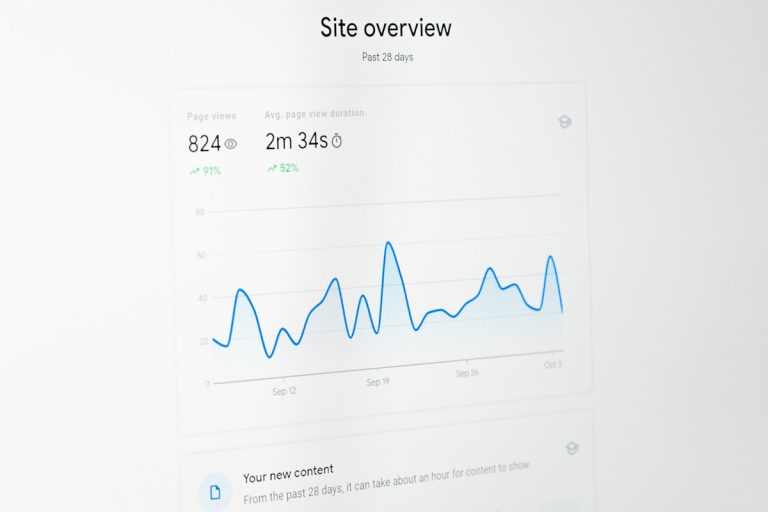
An AI marketing automation workflow is an interconnected pipeline of machine learning models, API triggers, and real-time search data that audits site health, refreshes decaying content, and optimises entity visibility across traditional search engines and AI answer engines. Rather than managing manual spreadsheets, businesses deploy automated pipelines to continuously capture organic impressions on Google and win citations on conversational platforms like ChatGPT, Claude, and Perplexity.
The Architecture of Scalable AI Marketing Automation Workflows
Marketing teams burn out because they spend forty hours a week acting as human glue between disconnected dashboards. You export decaying URLs from Google Search Console, paste queries into spreadsheets, generate a brief, wait three weeks for a freelance draft, and manually upload changes to your CMS. Modern AI marketing automation workflows eliminate this friction by turning reactive, manual tasks into self-healing operational loops. Instead of constantly reacting to algorithmic shifts after your organic traffic drops, you can connect your marketing stack with AI CMO: Unified AI Marketing Automation for Digital Growth to maintain continuous visibility across web crawlers and conversational answer engines alike.
Generative engines move too quickly for human copy-pasting. When search platforms update daily and generative answer engines evaluate brand sentiment in real time, manual updates leave your business invisible. High-performing teams replace fragmented stacks with automated triggers that identify ranking declines, update entity schema, and push context-aware copy to production automatically. By orchestrating your technical data, content production, and distribution through integrated pipelines, a lean internal team can outpace a traditional agency while cutting operational expenditure.
What Are AI Marketing Automation Workflows?
An AI marketing automation workflow is a programmatic series of tasks driven by machine learning, structured datasets, and webhooks. Unlike legacy schedulers that merely release a social post at a set time, an intelligent workflow ingests dynamic data, evaluates context, makes a tactical decision, and executes changes across channels.
Think of the difference between an old mechanical wall timer and a digital smart thermostat. The mechanical timer rings at 6:00 PM regardless of whether the room is freezing or boiling. A smart thermostat constantly checks ambient temperature, reads weather forecasts, evaluates insulation loss, and adjusts the heating valve dynamically to maintain balance.
In search and content marketing, an automated pipeline operates like that thermostat:
- It pulls search query movements directly from search APIs to find emergent customer queries.
- It identifies content decay before an organic ranking drops off page one.
- It cleans and generates schema markup so large language models recognise your brand entities.
- It updates local landing pages based on geographic intent and commercial search signals.
- It formats and distributes core insights across social channels and email newsletters.
Automating these mechanics bridges the gap between traditional search algorithms and generative models, giving your team persistent visibility across every platform your buyers consult.
Why SEO and GEO Both Require Automation Today
Traditional search engine optimisation centred on securing top placement across ten blue links. You researched high-volume keywords, built backlinks, tweaked title tags, and waited for indexation. That manual approach worked when search results were static. It fails in an environment dominated by Generative Engine Optimisation (GEO).
Buyers increasingly ask conversational engines like Perplexity, ChatGPT, and Google AI Overviews for direct commercial recommendations. These engines do not present a long list of external links; they synthesise multiple sources, draft an immediate answer, and cite two or three authoritative web entities. If your digital assets lack clear structured markup, factual clarity, and continuous freshness, AI models omit your business completely.
Managing this manually is impossible. No team has the bandwidth to test hundreds of prompt variations across multiple LLMs, track brand sentiment, inspect schema validity, and write daily technical updates by hand. By deciding to Automate Your SEO with AI, you deploy background processes that handle continuous keyword monitoring and structured data fixes, keeping your site discoverable for both traditional crawlers and generative systems.
Traditional SEO Workflows vs GEO Automation Pipelines
While traditional SEO and GEO both aim to capture qualified traffic, their operational triggers and outputs differ significantly. Structuring reliable pipelines requires understanding how these two disciplines function under the hood.
Traditional SEO Pipelines
Traditional search pipelines focus on crawl accessibility, link equity, and algorithmic keyword alignment. The core automated tasks include:
- Server Log and Status Code Audits: Listening for 404 errors, redirect loops, and server latency issues that disrupt crawl budgets.
- Internal Link Rebalancing: Detecting newly published resources and automatically inserting contextual links from older, high-authority articles to pass ranking power.
- Keyword Cannibalisation Checks: Flagging when two internal pages fight for the exact same query, prompting automated canonicalisation or content merges.
GEO and LLM Citation Pipelines
GEO pipelines prioritise entity clarity, direct answer architecture, and factual consistency across the web. Key automated operations include:
- Structured JSON-LD Injection: Dynamically updating Schema.org markup to explicitly state your business services, leadership, products, and regional coverage for machine readers.
- Direct-Answer Formatting: Restructuring complex informational headers and paragraphs into concise definitions that generative engines can lift and quote verbatim.
- Third-Party Entity Audits: Monitoring external business directories, brand databases, and industry portals to ensure generative engines encounter consistent brand data everywhere.
When unified into comprehensive AI marketing automation workflows, these two systems operate in tandem, capturing high-intent search clicks while defending your brand’s presence in conversational answer boxes.
Five Core AI Marketing Automation Workflows You Can Deploy
Setting up automated systems does not require months of custom development. You can transform your operations by deploying five practical, high-leverage workflows.
1. The Keyword Decay and Autonomous Refresh Loop
Content decays over time. Competitors release fresher data, search algorithms update their topical thresholds, and your primary articles slip down the rankings. Left unchecked, traffic decay erodes your inbound pipeline.
- The Trigger: A scheduled API call to Google Search Console flags any URL that has lost more than three average ranking positions over the preceding 45 days.
- The Action: The system crawls the current top-three ranking pages for the target query, identifies content gaps or outdated references, and drafts revised sections with updated internal links and headers.
- The Output: The revised draft is pushed into your CMS staging environment as a pending update, complete with a summary of edits for rapid editorial review.
This loop preserves your hard-won ranking positions automatically, preventing historical content from turning into a liability.
2. Real-Time Regional and Localised Targeting
Prospective clients search with distinct regional intent. A prospect searching from Birmingham expects relevant regional case references, correct currencies, and local context, not a generic international landing page.
- The Trigger: An inbound visitor arrives with verified regional parameters, or a scheduled workflow identifies an underperforming geographic postal code cluster.
- The Action: The pipeline adapts regional service pages by inserting verified local case references, geographic coordinates, and targeted operational details into on-page copy and schema.
- The Output: Search engines index hyper-relevant regional landing pages, and AI answer engines associate your organisation with specific geographical zones.
To capture regional demand without spending weeks writing localized variations manually, marketing teams can Master GEO Targeting with AI to maintain localized visibility at scale.
3. Continuous Technical Health and Structured Data Remediation
Missing image attributes, broken redirects, and broken schema headers undermine crawl performance. Running a manual quarterly audit means technical problems linger unnoticed for months, damaging your organic standing.
- The Trigger: A new post or landing page is published inside your CMS.
- The Action: A headless validation script inspects the live page, checks heading hierarchy (H1 to H3), confirms image alt attributes, verifies OpenGraph tags, and generates valid JSON-LD schema.
- The Output: Formatting oversights are corrected via a CMS webhook in real time before search engine crawlers index the URL.
4. Cross-Channel Content Extraction and Distribution
Creating an authoritative, original guide demands substantial effort. If you publish it solely on your blog and walk away, you miss critical distribution opportunities across social networks and direct subscriber feeds.
- The Trigger: A new long-form educational article is published on your main domain.
- The Action: An AI module reads the source material, extracts key takeaways, writes conversational discussion posts for professional networks, and drafts an engaging summary for your email list.
- The Output: Formatted updates are pushed to your distribution queue with canonical links leading back to the original article, driving immediate referral traffic.
5. Conversational Citation and AI Sentiment Tracking
Standard rank-tracking tools tell you where your website sits on a desktop search page. They do not tell you if ChatGPT suggests your tool or whether Perplexity references a competitor when prompted for recommendations.
- The Trigger: A daily automated process queries conversational AI platforms with commercial buying prompts specific to your sector.
- The Action: The pipeline analyses the generated answers, records whether your brand was cited, tracks competitor visibility, and evaluates sentiment.
- The Output: A consolidated daily report highlights prompts where your business lost citations, pinpointing exactly where your off-page authority and documentation need reinforcement.
Best Practices for Constructing Reliable Marketing Pipelines
Automating your marketing workflows offers clear speed advantages, but automation without oversight creates chaotic outputs. Follow these operational guidelines to protect your brand equity:
Maintain Human Editorial Governance
Never allow an automated system to publish high-stakes thought leadership, company announcements, or pricing adjustments without human review. Use automation to monitor data, surface issues, handle technical schema, and draft outlines. Keep a human editor as the final quality control gate. This approach maintains strategic quality while removing administrative busywork.
Establish a Single Source of Brand Truth
AI models reflect the context they receive. If your pipeline accesses an outdated PDF containing obsolete pricing or deprecated feature lists, it will propagate incorrect details across your digital channels. Maintain a centralised, verified knowledge base containing approved messaging, product specifications, and brand voice guidelines to keep all automated actions accurate.
Enforce Retrieval Constraints to Prevent Hallucinations
When deploying AI models to draft technical guides or compare services, require the models to ground their answers in verified internal files or specific research databases. Restricting generation to factual source documentation prevents inaccurate assertions from slipping into public-facing content.
Conduct Weekly Operational Audits
Do not configure an automated system and ignore it. Web APIs change, content schemas evolve, and search engines update ranking algorithms. Dedicate thirty minutes each week to review system logs, inspect pending revisions, and confirm that all integrations run cleanly. Regular maintenance prevents small technical snags from compounding into major indexation issues.
How AI CMO Replaces Fragmented Marketing Toolstacks
Most organisations attempting to modernise their search presence run into tool sprawl. You end up subscribing to one tool for keyword tracking, another for technical crawls, a third for content drafting, a fourth for social distribution, and an external agency to connect the dots. Costs escalate rapidly, integrations break, and teams spend more time debugging workflows than growing the business.
AI CMO replaces this fractured setup with an integrated platform built specifically for unified SEO, GEO, and multi-channel automation. By consolidating data analysis and autonomous execution into a single interface, it handles the complex mechanics of modern search visibility:
- SEO & GEO Autopilot: An always-on automation engine that continuously resolves technical issues, updates keyword targeting, and formats digital assets for traditional search engines and AI answer platforms. It acts as an autonomous digital marketing department, eliminating the need for expensive agency retainers.
- AI Visibility Tracker: A tracking module that monitors how your brand is cited across conversational AI platforms. It evaluates sentiment, uncovers authority gaps, and highlights the exact queries your competitors currently win.
- AI Content Strategist & Generator: A data-led generation engine that tracks live search behaviour to create authoritative articles, targeted email sequences, and social campaigns tailored to buyer intent.
- LinkedIn Chrome Plugin: A focused browser extension that streamlines outreach by automating personalized communication and managing prospective leads directly within the social interface.
By uniting these components under one roof, AI CMO enables lean marketing teams to execute sophisticated, enterprise-grade campaigns without bloated headcount or agency fees.
Common Pitfalls to Avoid in Marketing Automation
Setting up automated systems can dramatically accelerate content production, but moving too quickly often leads to costly errors. Keep an eye out for these operational traps:
Choosing Production Volume Over Quality
It is easy to set up an automated script that produces thirty generic blog posts every day. Avoid this temptation. Search platforms and AI engines easily identify thin, derivative copy. A single in-depth, original guide answering specific commercial problems will generate far more value than dozens of superficial pages created without real substance.
Neglecting Machine-Readable Data Structures
Many marketing teams focus exclusively on visual page design, adding heavy visual scripts while ignoring underlying markup. If conversational engines cannot parse your core content because of messy code and absent schema, they will ignore your site. Always pair clear prose with valid, structured markup.
Running Disconnected Channel Silos
Treating search optimisation, social distribution, and email messaging as separate operations leads to disjointed communication. When your search pipeline reveals that your target audience is researching a specific operational challenge, your social posts and email newsletters should address that exact theme. Cohesive AI marketing automation workflows ensure every channel supports the same strategic focus.
Practical Steps to Deploy Your Automated Growth Engine
Transitioning to automated marketing workflows does not require rebuilding your entire technical infrastructure overnight. Follow this practical, phased implementation framework:
Step 1: Document Repetitive Administrative Chores
Begin by auditing the recurring tasks your team performs over a typical two-week period. Calculate the hours spent on routine duties: pulling ranking spreadsheets, fixing broken links, formatting schema, or adapting existing articles for social media. These repetitive tasks represent your immediate automation targets.
Step 2: Consolidate Master Brand Documentation
Before connecting generative tools to your CMS, verify your source knowledge. Ensure service descriptions, product features, and technical details are completely accurate and documented in an accessible format. Confirm your website has clean URL paths, up-to-date XML sitemaps, and active search console connections.
Step 3: Implement Your First High-Value Pipeline
Do not attempt to automate every channel at once. Select a single high-impact pipeline, such as an automated keyword decay refresh loop or real-time technical schema remediation. Establish an internal review process so your team can verify the accuracy and tone of the output before publication.
Step 4: Add Conversational Tracking and Multi-Channel Repurposing
Once your foundational search automation operates smoothly, expand into multi-channel formatting and conversational citation monitoring. Track your brand’s presence across AI answer engines compared to direct market rivals, and use that visibility data to guide upcoming content strategies.
Step 5: Evaluate Measurable Commercial Outcomes
Assess your automation strategy based on business metrics rather than vanity numbers like raw word output. Track tangible indicators: hours saved on manual tasks, growth in qualified organic search visits, frequency of AI engine citations, and overall customer acquisition efficiency.
Achieving durable organic growth does not require an army of external contractors or bloated agency budgets. By implementing systematic, data-led pipelines, your business can protect its organic rankings and secure authoritative placement across modern AI interfaces. To automate routine search maintenance and scale your organic visibility sustainably, Start Your SEO Autopilot and let intelligent automation accelerate your growth.