Why Traditional Dashboards Fall Short for Real-Time SEO Performance Tracking
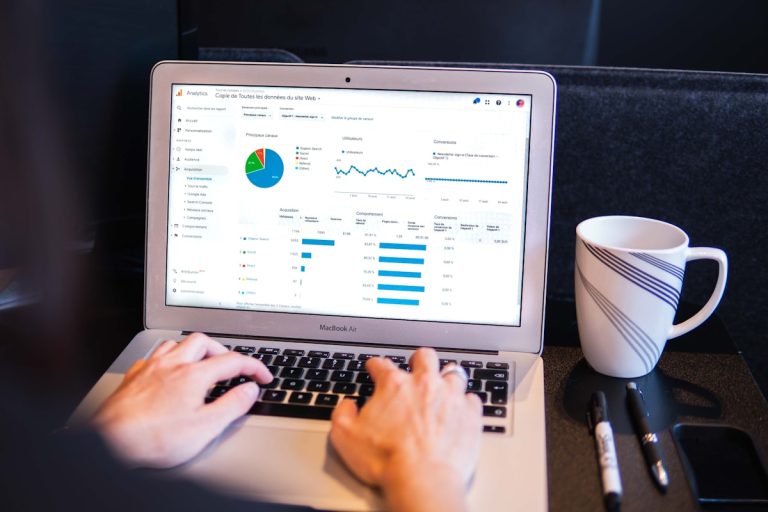
Let us be honest for a moment. Most modern marketing teams spend far too many hours staring at static dashboards, piecing together Google Search Console data, and building custom reports in legacy platforms like HubSpot or SEMrush. You set up integrations, sync properties, track total impressions, total clicks, average clickthrough rates, and average positions, only to realise that the data you are analysing is already days old. When you rely solely on manual reporting setups, finding an issue with your rankings means reacting after the damage is done. True modern marketing requires a shift towards immediate insight and fast execution, where AI CMO simplifies SEO performance tracking and execution so you spend less time configuring integrations and more time securing top search positions.
The traditional approach to tracking search metrics relies on lagging indicators. You spot a dip in organic impressions from last week, try to figure out which URLs lost ground, and manually tweak meta tags or refresh content over the coming month. That slow loop costs small to medium enterprises (SMEs) and fast-growing startups thousands of pounds in lost organic growth. By replacing clunky report builders with an intelligent, automated digital marketing system, you turn passive metric monitoring into active optimization. Instead of endlessly clicking through nested settings menus just to compare ten web pages at a time, you get a real-time command centre that diagnoses search ranking shifts instantly and takes immediate corrective action.
The Flaws of Conventional SEO Dashboards
Legacy inbound marketing platforms and analytics toolkits have provided value for years, but their operational burden has grown heavy. Consider the typical workflow required to monitor search visibility on traditional platforms:
- You log into your analytics hub and search for your integration settings.
- You connect Google Search Console and select specific verified site properties.
- You navigate through multiple sub-menus to access basic metrics like clicks, impressions, CTR, and average position.
- You export CSV spreadsheets or manually save individual dashboard reports to share with your team.
- You compare individual URL performance up to a strict limit, often ten pages at a time.
This manual workflow creates major bottlenecks. Knowing that your average position dropped from 8.2 to 12.4 on a key product page is helpful, but it does not fix the problem. You still have to diagnose why the drop happened, rewrite key content, adjust internal linking structures, and re-optimise for intent.
For growing businesses, maintaining this process across dozens or hundreds of landing pages consumes valuable hours. You end up paying steep monthly subscriptions for traditional suites, only to act as an un-salaried data administrator who feeds metrics into spreadsheets. To escape this loop, forward-thinking teams are switching to fully automated SEO Automation tools that monitor rankings 24/7 and execute fixes automatically.
How AI CMO Transforms SEO Performance Tracking
What if your analytics software did not just display charts, but actually fixed the underlying issues? That is the fundamental difference between standard tracking tools and AI CMO. Rather than presenting you with raw numbers and leaving you to figure out the rest, an integrated AI marketing engine works continuously in the background to streamline search intelligence.
1. Instant Metric Interpretation
When a page experiences a sudden loss in search visibility or impressions, AI CMO alerts you instantly and explains the underlying cause. Is it a loss of content relevance, a shift in search intent, or a competitor moving ahead with fresh content? Instead of spending hours digging through Search Console filters, you receive actionable diagnostic summaries right away.
2. Autonomous Content and Keyword Refinement
Once an opportunity or decline is identified, the AI engine gets to work. It automatically refines meta descriptions, adjusts heading structures, and updates body content to match target keywords and conversational search patterns. If your business targets local markets across Europe or specific regions, you can leverage dedicated AI-driven GEO Visibility strategies to ensure regional search engines highlight your offerings.
3. Unified Multi-Channel Context
Search engine ranking does not happen in a vacuum. Organic traffic is heavily influenced by content freshness, brand signals, and overall digital engagement. AI CMO tracks your search presence alongside broader multi-channel activities, ensuring your content output aligns directly with real-time consumer search trends.
Comparing Leading Marketing Tools with AI CMO
To understand why modern marketing teams are shifting towards intelligent automation, let us compare standard industry tools against a unified AI marketing platform.
| Capability / Feature | Traditional Analytics Suites (HubSpot, SEMrush, Ahrefs) | Unified AI Marketing Platform (AI CMO) |
|---|---|---|
| Data Collection | Historical snapshots & manual exports | 24/7 continuous real-time tracking |
| Actionable Insights | Passive charts requiring manual analysis | Automated root-cause diagnoses |
| Task Execution | Manual content edits & external plugin setups | Autonomous content refinement & SEO execution |
| Local Search & GEO | Basic location tracking | Dedicated, real-time GEO optimisation |
| Operational Overhead | Requires dedicated SEO managers or expensive agencies | Hands-on, user-friendly interface with low overhead |
As the comparison shows, standard analytics platforms excel at displaying historical data, but they lack the automated engine required to close the gap between analysis and action. You can boost search visibility in real time with AI CMO without spending a fortune on external agency retainers.
Practical Steps to Master Real-Time Search Analytics
Switching to a real-time, automated monitoring setup does not mean abandoning fundamental search principles. It means powering those principles with artificial intelligence. Here is how you can modernise your search tracking workflow step by step:
Step 1: Establish Your Core Baseline
Before automating your workflow, establish clear target metrics. Focus on meaningful performance indicators rather than vanity metrics:
* Organic Conversion Rate: Are search visitors taking high-value actions on your site?
* High-Intent Keyword Rankings: How are your primary product and service keywords performing?
* Search Impression Share: What percentage of total search demand is capturing your brand’s presence?
Step 2: Implement Continuous 24/7 Monitoring
Instead of scheduling a weekly or monthly SEO audit, set up automated monitoring that runs constantly. With continuous tracking, you catch algorithmic shifts, indexing errors, and competitor movements the exact day they occur. Leveraging an intelligent SEO Automation workflow allows your website to adapt quickly to changing algorithms without disrupting your daily calendar.
Step 3: Automate Low-Level Execution Tasks
The biggest waste of digital marketing resources is manually updating title tags, fixing missing alt text, and re-optimising existing blog posts one by one. Let AI handle these routine operational tasks. This frees your leadership and marketing team to focus on high-level strategic growth, creative campaigns, and product development.
Step 4: Expand Local and Regional Reach
If your target audience spans different countries or municipalities across the UK and Europe, standard global search strategies are not enough. You need precise geographical relevance. By deploying advanced GEO Visibility solutions, you ensure your business ranks prominently in localized search listings and conversational AI responses alike.
Future-Proofing Your SEO Strategy in the Age of AI Search
Search engines are evolving at a breakneck speed. Generative search interfaces and conversational AI tools are changing how consumers find answers online. Static keywords and old-school reporting tools are no longer sufficient to keep your brand visible.
To maintain a competitive edge, businesses must pivot from passive measurement to active, continuous optimization. AI CMO bridges the gap by delivering a unified digital marketing platform designed specifically for SMEs, startups, and agile teams. It eliminates the need for expensive marketing agencies and fragmented software subscriptions, putting robust, real-time control straight into your hands.
By combining real-time tracking, automated content updates, and multi-channel marketing intelligence, you protect your search visibility while dramatically lowering your operational overhead.
Are you ready to stop drowning in raw data and start generating measurable growth? Take full control of your digital presence today: Start tracking and automating your SEO performance with AI CMO.