Why Modern Search Requires Real Science (Not Guesswork)
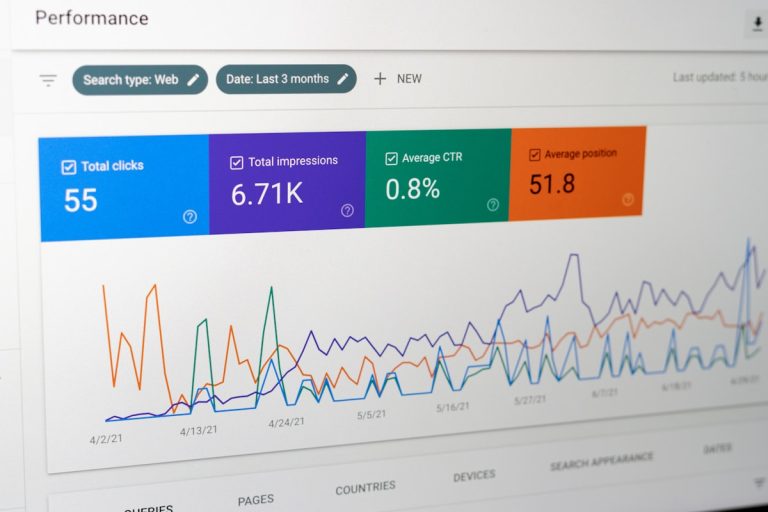
Search is no longer a tidy list of ten blue links on a white page. Over the past year, academic research into information retrieval and generative algorithms has revealed a fundamental shift in how digital engines index, cite, and retrieve knowledge. Traditional search engines looked at keywords and backlinks like a phone directory. Today, generative discovery engines evaluate semantic entity graphs, topic density, and context clusters to assemble live answers. If your business relies on old-school tactics, you are essentially whispering in an empty auditorium. Mastering modern discovery means leaning hard into robust AI performance analytics to track how machine learning models read, digest, and serve your domain to active buyers.
This is where academic theory meets real market execution. Researchers continue to publish papers exploring the structural governance and economic realities of artificial intelligence in corporate spaces. Yet, most everyday marketing teams remain trapped behind bloated agency retainers or fractured tool stacks that fail to bridge theory and action. Rather than drowning in endless dashboards, ambitious businesses need unified systems that extract algorithmic principles and transform them into direct growth. To see real pipeline expansion today, founders must explore unified AI performance analytics with AI CMO, converting technical insights into sustained online reach.
The Academic Shift: From Classic Search to Generative Engine Optimisation
Recent pre-prints and computer science literature document an undeniable pattern: generative discovery models (like Perplexity, ChatGPT search, and Google’s AI Overviews) operate on complex retrieval-augmented frameworks. They do not just pull up the page that mentions a keyword fifteen times. Instead, they scan wide information spaces, compute authority weights, and synthesise recommendations.
Think of it like hiring a master researcher instead of looking through an index card drawer. The researcher cares about topical completeness, verifiable facts, and brand relevance within specific niches. If your content library lacks semantic depth, these neural networks simply bypass your site when formulating direct answers.
This transformation poses massive structural challenges for small to medium-sized enterprises across the United Kingdom. Traditional marketing agencies charge thousands every month to tweak meta tags, but they often ignore how generative platforms parse text. To keep pace, brands must shift their perspective from manual keyword placement to systemic entity coverage. You can read our detailed guide on how to check your brand’s AI visibility to see how modern answer engines view your company right now.
Breaking Down the Operational Bottleneck for Growing Brands
Most businesses hit a very familiar wall when attempting to implement enterprise-grade discovery strategies. Their internal resources are limited, operational expenses keep climbing, and their software stack looks like a patchwork quilt:
- One platform for keyword research that gives outdated historical figures.
- Another dashboard for social scheduling that fails to communicate with search goals.
- A detached reporting tool that delivers confusing vanity metrics weeks after the budget has vanished.
The result is inconsistent marketing execution, delayed results, and immense operational fatigue. Marketing teams end up spending 80% of their time shuffling spreadsheets and manually tweaking copy, leaving zero time for strategic direction.
Without 24/7 visibility and live adjustments, your content decays faster than ever. When an algorithm updates its vector embeddings, a site managed with monthly manual checks falls behind instantly. Maintaining high-impact visibility demands real-time monitoring and immediate execution.
Translating Academic AI into Day-to-Day Market Visibility
How do we take high-level research concepts, such as semantic relevance matrices and multi-modal information extraction, and turn them into commercial traffic? It starts with continuous auditing and autonomous optimisation.
Instead of waiting for an agency analyst to compile a quarterly retrospective, modern marketing operating systems track your standing continuously. They evaluate how real discovery models parse your pages, pinpoint informational gaps, and prepare structured content to claim those missed positions. To take control of these real-time signals, proactive teams choose to automate your SEO with AI and eliminate repetitive manual maintenance.
Continuous algorithmic alignment provides your brand with measurable authority:
- Information Density: Generating copy that answers specific queries completely without fluff or buzzwords.
- Context Clustering: Grouping related topics so answer engines recognise your site as an authoritative entity within your industry.
- Multi-Channel Distribution: Ensuring your core research and perspective appear on social spaces, knowledge repositories, and search surfaces simultaneously.
When these elements sync up, your target audience finds your brand naturally, whether they type a fragmented query into Google or ask a generative assistant for a vendor recommendation.
Governed Autonomous Execution: The Crucial Role of Human-in-the-Loop
A major pitfall of the recent AI boom is the rise of unrestrained, black-box content generators. Marketers quickly realised that dumping thousands of unverified, generic articles onto a website leads to ranking penalties, diluted brand equity, and factual errors. Academic literature highlights this compliance and reliability issue repeatedly. Automated systems require structural guardrails.
This is why verified execution platforms stand apart from basic text generators. In a governed framework, AI operates like an elite operations manager. It handles heavy data mining, competitive analysis, and drafted content. However, human operators retain explicit control over approvals and live site modifications.
Before any page goes live or any strategy shifts, you review clear action logs, signed confirmations, and permission checks. This governed approach guarantees brand consistency while delivering the speed of automation. It lets a lean UK business run marketing operations at the level of a global enterprise without surrendering quality control. Curious teams can learn how to onboard & manage your brand with aiCMO to discover how governed oversight works in practice.
Halfway through the journey toward automated growth, businesses must decide whether to stay bogged down by manual labour or adopt systems built for algorithmic scale. To maintain an edge against larger competitors, founders rely on actionable AI performance analytics for continuous visibility across all channels.
Mastering GEO Visibility: Why Local Context Trumps Blanket Campaigns
Broad national or international targeting is often inefficient for growing regional brands. In algorithmic search, geographical relevance (GEO) operates under distinct rules. Generative models evaluate local business citations, contextual community links, and region-specific intent before surfacing recommendations.
If a potential client in Manchester or London asks an AI assistant for the best commercial provider in their sector, the model weighs regional authority heavily. If your marketing engine treats Manchester the same as Chicago, you burn money with little to show for it.
Mastering local context requires building out targeted landing assets, answering hyper-local questions, and aligning your structured data with geographic coordinates. When you master GEO targeting with AI, your digital presence matches exact localized search queries without creating hundreds of repetitive, manual pages.
Comparing Traditional Marketing Systems with Autonomous AI Engines
To appreciate the difference between conventional tool stacks and unified operations, let us examine their structural trade-offs:
| Strategic Attribute | Conventional Agencies & Siloed Tools | Unified AI Marketing Platform |
|---|---|---|
| Operational Workflow | Disjointed point tools requiring manual synchronisation | Single operating system linking research directly to action |
| Execution Latency | Weeks to plan, review, and publish campaigns | Real-time drafting, structured audits, and instant updates |
| Auditing Frequency | Monthly or quarterly retrospective reports | 24/7 continuous monitoring across search surfaces |
| Algorithmic Adaptation | Slow adjustments based on outdated industry folklore | Instant response to generative discovery shifts |
| Resource Overhead | High monthly retainers and multiple software subscriptions | Predictable costs with minimal human operational strain |
Point tools like standalone rank checkers or backlink monitors tell you what went wrong after the damage is done. They lack native execution mechanisms. Conversely, a comprehensive marketing operating system closes the gap between insight and output, tracking algorithmic changes and drafting verified updates instantly. For teams managing diverse touchpoints, mastering how to manage multi-channel with aiCMO shows how cross-channel synchronisation operates seamlessly behind a single interface.
If your regional reach has stalled, it pays to enhance your local visibility by deploying targeted data models that adapt to shifting user behaviours.
Real-World Impact: From Stalled Rankings to Scaled Visibility
Theory is fine, but measurable outcomes dictate business success. Real-world applications of these methods consistently prove that removing marketing fragmentation accelerates revenue.
Consider an emerging business struggling to reach target buyers. By shifting away from opaque agency contracts and adopting continuous optimisation, the company begins auditing search presence daily. It identifies technical errors, repairs broken schema structures, and identifies precise queries where competitors lack comprehensive answers.
Within weeks, search engines register this surge in informational value:
- First, crawl frequencies increase as retrieval bots detect regular, high-value additions.
- Next, brand references appear more frequently in generative AI summaries.
- Finally, inbound organic traffic transitions from unpredictable spikes to predictable inbound leads.
Because the system tracks metrics around the clock, performance dips never go unnoticed. If an algorithm update modifies how page context is evaluated, the platform flags the adjustment immediately. Marketers can start your SEO autopilot to keep content continuously refined without burning internal hours on manual audits.
Building a Resilient Digital Foundation for the Future of Search
The pace of technological change shows no signs of slowing down. As search platforms integrate more synthetic reasoning and personalised answers into daily workflows, the gap between forward-thinking companies and digital laggards will widen.
Relying on traditional techniques or disconnected software subscriptions is no longer just inefficient; it carries significant commercial risk. Winning the future of search requires treating marketing as an ongoing, data-driven science. By leaning on verifiable frameworks, human-guided agent execution, and continuous optimization, your brand can build enduring market authority.
You do not need an army of specialists or a massive agency budget to dominate your space. You simply need tools built for how search engines actually work today. Take the definitive step toward modern marketing operations and scale your market growth with AI CMO right now.