Stop Guessing: Why Content Performance Tracking Demands Full Automation
Publishing blog posts into a void and praying for search traffic is exhausting. Most growing businesses spend thousands of pounds on copywriters, designers, and disconnected tools, only to wonder why their organic traffic barely moves. You write a piece, paste it into your CMS, schedule social posts manually, and then check Google Analytics three weeks later, completely blind to what actually moved the needle. Traditional content delivery networks and modern headless CMS platforms like Contentful give developers fantastic API frameworks to deliver text to any screen, but they leave the hard work of daily strategy, keyword monitoring, and algorithmic course correction entirely on your shoulders. A composable repository stores your words, but it does not tell you why your articles are slipping down the rankings or how to fix them in real time.
That disconnect creates a massive resource sink for small and medium-sized enterprises. If you want sustainable digital growth, you cannot treat content creation and analytics as separate chores handled by bloated teams. You need an automated system that handles ideation, technical optimisations, multi-channel distribution, and continuous performance measurement under one roof. When you modernise your stack with content performance tracking powered by AI CMO, your business bridges the gap between raw strategy and real-time execution, turning passive articles into active growth engines without adding to your overheads.
The Headless CMS Trap: Great Infrastructure, Zero Autonomous Strategy
Platforms like Contentful made a name for themselves by decoupling the backend database from the frontend website. Developers love this flexibility because they can pipe articles to mobile apps, smart displays, and bespoke web apps using clean APIs. Marketers enjoy having a central hub where they can organise structured text fields. But let us be honest about what a headless CMS actually does: it is a passive filing cabinet. It sits quietly, waiting for your team to research topics, write drafts, fix technical meta tags, manually set local canonicals, and figure out why nobody is reading your guides.
When you rely exclusively on composable content platforms, the actual marketing legwork remains completely manual. Your team has to pull analytics from Google Search Console, cross-reference keyword positions in third-party SEO trackers, spot pages losing ground, and write briefs to revise the text. Most small marketing departments simply do not have the hours in the week to manage that workflow. As a result, content decays. Outdated articles drag down your domain authority, and high-intent commercial terms get scooped up by bigger competitors with deep pockets.
To bridge this operational void, businesses are turning to autonomous marketing agents. Rather than treating content as static database entries, forward-thinking teams link their publishing pipelines to automated intelligence. You can learn more about managing continuous multi-channel workflows through our guide on how to manage multi-channel with aiCMO, giving your operational team immediate relief from repetitive admin.
Closing the Loop: What Real Content Performance Tracking Looks Like
True tracking is not a monthly PDF export filled with vanity metrics. It does not mean looking at pageviews or bounce rates after your budget has already been spent. Practical content performance tracking requires a continuous, real-time feedback loop. If an article goes live on Monday, your tracking layer should immediately inspect its technical health, indexation status, ranking trajectory, and visibility across both traditional search engines and emerging AI answer engines.
To build a reliable organic presence, your tracking infrastructure must constantly monitor four foundational pillars:
- Search Intent Alignment: Tracking whether your content matches the exact search query patterns and user expectations over time.
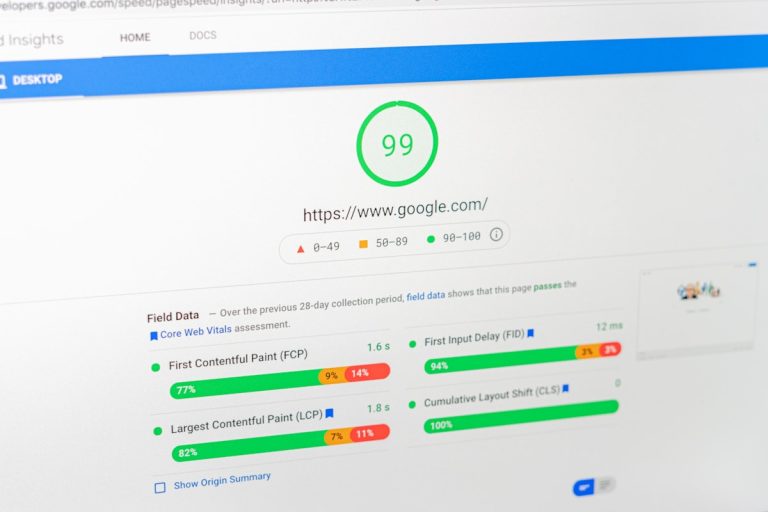
- Technical Health and Core Web Vitals: Checking that pages load instantly, schema markup stays intact, and canonical links point where they should.
- Search Engine Algorithm Movements: Spotting small drops in organic rankings before they turn into complete traffic wipeouts.
- GEO and Generative Visibility: Verifying how well your local presence and brand name are cited inside regional search results and LLM-driven summaries.
By linking continuous audits directly to your publishing platform, you stop treating marketing as an educated guess. If your content starts losing visibility for high-value transactional queries, your systems ought to flag the decline instantly and draft corrective revisions automatically. You can automate your SEO with AI to ensure technical updates and keyword updates happen automatically whenever algorithms shift.
Multi-Channel Distribution Without Operational Chaos
Publishing a brilliant piece of content on your website is only half the battle. If nobody knows it exists, it cannot attract backlinks, social signals, or referral visits. Yet, manually repurposing a single 1,500-word blog post into five LinkedIn updates, an email newsletter, and regional landing pages eats up hours of creative energy. Many founders hire expensive digital marketing agencies just to handle this cross-posting routine, only to receive generic copy and confusing retainers with minimal transparency.
True automation eliminates this friction by treating a core piece of content as a foundation for coordinated execution. When an informative article is completed, an automated operating system immediately extracts the core takeaways, tailors the tone for professional social networks, and schedules the assets across your distribution channels.
If you are looking to simplify your local reach across different territories while expanding your brand footprint, you can enhance your local visibility without spending endless weekends writing distinct local landing pages. Tracking engagement metrics across these various touchpoints reveals which messages click with your audience, feeding valuable data straight back into your editorial roadmap.

Governed Execution: The Power of Human-in-the-Loop AI
A lot of marketers are reasonably cautious about fully handing their brand voice over to artificial intelligence. We have all seen low-grade generative tools flood the web with repetitive, hollow text that reads like an instruction manual. Purely autonomous agents running wild without checks can quickly cause reputational issues, alter key commercial claims, or generate hallucinated facts that damage customer trust.
The solution is not to run away from automation, but to implement strict, governed execution. You want an intelligent engine that does the heavy research, handles data analysis, and prepares complete campaigns, but leaves final approval firmly in your hands. This is precisely how modern AI CMO systems operate:
- Autonomous Intelligence Gathering: The system reads your live workspace data, monitors Search Console insights, and researches competitor gaps.
- Structured Strategy Preparation: It plans upcoming editorial calendars, generates fully optimised drafts, and details proposed technical tweaks.
- Human Authorisation: You receive a clear preview detailing the proposed updates. No code changes, content alterations, or social posts go live without your explicit sign-off.
- Idempotent Execution and Auditing: Every action uses cryptographically signed confirmations, rigorous permission checks, and searchable activity logs.
When you use unified systems, you achieve exceptional operational speed while maintaining complete control over your brand narrative. If you are ready to remove agency overheads and deploy verified campaigns, you can explore scalable content performance tracking with AI CMO to build consistency across your online properties.
To speed up publication on your existing digital properties, you can also deploy the WordPress Plugin Beta, allowing your approved content and performance changes to sync straight to your CMS without custom developer sprints.
The Modern Search Landscape: SEO Meets Generative Engine Optimisation
Content tracking used to focus entirely on standard ten-blue-link results. You tracked keyword rankings on desktop and mobile, checked your click-through rates, and adjusted your meta titles. That traditional workflow is no longer enough. The rise of conversational assistants and AI summaries has completely altered how buyers discover products and service providers.
Today, prospects ask search engines natural questions, and AI engines summarise recommendations directly on the results page. If your company is not cited within these conversational answers, you miss out on high-intent leads who never click through to a traditional list of links. This shift has created an urgent need for Generative Engine Optimisation (GEO).
GEO tracks how frequently your brand, case studies, and thought leadership are quoted by large language models answering questions in your niche. Are you recommended when a prospective client asks for the best enterprise SaaS in your region? Does your product feature in automated comparison matrices?
Managing this dual visibility requires sophisticated, 24/7 scanning. You have to track how standard search engines parse your structured data, while simultaneously evaluating how AI crawlers index and quote your content. You can review our step-by-step framework on how to check your brand’s AI visibility to see how your website stacks up against current generative search patterns.
To ensure your local branches or regional services do not get left behind as search interfaces adapt, make sure to master GEO targeting with AI, safeguarding your presence across both map packs and generative overviews.

Turning Performance Analytics into Tangible Growth
Data is utterly useless if it does not lead to fast, decisive action. Knowing that an article has dropped five places in search results does not help your balance sheet if that report sits unread in an email inbox for three months. Real marketing velocity happens when insights trigger immediate technical updates.
When your marketing software spots an article losing traction, it should instantly pinpoint the problem: Did a competitor add fresher statistics? Has the search intent shifted from a broad definition to a practical tutorial? Are page load times lagging behind web vital standards?
Once the underlying issue is identified, the system should draft the necessary copy updates, inject the missing FAQ schema, optimise image weights, and queue the revised draft for your review. With one click, your content is updated, re-indexed, and back on track.
This level of responsive automation is how smaller enterprises consistently outcompete legacy corporations with massive marketing teams. Instead of waiting weeks for an external agency to schedule a progress call, review your analytics, and bill you extra for revisions, an autonomous system maintains your content library 24 hours a day, 7 days a week.
If you want to step away from fragmented point tools and experience true marketing autonomy, boost your search rankings now and let AI handle the heavy technical lifting.
Build a Resilient Marketing Engine That Scales With You
Relying on traditional marketing agencies or stitching together half a dozen fragmented tools inevitably leads to rising costs, messy handoffs, and disappointing organic traffic. Modern composable platforms and headless CMS solutions offer fantastic architectural tools for developers, but they cannot build an audience or refine your marketing strategy for you.
Sustainable digital visibility requires unifying content creation, technical SEO, multi-channel distribution, and active performance monitoring into one governed workflow. By keeping your team firmly in the driver’s seat with explicit approvals while letting artificial intelligence manage the operational legwork, you protect your valuable brand voice while producing content at a scale that was once impossible for lean teams.
Stop burning hours on manual administrative tasks, and give your business the automated advantage it deserves. Connect your platforms, monitor your organic search signals in real time, and drive reliable growth by deploying integrated content performance tracking with AI CMO today.