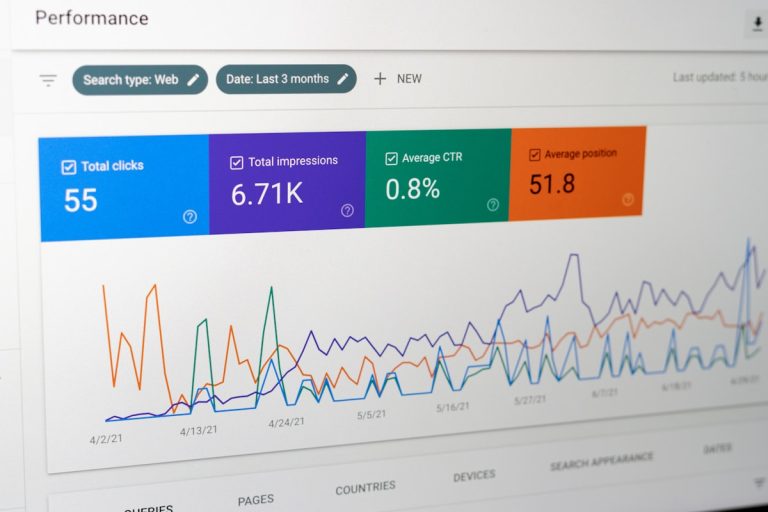
The Modern Search Shift: Why Traditional Metrics Leave You Blind
Search has completely changed, and the old playbooks are falling apart. Marketers used to obsess solely over Google Page 1, building backlinks and tracking blue links. But today, buyers use ChatGPT, Perplexity, Claude, and Gemini to get direct answers, product recommendations, and vendor shortlists. If an artificial intelligence engine summarises your niche and leaves you out, your site basically does not exist to that customer. Understanding this transition is the core takeaway of lesson 1 3 in modern digital marketing: visibility is no longer just rank tracking; it is about training generative models to recognise, cite, and recommend your brand.
Many founders assume AI visibility is an all-or-nothing game. In reality, large language models (LLMs) treat authority as a multi-layered spectrum of mentions, grounded citations, and semantic associations. To tackle this, businesses need a unified operating system rather than fragmented point tools. By adopting AI CMO: Unified AI Marketing Automation for Digital Growth, you can bridge high-level strategy with automated execution, tracking your generative footprint while systematically creating content that answer engines want to cite.
The Three Types of AI Visibility Marketers Must Understand
Most marketing teams make the mistake of treating every AI response identically. In generative engine optimization (GEO), your presence breaks down into three distinct states. Each type carries different commercial value and requires a unique tactical response.
1. Cited and Linked
This is the ultimate prize for direct conversion. In this scenario, the engine names your product and places an active, clickable hyperlink straight to your domain in its footnotes or source carousel.
Users who click these links carry high intent. They have already received a vetted recommendation from the model and are clicking through to inspect pricing, read technical specs, or sign up. However, data across platforms shows that clickable links are relatively scarce. On average, only about 28% of AI brand mentions include an active link. Google AI Overviews include links in roughly 10% to 11% of brand appearances, whereas Perplexity links out far more generously at over 50%. While rare, these linked citations heavily skew toward high-traffic, competitive queries where buyer attention concentrates.
2. Mentioned, but Not Linked
Here, the model explicitly recommends your brand, names your tool, or quotes your framework, but gives the user no hyperlink.
Many performance marketers write off unlinked mentions because they cannot track direct referral sessions in standard analytics. That is a critical mistake. An unlinked mention in an AI answer functions like automated word-of-mouth at scale. The user reads the advice, opens a fresh tab, and searches for your brand name directly.
Even more importantly, LLMs continuously digest new content. Every time your brand is mentioned across reputable industry websites, that co-occurrence becomes a training signal. In large-scale research analysing brand presence across AI answers, branded web mentions show a massive positive correlation with generative inclusion, far outweighing traditional metrics like raw backlink counts or domain rating. Every unlinked mention trains the model that your company is a category leader.
3. Completely Invisible
The worst outcome is total absence. The generative engine answers detailed questions about your exact software category or service, yet it lists three of your competitors while ignoring you entirely.
You cannot fix what you cannot measure. If your competitors show up in generative answers while you remain missing, your organic pipeline silently drains away. You can learn how to check your brand’s AI visibility to uncover these blind spots before your organic discovery drops to zero.
The Flaw in Traditional Analytics: Why Dashboards Are Not Enough
Established industry platforms like SEMrush, Moz, and Ahrefs have spent years refining keyword volume and backlink graphs. Some provide dedicated radar tools to inspect brand mentions. While these analytics are useful for diagnostic research, they suffer from a major limitation: they only report data. They hand you a complicated chart showing your lack of visibility, leaving you to manually research topics, draft articles, format schema, and update social feeds.
Small-to-medium enterprises and lean marketing teams do not have the hours to jump across four different disconnected dashboards. If an analytical tool tells you that a competitor is dominating citations for high-intent queries, you still have to do the heavy lifting yourself.
This is where autonomous agent architecture alters the workflow. Instead of buying another static monitoring subscription, forward-thinking teams choose to Automate Your SEO with AI. Rather than merely looking at lost ground, you need a system that identifies citation gaps and immediately executes the necessary content fixes.
How AI CMO Bridges Strategy and Verified Execution
Closing the gap in AI search requires a continuous feedback loop: you monitor your generative presence, locate missing prompts, produce authoritative source material, and distribute it across multi-channel touchpoints.
Our unified platform addresses this entire lifecycle through continuous automation and hands-on governance.
Tracking Share of Voice Across Major Engines
Generative answers are fluid; they change depending on prompt nuance, context, and retrieval-augmented generation (RAG) updates. Our platform monitors your presence across ChatGPT, Perplexity, Gemini, and Google AI Overviews. It measures:
- AI Share of Voice: How frequently your brand is surfaced compared to direct market competitors.
- Citation Velocity: How often your URLs appear inside answer source blocks over rolling 30-day windows.
- Sentiment and Context: Whether the model suggests your brand as a top recommendation or merely an alternative option.
Understanding these patterns lets you stop guessing and focus on the topics that drive genuine discovery.
Autonomous Action with Human Governance
Marketers are rightfully sceptical of black-box autonomous bots that push unverified text directly to live sites. Our platform balances continuous automation with strict operational governance.
You can orchestrate your strategy via our conversational marketing assistant, Ask Maggie. The system connects securely to your workspace, audits your existing site architecture, spots missing topical authority, and produces comprehensive, cite-worthy guides. Crucially, nothing goes live into production without signed user approval. Every publish operation, metadata update, and channel post is held in an action log, giving you complete oversight without the grind of manual drafting.
To ensure your regional presence matches your global generative footprint, you can Master GEO Targeting with AI, helping your business capture location-based prompts inside generative engines.
Structuring Content That LLMs Prefer to Cite
Generative models rely on web-scale information retrieval. When a user asks an engine a complex question, the model queries search indices, pulls down relevant documents, extracts facts, and synthesises an answer.
If your content is buried in conversational fluff or vague jargon, the extraction layer bypasses your text. To dominate generative engine queries, follow these core structuring rules:
Clear Fact Density and Direct Answers
Models favour pages that state unambiguous definitions and verified facts early in the text.
– Place direct answers right underneath subheadings.
– Use bulleted lists for technical specifications, pricing structures, and sequential steps.
– Avoid flowery metaphors that obscure key data points.
Semantic Entities and Topic Clusters
LLMs think in knowledge graphs. If you want to rank for an advanced topic, your site must cover the surrounding sub-entities thoroughly. For a broader walkthrough on syncing these campaigns across search and social channels, explore our guide on how to manage multi-channel with aiCMO.
The following comparison clarifies how generative optimization differs from traditional search engine management:
| Optimization Vector | Traditional SEO | Generative Engine Optimization (GEO) |
|---|---|---|
| Primary Target | Crawler algorithms & indexers | Semantic LLMs & retrieval synthesis (RAG) |
| Core Success Metric | Keyword rank position (1-10) | Citation frequency & conversational Share of Voice |
| Content Structure | Keyword placement & header tags | Fact-dense synthesis, statistics, & clean answers |
| Off-Page Signals | Backlink counts & anchor text | Unlinked brand co-occurrences across trusted web sources |
| Execution Method | Manual copywriting & agency retainers | Governed autonomous workflows via AI CMO |
By structuring your articles around extractable entities, you increase the likelihood that when an engine builds an answer, your site provides the source material. You can deploy our SEO & GEO Autopilot to identify missing semantic nodes and systematically produce the authoritative articles required to fill those voids.
Overcoming Agency Overhead with Automated Workflows
Historically, mastering a new search discipline meant hiring a specialist digital agency. But traditional agency models come with heavy drawbacks: opaque monthly retainers, slow communication, and disconnected reporting spreadsheets. Startups and growing SMEs end up paying thousands of pounds every month just to receive advice, while the actual implementation lags for weeks.
At the other extreme, subscribing to a dozen single-purpose SaaS subscriptions creates tool fatigue. You end up with one tool for keyword discovery, another for content generation, a third for rank tracking, and a separate platform for social syndication.
AI CMO removes this friction by unifying research, tracking, content generation, and multi-channel publication under a single roof. Our platform acts as a virtual marketing department that works 24/7. It tracks citation losses in real time, prepares remediation roadmaps, and submits publish-ready assets for your approval. You stop paying for agency overhead and start investing in compounding digital assets.
Step-by-Step: Winning the AI Visibility Game
Turning AI visibility theory into revenue requires a repeatable, systematic operating cadence. You can quickly implement this workflow across your business:
Step 1: Baseline Your AI Visibility Footprint
Audit your top target queries across major engines. Note down whether your brand is cited with a link, mentioned without a link, or entirely omitted. Identify which third-party sites the models cite when your competitors appear.
Step 2: Establish Direct Topical Authority
For every prompt where your brand is absent, create dedicated, authoritative source content. Provide original research, industry data, clear definitions, and verified steps. Use concise headings so RAG models can extract clean snippets.
Step 3: Syndicate and Reinforce Web Mentions
Remember that unlinked mentions across the broader web feed model associations. Distribute your thought leadership across industry publications, directories, and social ecosystems. This multi-channel footprint provides the training signals models rely on when validating brand authority.
Step 4: Automate Optimization and Governance
Manual content upkeep does not scale. Take advantage of automated workflows to discover decaying topics, refresh factual data, and track your ongoing share of voice across emerging generative systems. To secure your local and regional dominance across answer engines, Enhance Your Local Visibility using our purpose-built geographic optimization agents.
The Path Forward for Modern Growth Teams
The transition from blue-link search to conversational, generative answers is the biggest shift in digital discovery in twenty years. Simply understanding the lessons of AI citations is not enough; winning requires continuous execution.
Relying on expensive external agencies or cobbling together fragmented point tools wastes precious capital and leaves your brand invisible across the conversational web. By deploying a comprehensive marketing operating system, you can monitor your presence across all major models, uncover citation opportunities, and automate high-value content execution with complete governance.
Take control of your brand’s presence across generative search today. Start Your SEO Autopilot and build the continuous authority your business needs to lead the future of digital discovery.