Why Passive Monitoring Fails: The Shift to Active Real-Time SEO Tracking
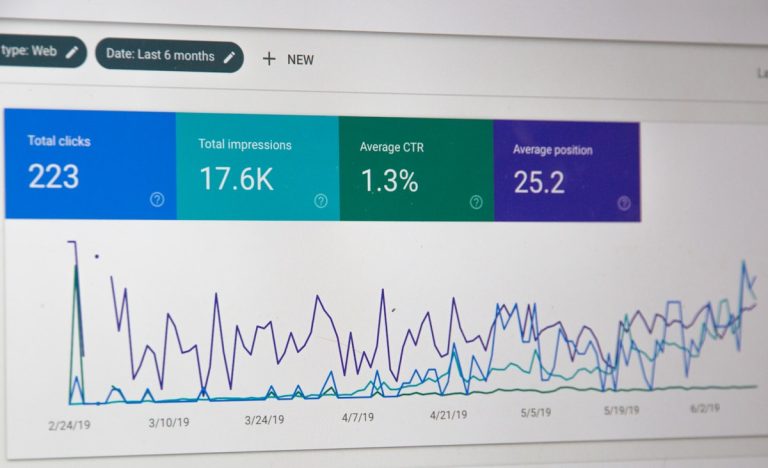
Most digital marketing teams spend their mornings checking dashboards that display yesterday’s losses. Traditional rank trackers and web index platforms, like Ahrefs with its Brand Radar product, have done a solid job spotlighting brand mentions across AI outputs, YouTube, TikTok, and Reddit. Yet, knowing your keyword dropped five spots or discovering a competitor surged ahead on ChatGPT citations two days ago does not solve the underlying problem. It just gives you bad news on a shiny graph. If your stack stops at alerting, your team remains stuck in a loop of panic, manual audits, and sluggish updates.
True search presence requires dynamic execution rather than static reporting. Modern search engines and AI answer engines do not wait for weekly crawl cycles; they digest fresh information, authority signals, and conversational intent by the hour. When you upgrade your infrastructure with AI CMO: Unified AI Marketing Automation for Digital Growth, you turn passive rank alerts into instantaneous, governed action. By uniting continuous observation with automated execution, real-time SEO tracking becomes an active engine for market expansion rather than a post-mortem review of lost traffic.
The Limits of Brand Radar Tools
Tools designed purely around monitoring, such as Brand Radar, operate like weather stations. They tell you it is raining, but they do not put up an umbrella or fix the hole in your roof. When an algorithm update hits or a rival launches a high-authority campaign, legacy platforms register the dip in your organic rankings. Then what happens?
Typically, your team faces a slow, fragmented workflow:
– The analytics tool flags a dropped ranking or lost brand mention.
– An SEO specialist pulls log files and checks Google Search Console data.
– A copywriter receives a ticket to refresh outdated copy, usually days later.
– An editor reviews it, passes it through sign-offs, and waits for a developer to deploy the changes.
By the time those fixes go live, weeks have slipped away. For small to medium enterprises and lean startups, these manual delays kill momentum. High-priced agency retainers often produce identical outcomes: thick monthly PDF decks describing issues that should have been solved twenty minutes after they appeared. To see how these gaps affect discovery across modern engines, learn how to check your brand’s AI visibility and why passive monitoring leaves gaps in your growth pipeline.
Why Real-Time SEO Tracking Demands Immediate Action
Search discovery is undergoing a seismic shift. We are no longer optimising solely for ten blue links on Google. Today, engines rely heavily on machine-generated syntheses, multi-channel discussions, and localised parameters. A user might discover your product through a suggested prompt on an AI engine, a Reddit discussion thread, or a nearby geo-targeted search query.
When ranking signals fluctuate, response time dictates whether you retain traffic or vanish from the conversation. Genuine real-time SEO tracking combines prompt tracking, backlink discovery, and indexation status with the computational power to rewrite, re-optimise, and resubmit pages on the fly. Waiting days to address content decay is no longer a viable digital strategy.
Moving Beyond Observation: How Real-Time SEO Tracking Works
Real-time SEO tracking is not about hitting refresh on your browser every ten seconds. It is about building an automated pipeline that registers ranking variations, decodes the cause, and prepares targeted solutions.
When you operate an integrated platform, your marketing stack works 24/7. When search engine result pages (SERPs) adjust, the system pinpoints whether the shift stems from keyword intent drift, competitor content updates, internal technical faults, or local search modifications.
If you are ready to eliminate manual audits and let intelligent systems handle content maintenance, you can Automate Your SEO with AI.
Continuous Visibility: Search Engines Meet Answer Engines
Modern discoverability lives across two distinct domains: traditional Search Engine Optimisation (SEO) and Generative Engine Optimisation (GEO). Traditional search tracks your physical rank on result pages. GEO, meanwhile, evaluates whether large language models and answer engines cite your brand when users ask for recommendations.
A dip in traditional organic search might mean a title tag needs refining or fresh context must be injected into an H2 section. A drop in generative engine visibility, however, means your brand is losing authority in foundational datasets and community hubs. Real-time SEO tracking must survey both environments at once. If your tracking software focuses solely on search result positions, you miss the vast volume of potential clients turning directly to conversational assistants for purchasing guidance. You can discover how to manage multi-channel with aiCMO to keep your organic brand footprint uniform across every channel.
Comparing Modern Approaches: Pure Analytics vs Unified Execution
To illustrate the operational differences between traditional monitoring stacks (such as SEMrush, Moz, or Brand Radar setups) and unified execution platforms, consider how each handles standard search anomalies:
| Diagnostic Feature | Traditional Monitoring Tools | Unified AI Execution (AI CMO) |
|---|---|---|
| Data Collection | Daily or weekly rank crawls; static brand radar reports | Continuous, real-time SEO tracking across search and generative engines |
| Response Mechanism | Generates notifications, PDF summaries, and dashboard graphs | Automates remedial drafts, meta tag updates, and schema adjustments |
| Workflow Friction | Requires manual export, human review, and external CMS publishing | In-app previews, governed approval workflows, and native CMS deployment |
| Local Search Strategy | Basic rank-by-postcode tables | Dynamic geo-targeted landing page creation and local visibility adjustments |
| Resource Dependency | Demands specialist operators, content teams, and expensive agencies | Single operating system handling strategy, tracking, and execution |
When you analyse the grid above, the bottleneck in traditional setups becomes clear. It is not an absence of data; it is the friction between identifying a ranking decline and deploying the solution.
Midway through any visibility campaign, teams realise that knowing their position is only five percent of the battle. The remaining ninety-five percent is pure execution. When you transition your digital properties to AI CMO: Unified AI Marketing Automation for Digital Growth, your team moves from scrambling over spreadsheets to supervising strategic, verified growth across every active market.
Bridging the Gap: Integrating SEO Automation and GEO Targeting
Monitoring ranking shifts is helpful, but what happens when the shift happens in a specific city or region? Search algorithms prioritise geographic proximity and regional intent more heavily than ever. If your organic footprint lacks targeted local context, your overall discoverability stalls.
Many businesses struggle because scaling geo-specific landing pages and managing localised keywords manually requires immense human effort. By pairing continuous performance analysis with regional optimisation, you can Master GEO Targeting with AI. This approach lets your team respond to fluctuating regional demand by updating local schema, altering town-specific copy, and capturing nearby buyer intent before rivals notice the opening.
Human-in-the-Loop: Speed Without Losing Governance
A common anxiety with automated solutions is the fear of rogue algorithms publishing unverified text across production websites. High-performing digital teams do not need reckless generators; they need reliable automation coupled with governed controls.
Within the AI CMO ecosystem, autonomous operations run on strict permission checks, idempotency, and action logs. When your real-time tracking detects an opportunity:
1. The platform processes live data from your connected workspace.
2. The system identifies thin content, declining search queries, or missing semantic entities.
3. Remedial content, structured data, or technical revisions are drafted automatically.
4. Your marketing lead receives a clear preview of the proposed changes.
5. With a single click, signed confirmation authorises and deploys the update directly to your site.
This balance delivers the best of both worlds: round-the-clock computational speed backed by transparent human verification. You keep total control over brand voice without doing the repetitive legwork. Review our detailed guide on how to onboard & manage your brand with aiCMO to see how simple it is to bring your digital properties under unified management.
The Strategic Path Forward for Growing Brands
Relying on disconnected toolsets and passive monitoring suites creates an illusion of control. You pay hundreds of pounds each month for dashboards that tell you what you already know: search algorithms shift quickly, competitors are aggressive, and producing daily content updates by hand is impossible for a lean marketing unit.
Real-time SEO tracking should never exist in a silo. It functions best as an alert mechanism inside a larger, autonomous execution loop. When your monitoring platform speaks directly to your content pipeline, indexation tools, and regional optimization modules, digital marketing stops being a frantic, reactive chore. It transforms into an efficient, predictable engine for organic customer acquisition.
Equip your business with the right tools to monitor ranking movement, counter rival strategies instantly, and dominate modern discovery channels. Take control of your digital visibility today with AI CMO: Unified AI Marketing Automation for Digital Growth.