The New Rules of Discovery: Why Old-School Search Tactics Fall Short
Search is changing right in front of us. For two decades, digital marketing meant stuffing keywords into metadata, chasing backlinks, and praying Google placed your blue link on page one. Today, people do not merely type queries into a search bar; they ask ChatGPT, Claude, and Perplexity to solve problems, compare tools, and recommend software directly. If you want to know how to optimize for ai visibility and prepare for agentic search, you have to realise that your target customer might never visit a traditional search results page again. They get their answers synthesised inside an answer engine, and if your brand is not part of that synthesis, you do not exist to them.
Many small and medium-sized businesses feel stranded because legacy agencies charge thousands of pounds a month for outdated reports, while fragmented point tools only create chaos. To build real authority and stay ahead of automated answer engines, businesses need clear workflows and continuous optimization. You can explore how to optimize for ai visibility and prepare for agentic search through a unified platform that aligns your entire digital footprint for large language models, ensuring your brand earns authoritative citations rather than getting skipped over.
Traditional SEO vs Generative Engine Optimization: What Changed?
Traditional search engines operate like librarians matching catalogue cards. You optimise for a single keyword string, build a dedicated landing page, and hope your domain rating pushes you up. Generative Engine Optimization (GEO) operates like an analyst briefing an executive. Large language models (LLMs) break user prompts down into multiple intents, running a process called query fan-out.
Instead of evaluating a single URL for a query, an AI engine looks across hundreds of web documents, forum discussions, review portals, and technical guides. It parses facts, extracts key attributes, and synthesises a customised answer. Here is how the two approaches compare:
- Keyword Matching vs Entity Understanding: Old SEO looked for exact phrases. AI engines look for entities (your brand, your products, your verified capabilities) and their relationships to other recognised concepts.
- Click-Throughs vs Direct Citations: Traditional search rewarded pure click volume. Agentic engines reward semantic trust; whether the model trusts your data enough to quote you as an authority.
- Siloed Pages vs Knowledge Graphs: You can no longer rely on one isolated sales page. AI systems look for consistent signals across your whole site taxonomy and third-party corroboration.
If you want to understand where your business currently sits inside these answer models, reading our guide on how to check your brand’s AI visibility reveals how bots see and parse your primary web pages.
Stop Treating Raw Traffic as Your Only Metric
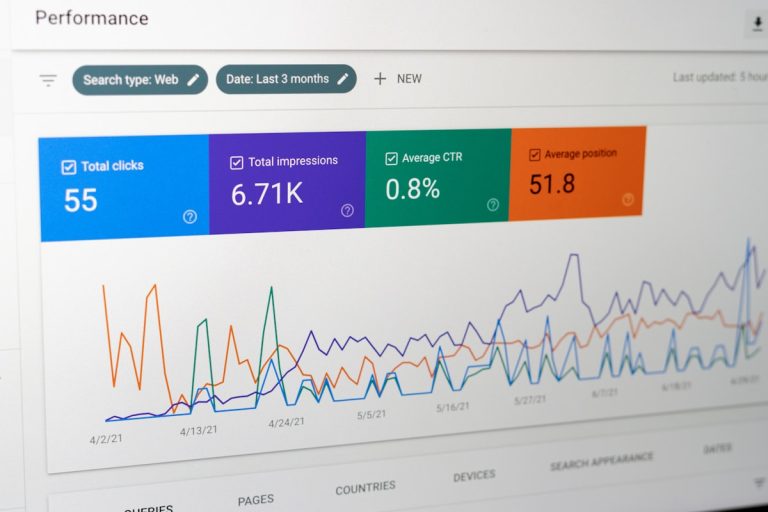
Most marketing dashboards track clicks and pageviews. In an era where answer bots resolve queries on the spot, those numbers tell an incomplete story. A prospective buyer might ask an AI agent to compare three software tools, read the comparison, pick your brand, and head straight to your checkout via a direct URL. That journey looks like direct traffic in Google Analytics, but it was entirely driven by AI search visibility.
To measure performance properly, divide your metrics into two distinct tiers:
Tier 1: Core Business Impact
These are the figures that actually pay the bills:
* Revenue attributed to LLM referrals and citations
* Direct purchases from AI-assisted journeys
* Conversion rates of visitors entering via AI platform domains
* Pipeline influenced by conversational search touchpoints
Tier 2: AI Presence and Authority Signals
These help you diagnose how visible your brand is across conversational platforms:
* Prompt Coverage: Does your brand surface when prospective buyers ask commercial questions in your niche?
* Recommendation Rate: Are AI engines endorsing your product, or just lumping it into a generic list of alternatives?
* Linked Citation Rate: When an answer bot generates a source list, does your website get linked directly?
* Representation Accuracy: Is the AI describing your features, pricing, and services correctly, or repeating outdated data?
Connecting your digital footprint to automated workflows helps bridge this gap. You can Automate Your SEO with AI to keep your metadata, factual structured data, and content freshness running round the clock without hiring a massive agency team.
Structuring Content for Machine Retrieval and Synthesis
AI crawlers do not read websites like casual human browsers. They ingest text blocks, scan schemas, and extract raw facts. If your core content is buried inside heavy client-side JavaScript or trapped in decorative graphics, an LLM crawler will simply skip it.
Here is how you make your content trivially easy for AI models to parse:
1. Lead with Answer-First Summaries
Put the core answer in the very first sentence of each section. Avoid long-winded backstories. When an AI bot scans a heading, it expects the immediate paragraph below it to state the solution clearly.
2. Build Decision-Constraint Matrices
Modern users do not ask basic questions. They ask constrained questions: “What is the best marketing tool for a five-person UK firm on a tight budget that needs hands-on execution?” If your site only contains broad marketing slogans, an AI agent cannot verify if your product fits those constraints. Clearly display pricing brackets, platform integrations, operating regions, and technical specifications in plain text tables and bullet points.
3. Maintain Entity Clarity with Structured Data
Schema markup is not optional anymore. Use schema definitions to tell AI bots exactly what your company offers, who founded it, and what specific problems it solves.
To see real examples of companies modernising their search setups and gaining traction across competitive markets, check out our case studies covering actual digital transformations.
If your business relies heavily on regional customers or physical territories, you can Enhance Your Local Visibility by feeding search bots clean geographic and operational entities they can index with confidence.
The Role of Autonomous AI Marketing and Governed Workflows
The sheer volume of content, technical schemas, and multi-channel signals required to win at AI search quickly overwhelms small teams. You cannot manually audit dozens of pages every week while running business operations.
This is where the unified platform behind AI CMO changes the equation. Instead of cobbling together disconnected tools for keyword tracking, copywriting, and social updates, an integrated system handles operational tasks continuously. By automating critical SEO and GEO operations 24/7, businesses gain significant cost savings and achieve measurable visibility improvements within weeks.
Marketers can manage their technical search footprints while simultaneously streamlining off-page signals. If you want to dive into unified campaign operations, check our guide on how to manage multi-channel with aiCMO to keep your messaging aligned across platforms.
To transform your digital strategy into a hands-off, highly responsive engine, you can AI CMO: Unified AI Marketing Automation for Digital Growth and let machine intelligence handle repetitive maintenance while you focus on top-level business growth.
Third-Party Corroboration: The 85% Rule
Here is an uncomfortable truth about generative search: your own website is only a small piece of the puzzle. Industry research reveals that roughly 85% of brand citations inside AI engine responses come from third-party sources. AI models are trained to be sceptical of self-promotional claims. If your homepage says you are the best marketing automation tool in Britain, but independent forums, review platforms, and industry publications say nothing about you, the AI will not recommend you.
To build genuine brand authority for generative search, coordinate your efforts across three external pillars:
- Targeted Digital PR: Get featured in legitimate trade publications where journalists discuss practical solutions to your industry’s problems.
- Community Validation: Participate in public conversations on LinkedIn and Reddit. When people share authentic experiences regarding your service, AI engines scrape and register that positive sentiment.
- Consistent Directory Profiles: Ensure your brand name, operating addresses, pricing models, and core services match perfectly across external review sites. Inconsistencies confuse LLMs and lower their confidence in citing you.
When you need to bring your local and industry-specific profiles up to standard across external ecosystems, you can Master GEO Targeting with AI to ensure search bots see authoritative, verified location and entity signals everywhere.
Preparing for Agentic Commerce: When AI Does the Buying
We are quickly moving from conversational search (asking an AI for advice) to agentic search (authorising an AI agent to execute tasks on your behalf). In an agentic commerce scenario, a user gives a prompt like: “Find me an affordable marketing platform that automates our technical SEO, set up an account, and prepare our first roadmap.”
The autonomous agent will evaluate candidate platforms based on:
1. Machine-Readable Documentation: Can the agent easily parse your terms, feature sets, and onboarding steps?
2. Clear Pricing Transparency: Does your site state costs openly, or hide them behind opaque sales forms?
3. API & Integration Accessibility: Can the agent easily integrate your solution into existing client workflows?
Brands that rely on vague buzzwords and hidden pricing will be systematically excluded by agentic buyers. Winning platforms will be those that provide concrete data points, verified capabilities, and frictionless onboarding.
If you are eager to get your site ready for these automated systems without wasting hours on manual code adjustments, Start Your SEO Autopilot to keep your technical architecture fully accessible for web agents.
Practical Next Steps for Your Business
Getting your brand ready for conversational engines does not require discarding your existing marketing foundation. It simply means updating your priorities so machine intelligence can locate, verify, and endorse your offerings.
Start by auditing your core service pages:
* Replace vague marketing fluff with precise, factual descriptions of your capabilities.
* Publish clear comparison guides that address decision constraints like budget, team size, and technical requirements.
* Monitor your brand mentions across third-party discussion platforms and industry review sites.
* Automate your technical maintenance so search bots always find fresh, server-rendered HTML.
You do not need an overpriced agency to stay competitive in this new search landscape. Take direct control of your search footprint and explore how to optimize for ai visibility and prepare for agentic search by putting continuous, transparent marketing automation to work for your business today.