Why Your Pretty Charts Are Failing You: The Truth Behind Every Data Storytelling Report
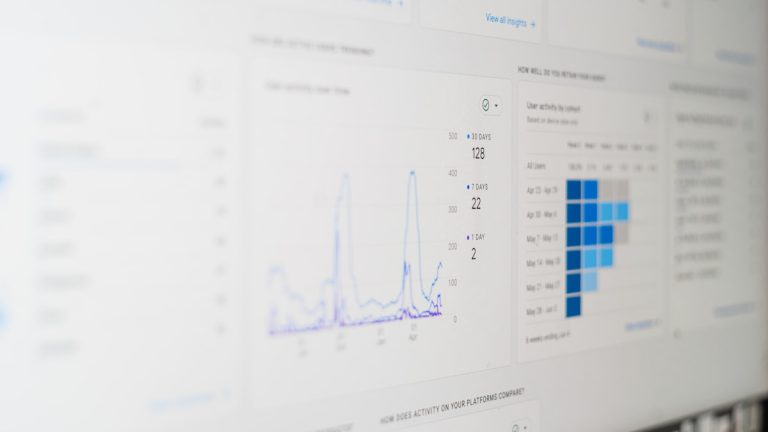
Let us be completely honest about modern marketing meetings. Someone pulls up a slide deck packed with pastel charts, line graphs, and polished diagrams. Everyone nods, drinks their lukewarm coffee, and agrees that the quarterly trends look fascinating. But by Thursday afternoon, nothing has changed. The graphs gather digital dust on Google Drive. A traditional data storytelling report does an incredible job of showing you where your traffic came from, but it leaves you stranded right at the finish line. Turning numbers into pretty narratives helps your team understand past performance, yet understanding alone does not drive revenue or update your campaigns.
The gap between raw data interpretation and hands-on execution is where most small and medium businesses lose momentum. You see the dip in organic search clicks, or you spot a spike in local intent queries, but translating those observations into practical work takes dozens of hours you simply do not have. This is precisely why moving from descriptive reporting to autonomous execution matters; you can explore AI CMO: Unified AI Marketing Automation for Digital Growth to transform passive observations into revenue-driving, live campaigns without hiring an army of expensive specialists. Rather than letting your metrics expire inside a slide deck, it is time to connect your analytics straight into an engine that carries out the actual work.
The Competence Gap: Why 66% of Marketers Dread Analytics
Recent industry surveys across thousands of marketing and commercial professionals reveal a startling paradox. Over 74% of organisations state their reliance on data has spiked dramatically, yet roughly 66% of marketing professionals admit to feeling genuine anxiety whenever they have to handle complex numbers. While 88% feel far more confident presenting when metrics look visually appealing, making a deck look pretty does not fix the underlying workload.
The truth is that tools like Canva or Flourish have perfected visual design. They make it simple to craft sleek bar charts and infographics. If you need a board deck to explain a bad quarter, visual design platforms work wonders. But here is the hard ceiling: visual design tools stop the second you download the PDF. They tell a story, but they cannot write the blog post, revise your technical metadata, or fix the regional search blind spots revealed in that story.
Marketers are tired of playing the middleman between reporting dashboards and execution tools. You pull figures from Google Search Console, drop them into a visual builder to create a data storytelling report, present the findings to your stakeholders, and then spend your weekend manually implementing fixes across five different fragmented platforms. That is not marketing leadership; that is operational exhaustion.
Anatomy of the Chasm: From Insight to Actual Execution
Why do actionable insights rot inside decks? Let us break down what happens when your weekly dashboard flags an opportunity.
Suppose your analytics show that users in Manchester are searching for your service, but your organic conversions in that region are dropping. A standard data storytelling report flags this as: “Regional drop in North West engagement; recommend prioritising local search optimisation.”
Now, what does your team have to do next?
* Research local competitor keyword clusters.
* Draft three distinct, brand-consistent landing pages.
* Update local schema markup and directory signals.
* Schedule accompanying social snippets across platforms.
* Monitor ranking shifts daily to measure improvement.
For an SME or a lean startup team, that single bullet point represents thirty hours of manual labour. You either hire a bloated external agency that takes six weeks to deliver a draft, or you juggle five disconnected software subscriptions. This is where you can Master GEO Targeting with AI to eliminate the manual regional grunt work and bridge the gap between discovery and deployment.
If you are already trying to keep up with cross-platform publishing, learning how to manage multi-channel with aiCMO shows you how single insights can feed consistent execution across every digital surface without extra headcount.

The Shift from Passive Dashboards to Governed Autonomous Agents
Traditional marketing software treats you like an assembly-line worker. It provides the conveyor belt, but you still have to turn every single bolt. Modern digital growth requires a complete paradigm shift: moving away from point solutions and towards governed, autonomous execution.
When you use an intelligent operating system rather than a static presentation builder, your reporting pipeline becomes active:
- Continuous Ingestion: The system monitors your real-time analytics, search impressions, and visibility metrics around the clock.
- Autonomous Diagnosis: Instead of asking you to spot the trend, the system identifies where visibility is slipping or where new query volumes are emerging.
- Drafted Remediation: The platform builds the exact content assets, metadata, or regional adjustments needed to capture the opportunity.
- Governed Human Approval: You retain total control. You inspect the proposed strategy, review the changes, and click approve.
- Direct Publishing: The platform deploys the changes directly to your connected channels.
With this structure, you never spend another Monday morning wrestling with spreadsheets just to justify your strategy. If you want to put your organic traffic acquisition on real-time auto-drive, you can Automate Your SEO with AI and bypass the manual technical bottlenecks entirely.
Closing the Loop: Turning Analytics into Real-Time Content
Let us look at how this changes everyday content marketing. When you produce a monthly content summary, you usually examine which articles gathered pageviews and which fell flat. But historical pageviews are a lagging indicator. They only tell you what worked two months ago, not what your audience demands today.
A modern, action-focused data storytelling report does not look backwards; it diagnoses immediate opportunities. If your analytics indicate that your core audience is searching for comparisons between fragmented tool stacks and unified platforms, you do not need another pie chart. You need fresh, well-researched, authoritative long-form content published on your domain by tomorrow morning.
By connecting your performance tracking directly to content production, you eliminate weeks of delays. For teams looking to scale organic reach without the manual treadmill, you can review our SEO & GEO Autopilot system to see how search signals instantly translate into live, indexable assets.
By unifying your data feed with direct publishing capability, your brand stays agile enough to outmanoeuvre slower competitors who are still stuck waiting for their quarterly design decks.
Beyond Search Engines: The Rise of AI Search Visibility
There is another massive blind spot lurking in traditional reporting: generative engine discovery. For years, digital marketing relied entirely on classic search engines. You tracked ten blue links on Google, checked your rankings, and felt satisfied.
Today, buyers turn to conversational AI platforms to find service providers, compare SaaS products, and evaluate local businesses. If an enterprise buyer asks an AI assistant for the top marketing automation platforms in the United Kingdom, does your brand show up in that synthesized answer?
Standard dashboards cannot tell you this. They only see referral traffic or raw keyword rankings. You must understand how to check your brand’s AI visibility to see how modern AI models cite and view your business. Once you know where your footprint is missing inside conversational discovery, you can deploy authoritative content to fix those omissions immediately.
If you are curious about your existing footprint, you can read our live analysis to see how automated tracking bridges this gap, and learn how to Boost Local Search Rankings across emerging generative answer engines before your competitors even realise the playing field has changed.

Why Traditional Marketing Agencies Struggle with Active Data
For decades, small businesses turned to external marketing agencies because they lacked the technical skills to handle search engines, ad platforms, and content distribution in-house. But the agency business model carries inherent friction:
- Opaque Retainers: You spend thousands of pounds each month, only to receive a thirty-slide monthly deck summarising what went wrong.
- Slow Turnaround: Asking an agency to adapt to a sudden search trend requires meetings, creative briefs, account manager reviews, and revisions. It takes weeks.
- Fragmented Execution: One specialist handles your paid campaigns, another handles your SEO, and a third writes your blog. None of them share data seamlessly.
When you replace that bloated setup with a unified platform, the economics of digital growth change overnight. Instead of paying an agency to interpret a data storytelling report for you, you can Start Your SEO Autopilot and let an automated system handle research, drafting, and cross-channel distribution for a fraction of the cost.
You gain total clarity. You can review exact action logs, inspect scheduled deployments, and verify how every single marketing action directly maps back to your underlying performance metrics.
Step-by-Step: Converting Insight Decks into Autonomous Workflows
If you want to pull your marketing department out of reporting paralysis and into high-velocity execution, here is the exact framework to follow.
Step 1: Centralise Your Metric Sources
Stop logging into seven individual dashboards every morning. Connect your search console, analytics tools, and social signals into a single operating environment. You cannot automate what you cannot see in aggregate.
Step 2: Establish Direct Execution Channels
Make sure your strategic engine connects directly to your content management system and social profiles. When your platform spots an organic keyword opening, it should be able to draft the post and stage it inside your actual CMS, ready for review.
Step 3: Implement Clear Governance Rules
Autonomous execution does not mean running wild without supervision. High-performing teams implement strict human-in-the-loop controls. Your system drafts the copy, optimises the headings, and maps the internal links, but your team reviews and approves the publication. You get 10x the speed without risking your brand voice.
Step 4: Automate Continuous Optimization
Digital marketing is never finished. A single post is not a strategy. The moment content goes live, your platform must track its ranking trajectory, measure its conversion path, and update internal links automatically to maintain performance over time.
To see this workflow in practice, check out our real-world breakdown of AI CMO: Unified AI Marketing Automation for Digital Growth, where you can watch how operational tasks run seamlessly in the background while your leadership team stays focused on big-picture business strategy.
The Future of Marketing: Stop Presenting, Start Executing
The past decade of digital marketing software convinced teams that better visual charts equal better business outcomes. We bought into the idea that if our dashboards looked like sleek modern art, our revenue would follow suit. But visual summaries without execution pipelines are merely expensive distractions.
You do not need another meeting to dissect why organic traffic dipped last month. You do not need to spend your Friday evening colour-coding charts in a design app. What you need is an intelligent, unified system that sees the dip, understands the remedy, drafts the solution, and asks for your permission to deploy it.
Step away from static slides. Reclaim your team’s time, strip away the overhead of bloated external agencies, and turn your marketing insights into immediate, revenue-generating action across every channel that matters.
Ready to see how fast your brand can grow when data leads directly to execution? It is time to Enhance Your Local Visibility and put an end to passive reporting forever.